What is the ideal age for a loft bed according to the child's maturity?
You're wondering at what age a child can sleep in a loft bed safely? While the official recommendation mentions the age of 6, the real answer depends mainly on your child's maturity and autonomy.
Between safety standards, types of raised beds, signs of readiness and practical advice, here is the complete guide to making the right choice at the right time.
The recommended age: the 6-year milestone
Manufacturers, like French standards (NF EN 747), recommend using a loft bed from 6 years old.
This is the age when motor coordination is generally sufficient to climb up and down a ladder without assistance.
But each child is unique. A very independent 5-year-old child may be more capable than another 7-year-old who is still hesitant. The date of birth is not enough: it is maturity, emotional stability and the ability to follow simple instructions that matter.
What exactly is a loft bed?
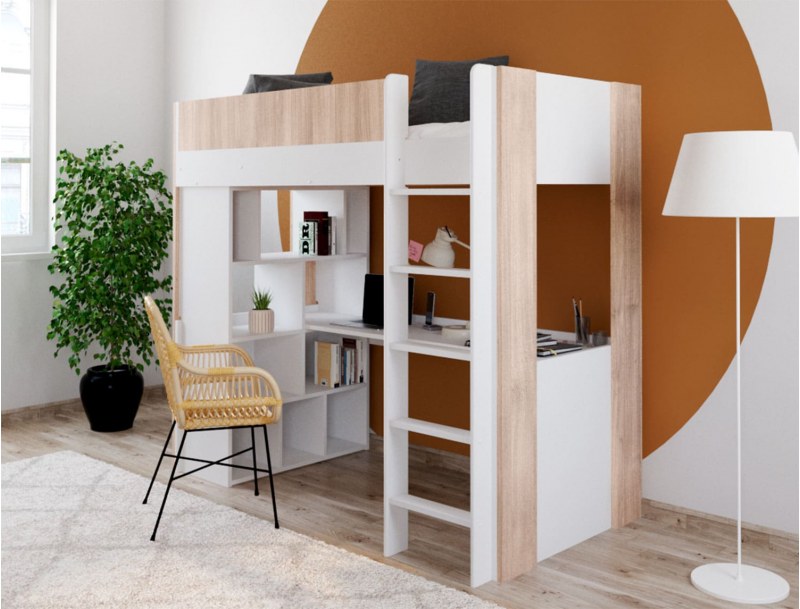
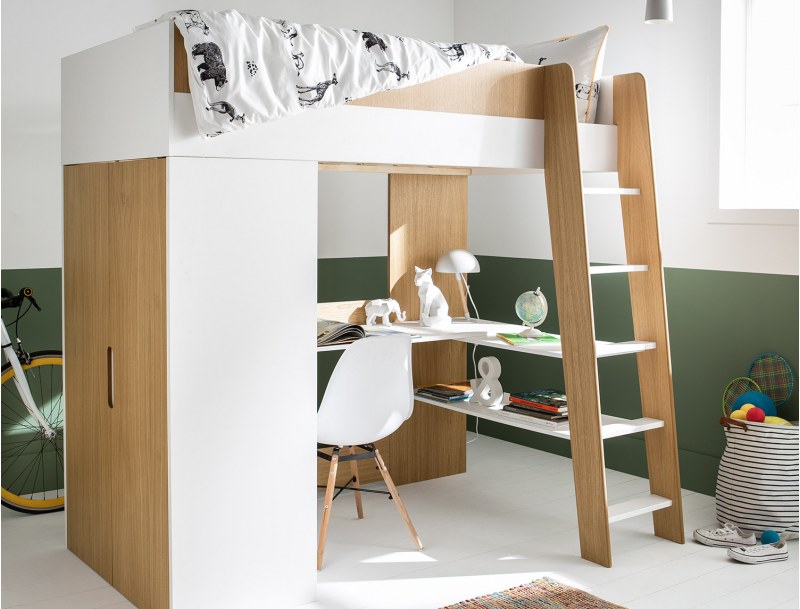
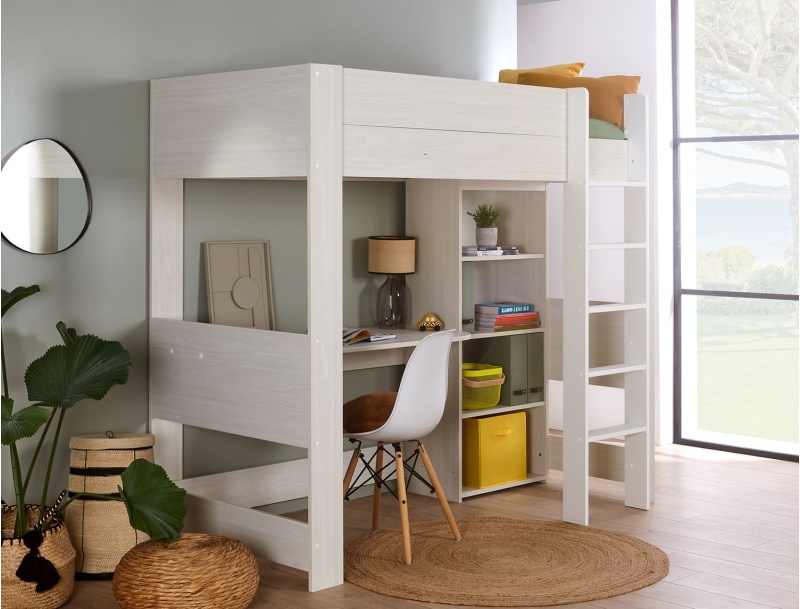
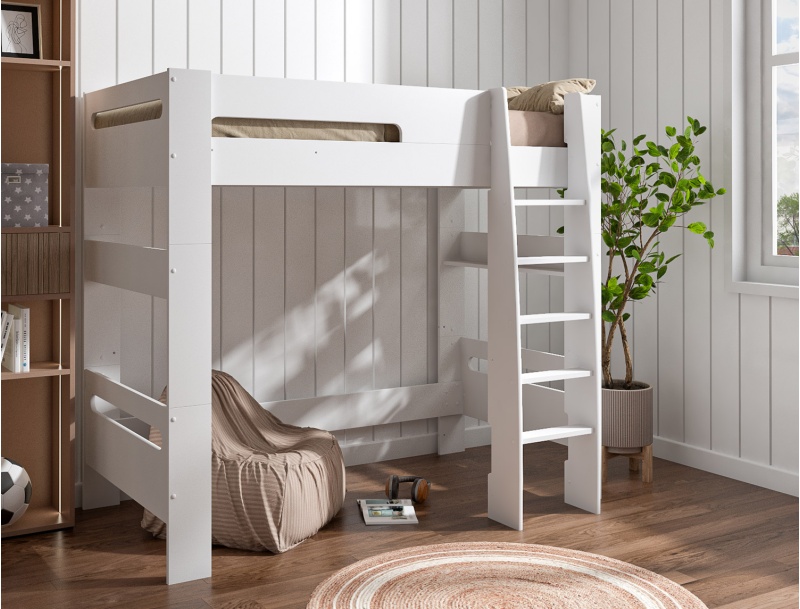
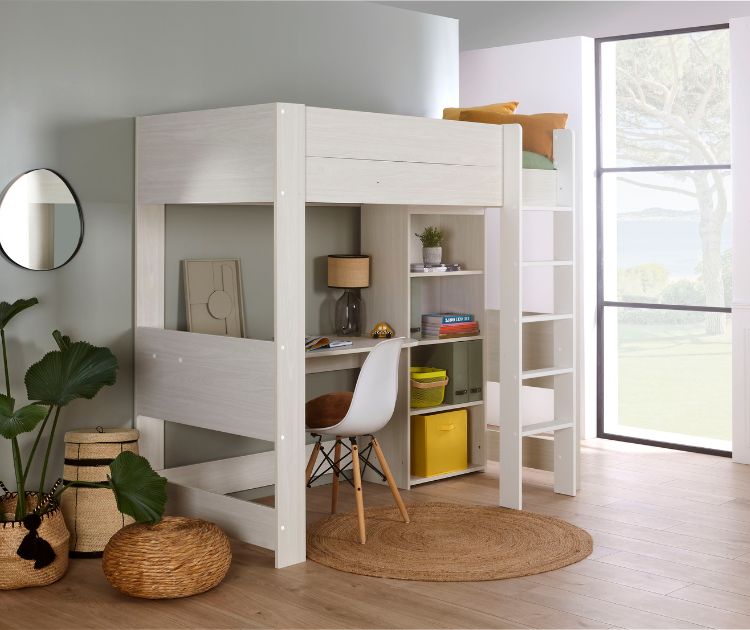
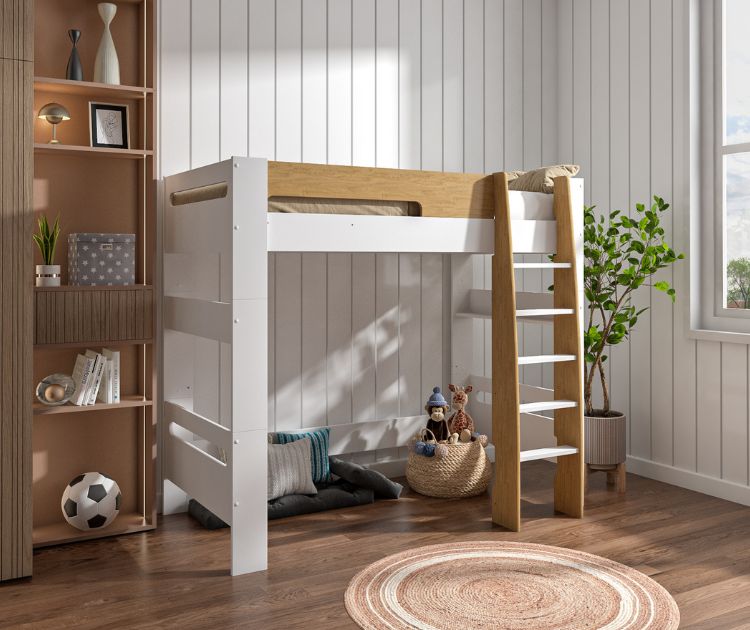
The children's loft bed is a wooden structure with a sleeping area at height accessible by a ladder or stairs. It frees up floor space to create a desk, play area or storage. This space saving is particularly useful in small bedrooms.
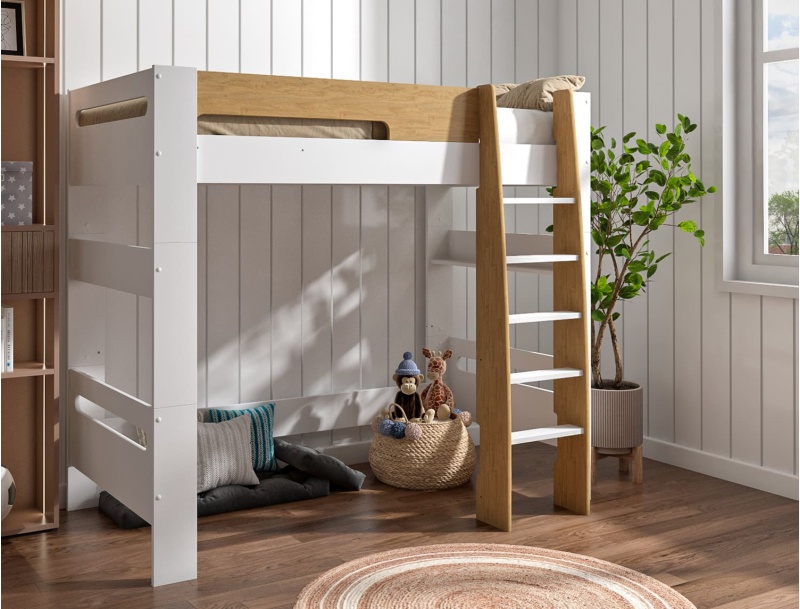
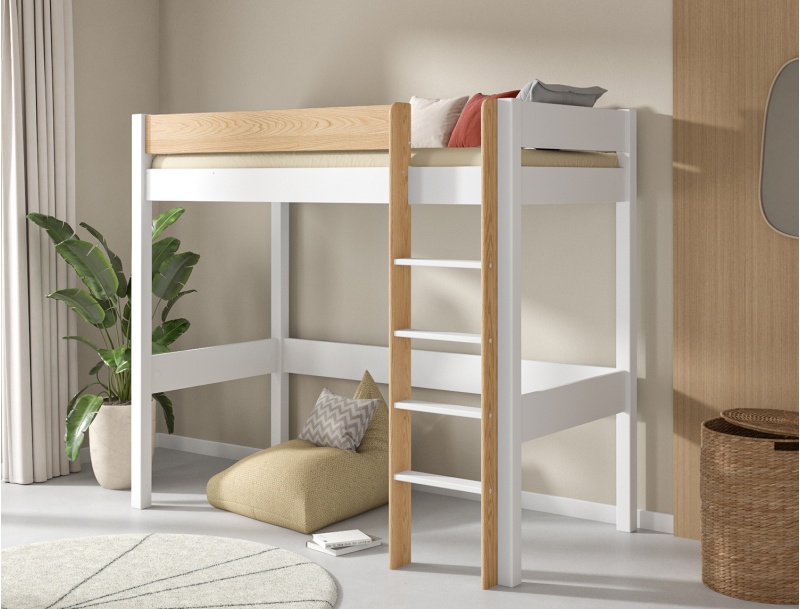
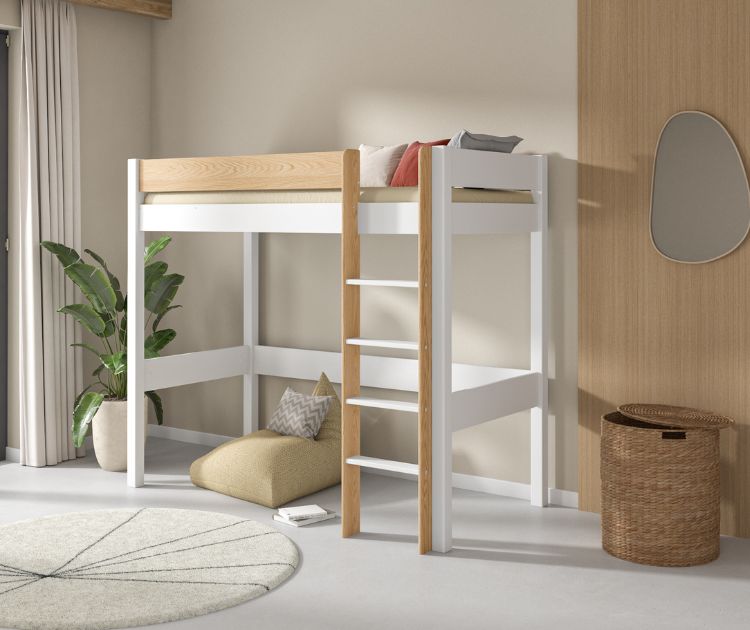
Unlike the bunk bed, the loft bed does not have a bed at the bottom. It allows structuring the room around a central and evolving space. It is chosen for its functional side, but also for its modern aesthetic.
Mid-height bed or loft bed: two stages according to age
If your child has not yet reached 6 years old, the mid-height bed represents an excellent alternative. Lower, often around 120 cm, it allows getting used to the height without taking risks. It is often accessible from 4 years old, especially if the child is agile and confident.
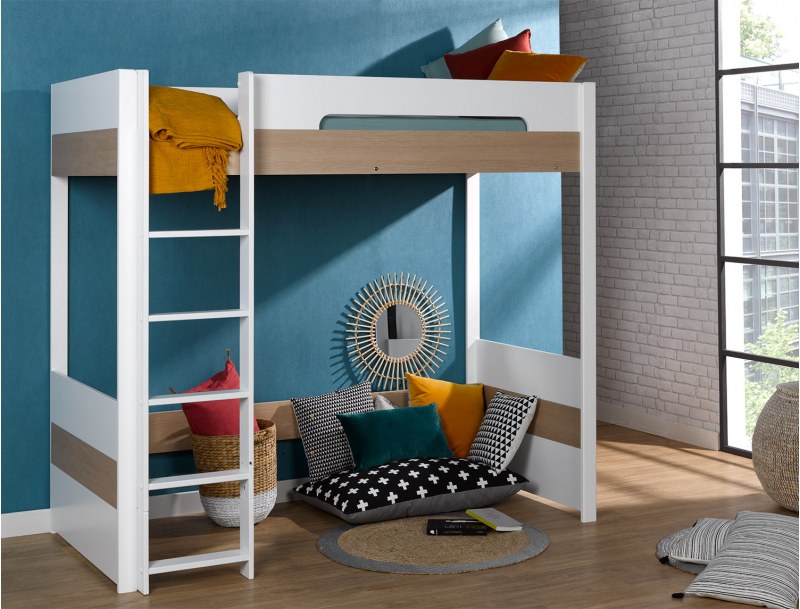
The full loft bed, often perched at over 160 cm, requires more confidence. By offering it later, you facilitate a gradual and safe transition.
Certain signs don't lie. A child ready for a loft bed climbs stairs with ease, doesn't get up at night in a confused manner, follows instructions and shows autonomy in their daily actions. If you notice these behaviors, you can consider this change with more peace of mind.
Trust your observation. You are best placed to know if your child is ready for this new step.
Before any purchase, make sure the bed complies with NF EN 747 or NF D 62-100 standards. This is the guarantee of a sturdy frame, healthy materials and safe dimensions.
The mattress should not exceed 16 cm in thickness. Beyond that, the safety barrier loses its effectiveness. Similarly, a free height of 60 cm between the mattress and the ceiling is essential so that the child can sit up without hitting their head.
If your child is young, prefer a staircase with wide steps rather than a vertical ladder. This is a guarantee of comfort and stability.
Involving the child for a successful transition
Moving to a raised bed can be experienced as an adventure. By involving your child in choosing the model, in the decoration or even in the assembly (for the simple parts), you transform this step into a game. They take ownership of their new space and respect it more.
Once the bed is installed, establish clear rules from the start. For example: never play in the bed, do not jump, and always climb facing the ladder. Simple rules, repeated regularly, quickly become automatic.
A bed that frees up space... and much more
The loft bed is not just a sleeping area. It becomes a central element of the room. Under the bed base, you can create a small custom universe: a desk for homework, a bookshelf or a relaxation area with cushions and a rug.
This furniture evolves with the child's age. Today a reading corner, tomorrow a work space, then a lounge area to welcome friends. It's a durable purchase, useful in daily life.
Choosing the right model: comfort and sturdiness
Choosing a loft bed also means investing in quality. Opt for a solid wood structure, which is more durable over time. Check the fixings, safety barriers, and make sure everything complies with French standards.
A good loft bed must be designed to last. It must adapt to the child's development while maintaining its stability.
Did you know?
A loft bed can free up to 3 m² of floor space in a room of less than 10 m². This is equivalent to a large desk or a comfortable relaxation area.
 En
En
 Français
 Deutsch
 Nederlands
 Italiano
 Español













 What Age for Bunk Bed: Standards and Safety
 When to put baby in their room: age and transition
 Best Choice for Baby: Bed Attached to Parents or Next to Them?
 The convertible bed: furniture that grows with your child
 The bunk bed with storage and desk: discover its advantages!
.jpg "À quel âge votre enfant peut-il utiliser un lit mezzanine ? | Chambrekids")