Baby bed attached to parents' bed: the ideal solution
Are you considering installing a baby bed attached to the parents' bed to reassure your newborn, but wondering if this practice truly respects all safety standards? While proximity facilitates breastfeeding and eases anxieties, it's important to differentiate safe methods from false good ideas that impact your intimacy and become obsolete after a few months. We analyze here the most reliable options, from the convertible bed to independent sleeping, to offer you a lasting solution that preserves restorative sleep.
Keeping baby close: the real good reasons and the pitfalls to avoid
Why sleep in the same room as your newborn?
You have that visceral instinct to want your child very close, don't you? It's completely natural and this reassuring proximity soothes everyone. Listen to yourself, that's the foundation.
Moreover, the WHO recommends sharing the room until 6 months. This drastically reduces the risk of sudden infant death syndrome. Plus, nighttime breastfeeding becomes much less tiring for you.
The question is therefore not whether to be for or against. It's simply about doing it safely.
The golden rule: their room, but not their bed
Caution, sharing the room doesn't mean sharing the bed. The risk of suffocation or overheating is real and documented. Never take this danger lightly, ever.
Are you considering a baby bed attached to the parents' bed? The best option remains a separate bed in the parental bedroom. It's the perfect compromise for peaceful nights.
Even with a separate bed, the room's atmosphere plays a major role. Here's how to create a secure cocoon for your little one.
To ensure truly restorative and healthy sleep, check these points:
A stable temperature between 18°C and 20°C.
An ideal humidity level, between 40% and 60%.
No pets during sleep.
No lit screens that could disrupt their rest.
A well-ventilated and dust-free room.
The bedside sleeper, a false good idea? what they don't tell you
A practical solution... but very temporary
Undeniably, the idea is appealing. Having a baby bed attached to the parents' bed offers immediate access for breastfeeding and provides instant reassurance. On paper, this side opening seems to be the dream option for your first nights together.
Yet, economic reality quickly catches up with parents. As soon as baby starts moving or sitting up, often around 6 months, this cradle becomes dangerous. It's a short-term investment that you'll need to replace very quickly with a classic crib.
We often forget to check technical compatibility. Parental beds with wide frames, ledges, or storage bases often prevent securely attaching the cradle against your mattress.
Here's why this system isn't always ideal:
Complex installation: attachment straps aren't always universal and can become a real headache.
The dangerous "gap": a small space between the two mattresses is enough to present a risk if the bed is poorly secured.
The created dependency: baby gets used to this ultra-proximity, making the transition to their own bed more delicate.
The bulk: once its short mission is over, it's one more useless piece of furniture to store.
And what about parents' intimacy in all this?
It's a subject we talk little about, but which weighs heavily. A cradle literally "grafted" to your bed modifies the couple's space. Your bed should remain a sanctuary, and this material intrusion can, in the long run, impact your intimacy and recovery.
Is there a solution that offers secure proximity without sacrificing everyone's space and without becoming obsolete in six months?
The simple and lasting alternative: the baby bed next to yours
Common sense: a crib with bars near you
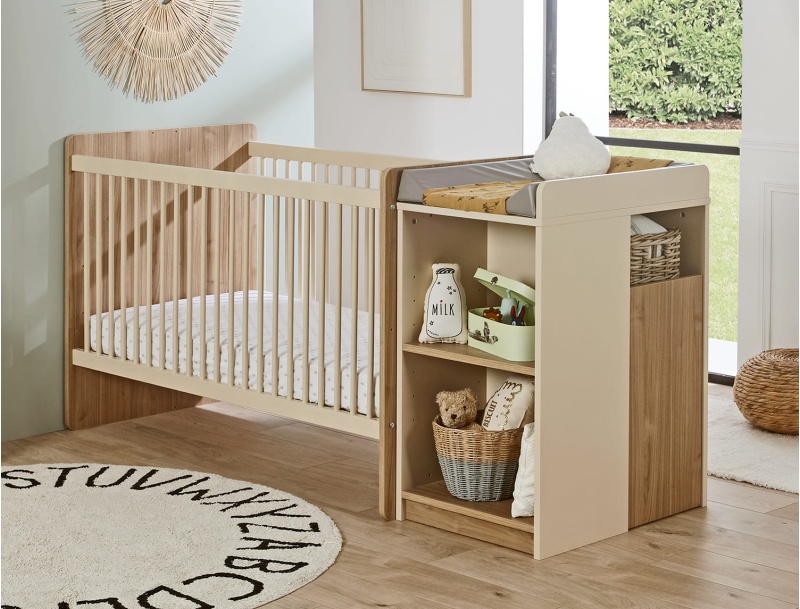
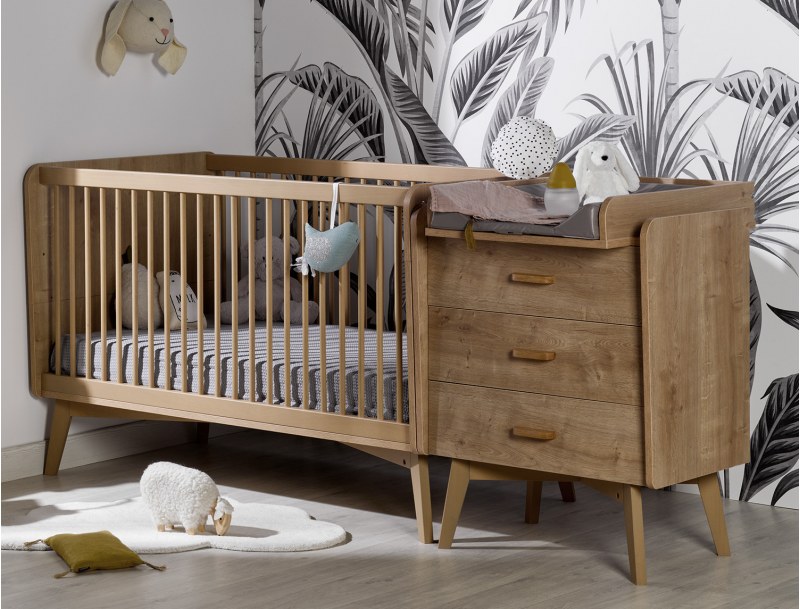
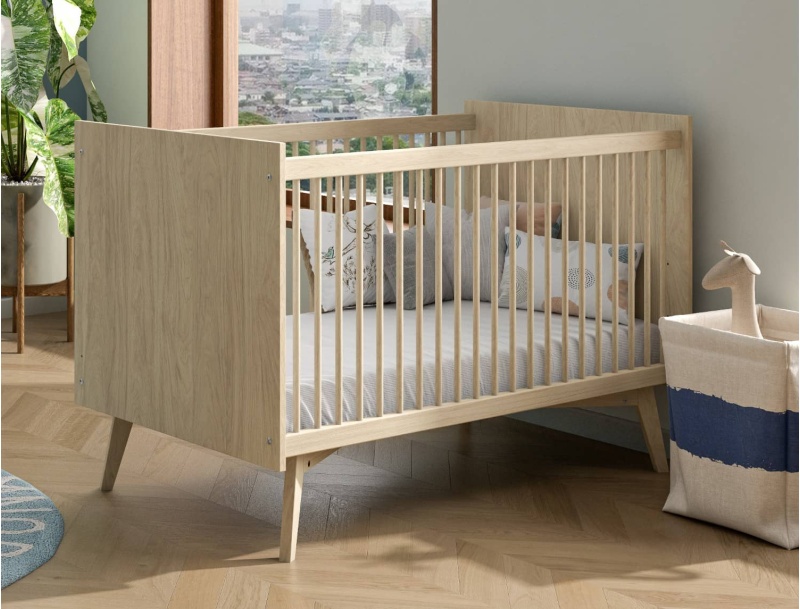
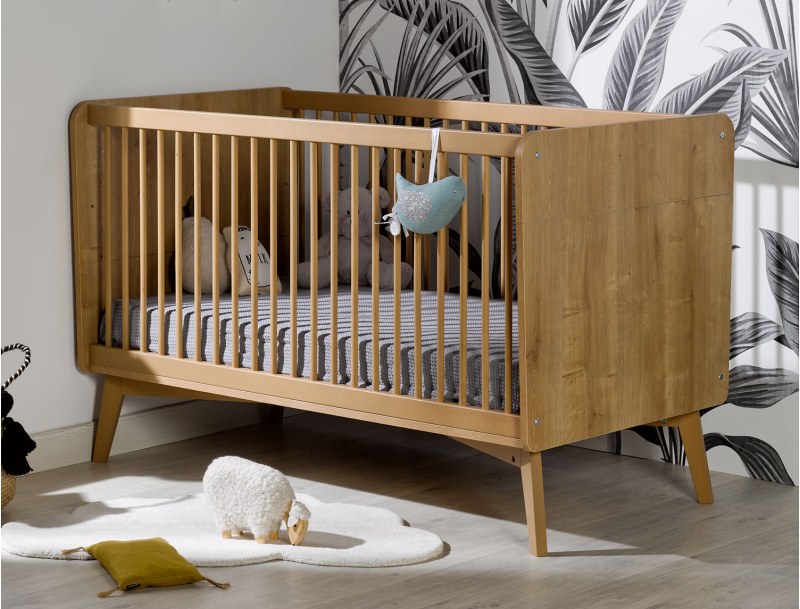
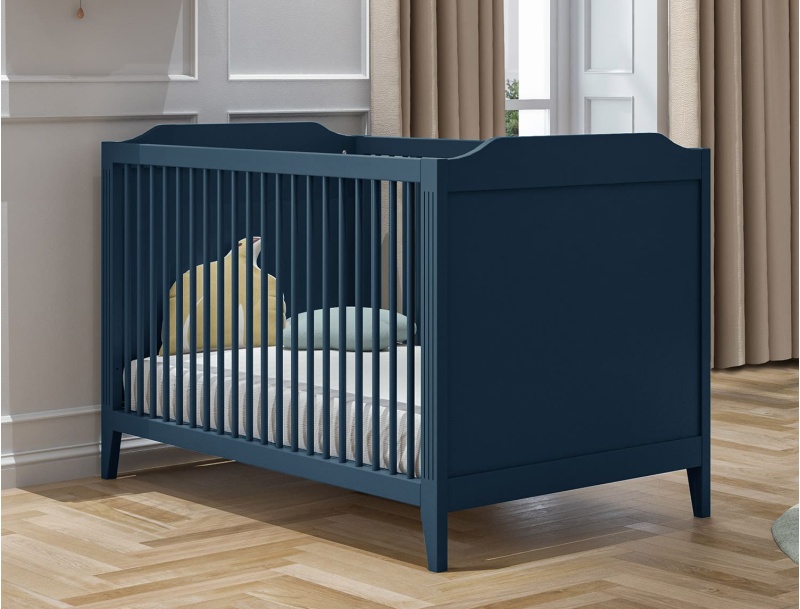
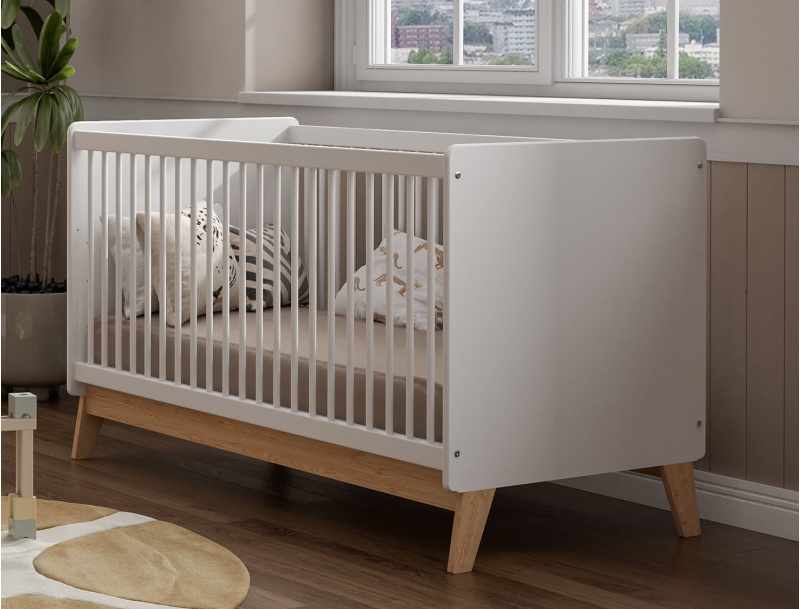
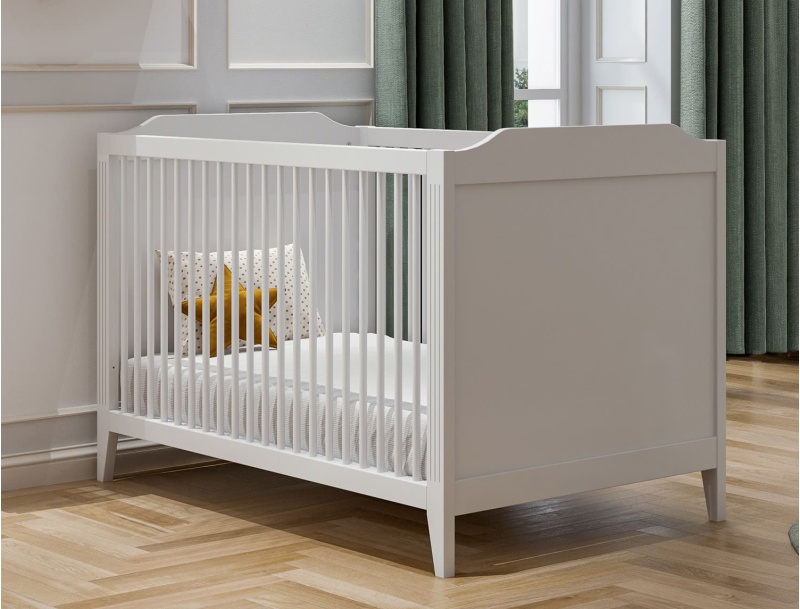
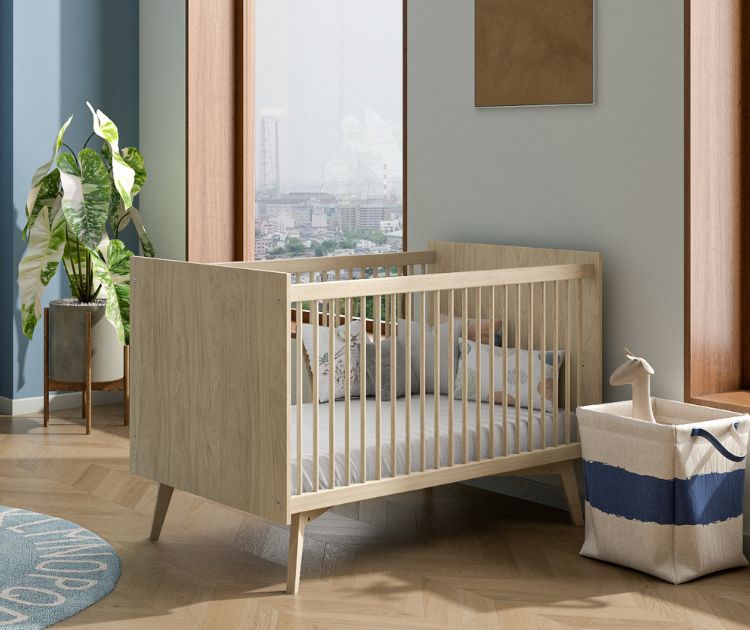
Looking for a safe alternative to a baby bed attached to the parents' bed? The most obvious solution remains installing a classic crib with bars directly in your bedroom. With its four closed sides, it offers maximum safety that open systems don't always guarantee.
This configuration is ideal for reassuring everyone. You hear baby, you can soothe them with one hand, but everyone keeps their territory. This is the very definition of "co-sleeping in separate beds": a personal sleep space for them, proximity for you.
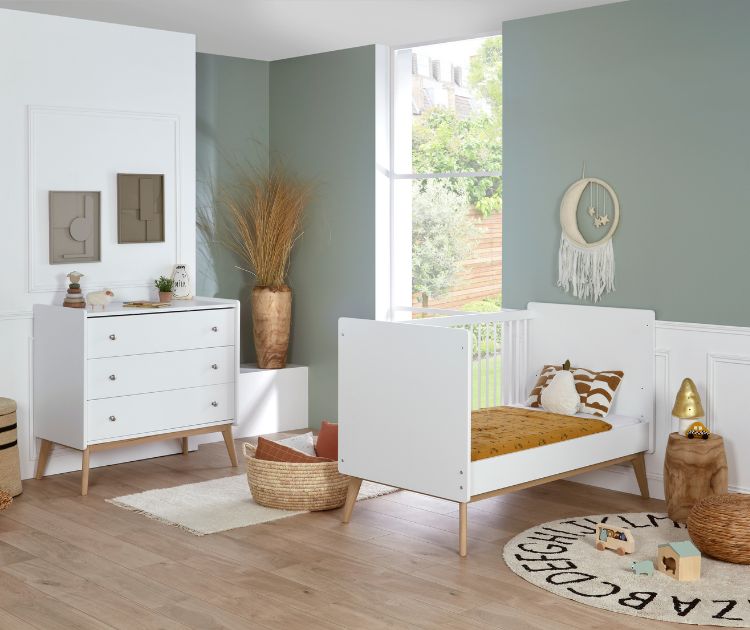
The smart choice: opting for a bed that grows with them
Why buy a new bed every two years? The convertible baby bed represents the most rational option for your budget. It's a smart investment that precisely adapts to your child's growth, from birth until their first school years.
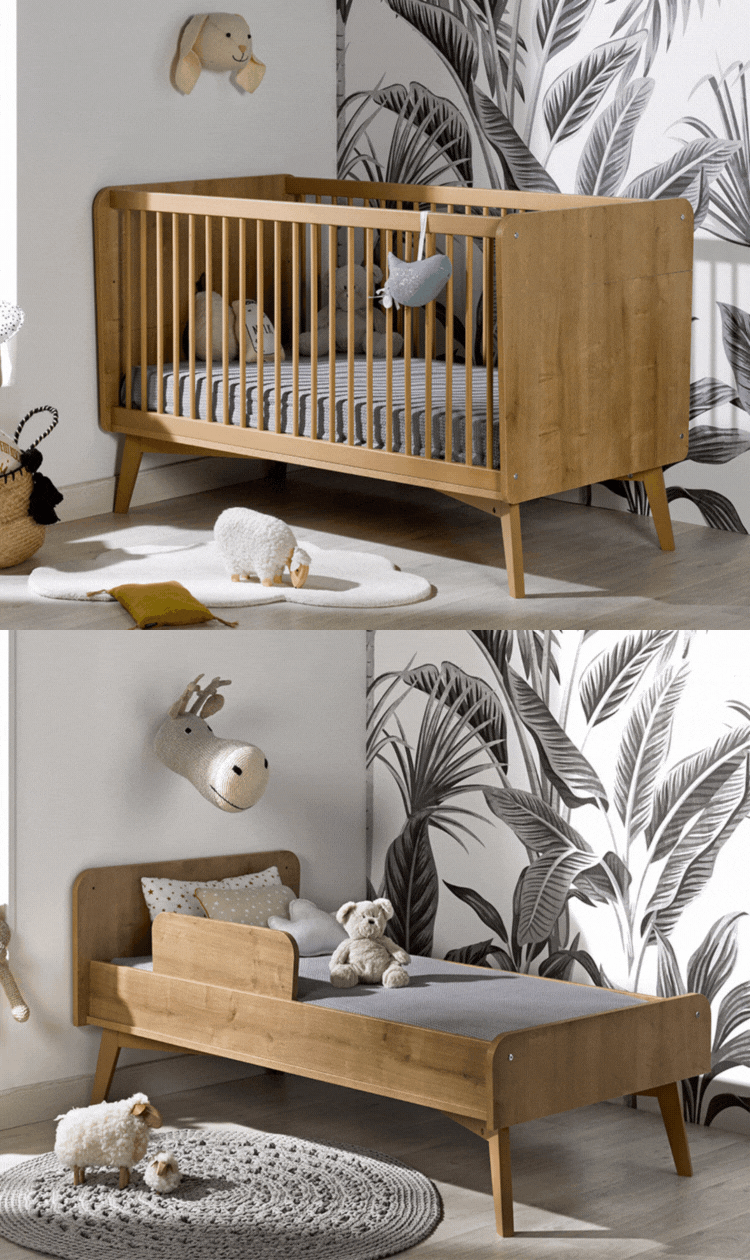
It begins its life as a secure cradle near you during the first months. Then, it simply transforms to follow the child's autonomy. You thus avoid the chore of multiple purchases and useless storage of obsolete furniture.
Quality above all: healthy materials for their nights
Furniture composition is a criterion many parents wrongly neglect. Favor the incomparable robustness of an eco-friendly wooden bed. Besides being solid, PEFC-certified wood guarantees responsible forest management. It's an ethical choice for your child's future.
Also think about what your baby breathes eight hours a night. We strongly recommend furniture with low formaldehyde levels and water-based paints without solvents. It's the only way to ensure a 100% healthy and risk-free sleep environment.
The convertible baby bed: parents' and child's best ally
A single purchase for several years of peace of mind
No more furniture carousel every six months. The convertible baby bed replaces the bassinet, the crib, then the first junior bed. It's a unique and cost-effective purchase that durably preserves your family budget.
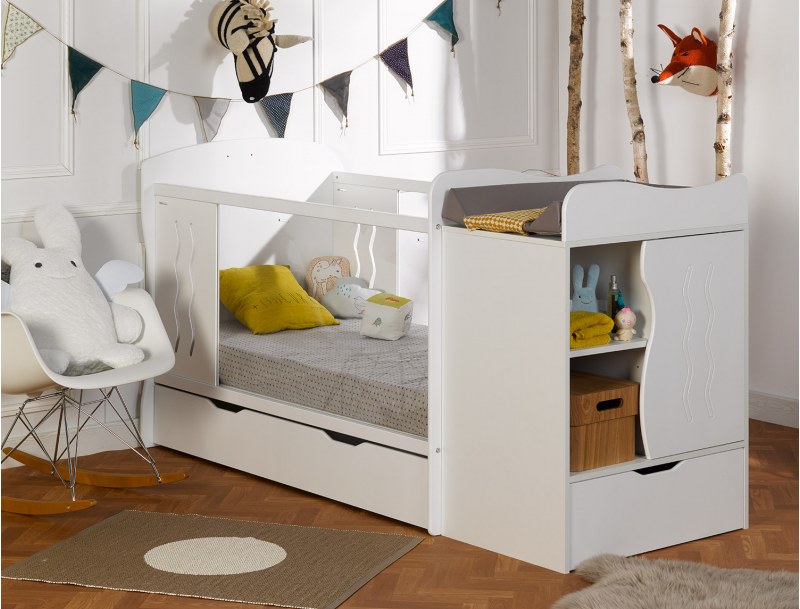
High position (0-6 months): an adjustable height mattress base to avoid hurting your back when picking up baby.
Low position (6 months - 2/3 years): a secure crib with bars when baby starts standing up.
"Toddler bed" position (from 2/3 years): one or more bar panels are removed to create a big kid bed, promoting the child's autonomy.
The combination bed: the all-in-one solution to optimize space
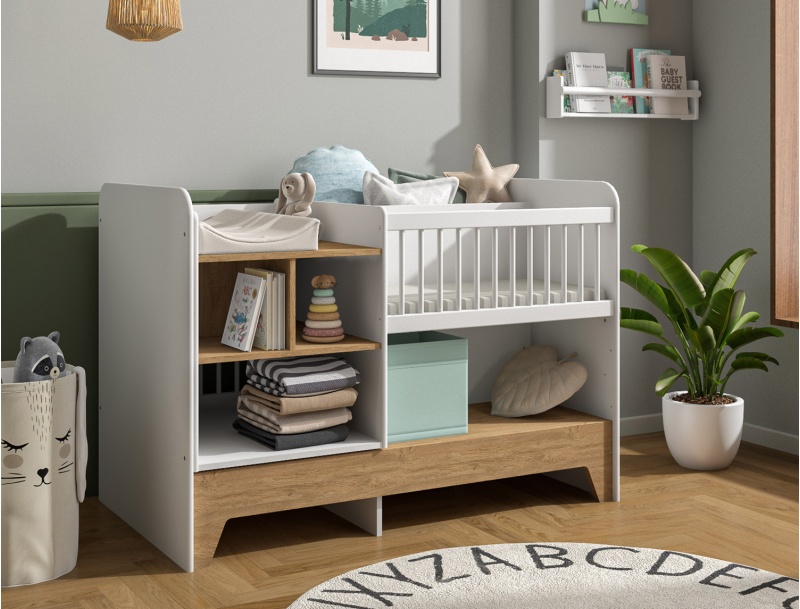
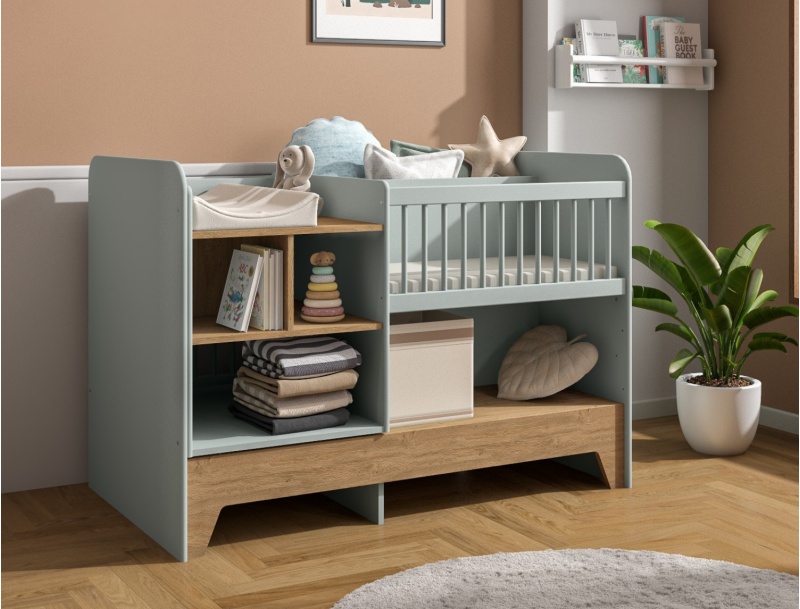
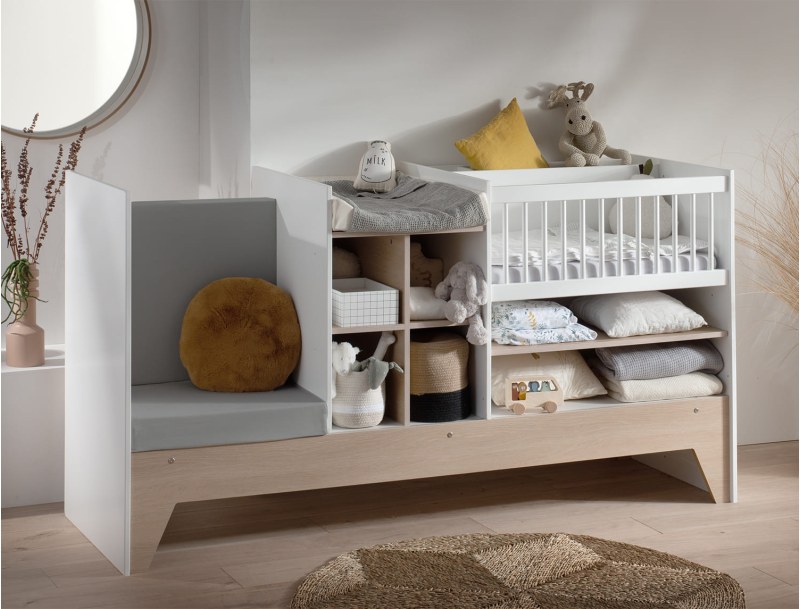
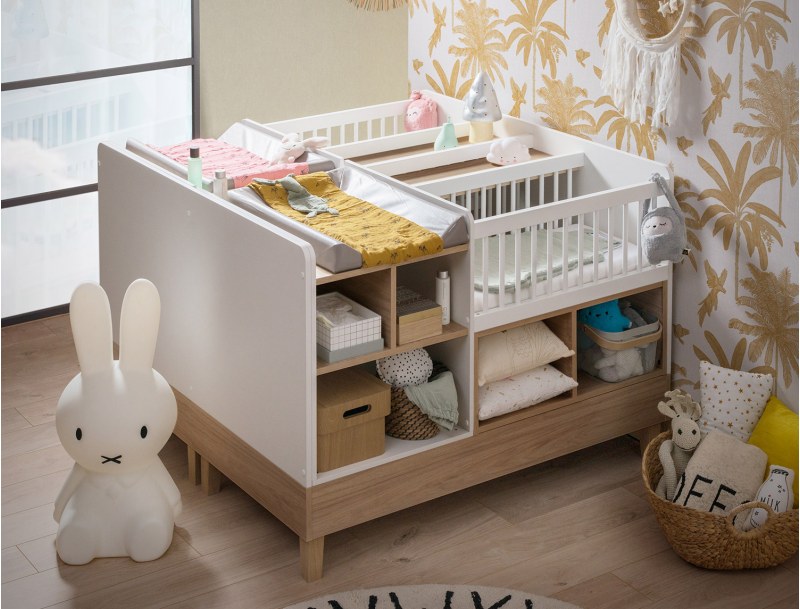
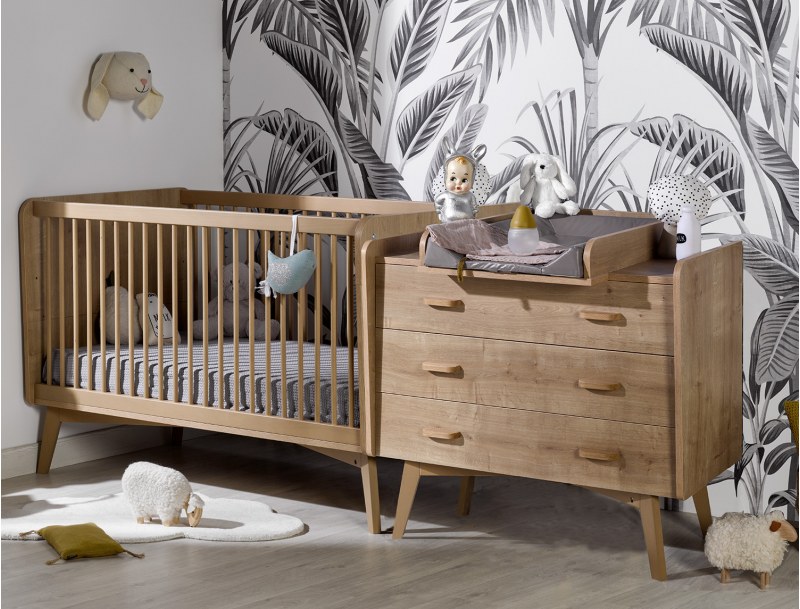
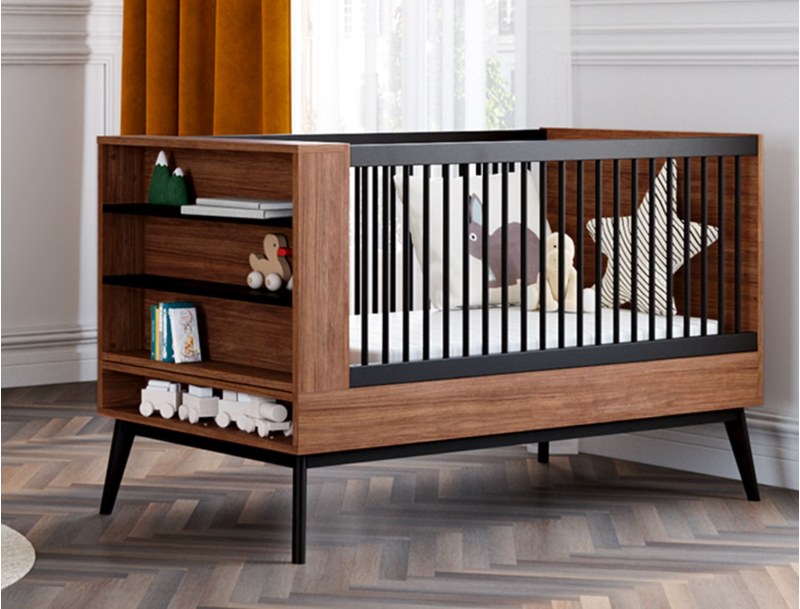
Short on space? The combination baby bed is an ingenious solution that integrates sleeping, a changing dresser, and spacious storage. It's the all-in-one furniture par excellence for organized parents.
It's the ideal configuration for small spaces. You have everything within reach for changing, from birth through the first years, without unnecessarily cluttering the room.
Beyond the practical aspect, this choice psychologically supports your child. They keep the same bed, their familiar cocoon, which is enormously reassuring during transitions and avoids distressing loss of bearings.
The transition to an open "toddler bed" is a major milestone. The child can get up and go to bed alone, an immense pride anda big step towards autonomy. They thus gain independence in complete safety.
Preparing a gentle transition to their own room
Whether you opted for a classic bed or a convertible bed, the time will come when your child (and you!) will be ready for the next step: the move to their own room.
The right time is when you feel it
Forget social pressure, there's no ideal age set in stone. While recommendations suggest waiting until 6 months, the right timing depends mainly on how parents feel and the child's maturity.
Does your little one sleep through the night? Do your slightest movements seem to wake them when the baby bed attached to the parents' bed was supposed to soothe them? It might be the signal. Listen to yourself above all, without giving in to external pressures, because each family has its own rhythm.
Familiarizing baby with their new environment
Don't skip steps. Start by spending playtime in their future baby room so they associate it with a positive and fun place. Once this space is tamed during the day, suggest napping there for progressive acclimatization.
The undeniable advantage of the convertible bed? Your child keeps their bearings. Since they already sleep in their own bed, only the location changes, not their direct sleep environment. This reassuring continuity greatly facilitates acceptance.
The first night: patience and reassurance
For the big leap, strictly maintain the usual bedtime routine: bath, story, cuddle. Speak calmly to explain this change. They need to feel secure, so don't hesitate to reassure them of your presence right next door, within earshot.
Let's be honest, the first night might be chaotic. That's completely normal. Patience is key here. If crying persists, don't force it: try the experience again later, without drama or guilt.
Keeping baby close is natural, but safety remains the priority. Rather than a short-lived bedside sleeper, the convertible bed placed in your room represents the wisest choice. It offers peaceful and lasting sleep, accompanying your child from their first nights until their independence in their own room.
The World Health Organization (WHO) does indeed recommend sharing a room with your infant, ideally until 6 months. This reassuring proximity significantly reduces the risks of sudden unexpected infant death and facilitates nighttime breastfeeding. However, the golden rule for safety remains room-sharing, not bed-sharing.
This practice, often called "bed-sharing," is strongly discouraged by healthcare professionals. The parents' bed is not a safe environment for a young child: the mattress is often too soft, and the presence of bulky comforters or pillows represents a real risk of suffocation. It's preferable to opt for a separate sleep space.
Beyond the risk of suffocation from bedding, bed-sharing exposes the child to dangers of crushing during parents' deep sleep or falling. Additionally, adults' body heat can cause hyperthermia (overheating) in the infant, which is a major risk factor. An adult bed simply doesn't meet the strict safety standards required for a baby's sleep.
When practiced safely (each in their own bed), shared sleeping strengthens attachment bonds and soothes the baby, who feels their parents' presence. This allows parents to be more responsive to the child's needs without having to fully get up, thus promoting faster falling back asleep for everyone. It's a solution that combines serenity and practicality.
This is the ideal solution to combine proximity and safety. Installing a classic crib or convertible bed in your room allows the child to have their own space, with a firm and appropriate mattress. You thus enjoy the benefits of co-sleeping while guaranteeing your child a healthy environment, without the risks associated with sharing the same bed.
Sleeping in the same room isn't a bad habit if it meets the infant's safety needs during their first months. However, sharing the same bed can create a dependency on accompanied sleep, making acquiring autonomy more complex later on. The important thing is to define a clear framework where the child progressively learns to sleep in their own space.
For their safety, a baby should sleep in their own bed from birth, whether placed in your room or theirs. Regarding the move to their own room, recommendations suggest waiting until 6 months of age. This is generally when risks decrease and when the need for privacy for parents, as well as the child, becomes more apparent.
 En
En
 Français
 Deutsch
 Nederlands
 Italiano
 Español












 What Age for Bunk Bed: Standards and Safety
 When to put baby in their room: age and transition
 Best Choice for Baby: Bed Attached to Parents or Next to Them?
 The convertible bed: furniture that grows with your child
 The bunk bed with storage and desk: discover its advantages!