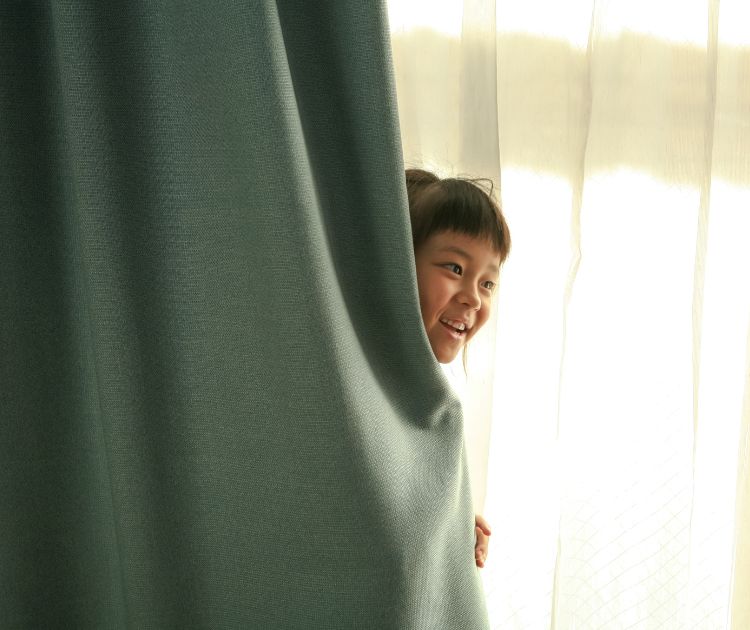
Who hasn't felt the joyful thrill of hiding, heart pounding, waiting to be discovered? If hide and seek fascinates children so much, it's because it responds to a natural need: exploring and understanding the world.
This seemingly simple game actually develops fundamental skills in children: memory, motor skills, sociability, and imagination. Discover how to make the most of hide and seek as a family.
Why are children so passionate about hide and seek?
Hide and seek naturally captivates children from their earliest years.
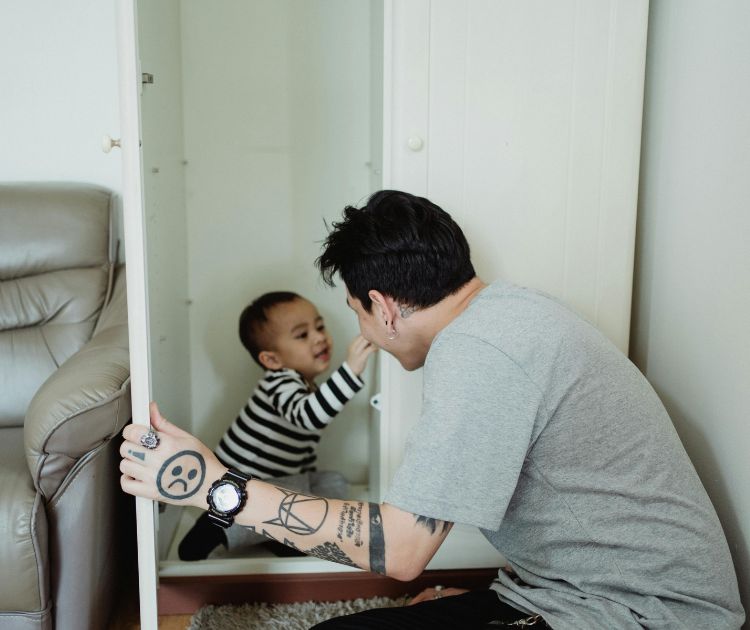
But why? Because it addresses a fundamental need in toddlers: understanding that even when hidden, objects or people continue to exist. Called "object permanence", this cognitive skill appears between 12 and 18 months and explains why your baby laughs out loud when you suddenly reappear after disappearing behind your hands.
Thus, by regularly playing hide and seek, your child trains their cognitive abilities while developing self-confidence. They learn to anticipate, memorize hiding places, and interact with other children, forging strong social bonds from their early years.
Did you know? ? According to a neuroscientific study, playing hide and seek for just 15 minutes per day improves spatial memory by 30% in children between 2 and 5 years old.
Basic principles of hide and seek
Hide and seek remains an essential game where a seeker must find hidden players. Its fundamental principle is simple: while the seeker counts, others hide in their hiding spots.
In practice, when the seeker spots a player, they immediately announce it. This playful game particularly appeals to children through its universal simplicity. It's worth noting that this activity crosses generations and borders, establishing itself as a classic worldwide.
But remember: each hiding spot must remain accessible to preserve the spirit of the game. Experienced players know well - it's better to vary strategies between each round. That's why the world of hide and seek continues to stimulate the imagination of both young and old, while maintaining rules accessible to all.
What's the ideal age to start playing hide and seek with your child?
Start from 12 months with a simplified approach.
At this age, focus on visual play, where you briefly disappear behind a cushion or furniture, thus stimulating their learning of object permanence. From age 3, introduce more structured rules to enhance their social and emotional abilities.
How does hide and seek support children's cognitive and motor development?
Hide and seek strengthens both the brain and the body.
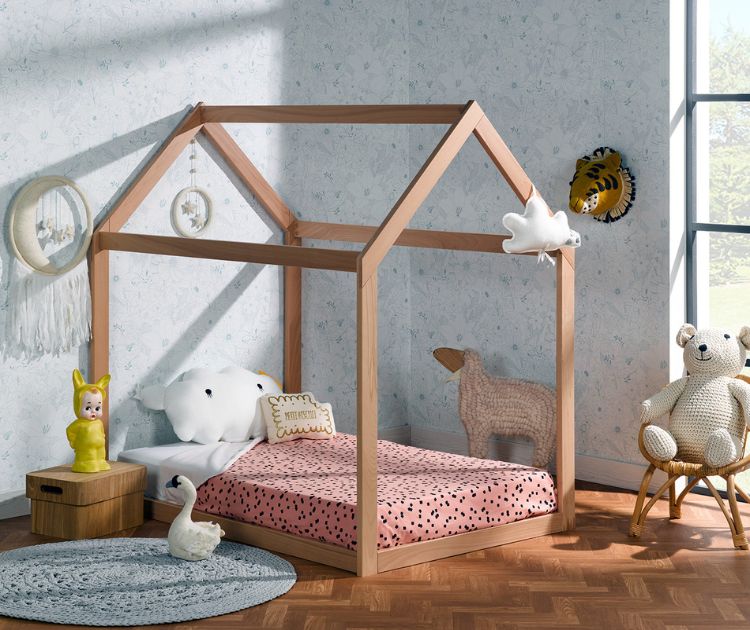
On the cognitive side, looking for an ideal hiding spot or guessing where one's friends are actively stimulates logical thinking, decision-making, and anticipation. On the motor skills side, running, crawling, sliding under a table or climbing on a cabin bed greatly improves the child's agility and physical coordination.
Practical case ?: Lucas, 4 years old, very shy, developed better self-confidence by regularly playing hide and seek in his room equipped with a children's loft bed, which encourages him to explore while feeling secure.
Hide and seek, more than just a children's game
Let's see how this playful activity concretely helps young ones progress while exploring their world!
Patience: Holding your breath in a hiding spot or waiting your turn to be the seeker - the game teaches waiting management. A subtle training in self-control.
Cooperation: Some versions of the game transform players into a united team. Together, they devise strategies to locate hiding places or rescue their companions.
Motor skills: Running, crawling, balance... This world of constant movement stimulates the body while mastering space. Daily exercise disguised as fun.
Spatial Awareness: Each game becomes an active search. Young ones refine their judgment of distances and volumes, skills transferable to many areas.
Social Rules: Respecting turns, accepting loss, negotiating field limits... All learning experiences that structure interactions between players.
Note that this playful activity particularly impacts children aged 3-8. It encourages them to experiment with their bodies in space while sharpening their seeker spirit.
The social benefits are worth examining. By taking turns as both hider and active seeker, the child discovers different relational positions. A micro-society where mutual aid and fair play are experienced.
As for the cognitive dimension, each game engages memory and reasoning. Remembering previously used hiding spots, anticipating others' strategies... A true laboratory of spontaneous research!
In short, this traditional game reveals all its richness when observed closely. It simultaneously shapes body and mind, while preparing children to navigate the social world. A versatility that undoubtedly explains its longevity across generations.
Hide and seek and health: why playing regularly helps your child grow healthy?
Hide and seek is a beneficial game for your child's overall health.
According to neuroscientific studies, regularly playing hide and seek stimulates children's physical and emotional health, improving their stress management and ability to interact with others. This game also promotes better sleep and helps prevent sedentary behavior, essential for overall balance.
What emotional and social benefits does hide and seek bring to children?
Games like hide and seek strengthen family bonds.
Each game allows children to learn to respect rules, practice patience, and manage their emotions, particularly in cases of frustration or defeat. These social skills will facilitate their life in community settings (school, leisure activities) and promote better self-confidence.
Hide and seek game rules: learn the basics and variations
The classic rules of hide and seek are easy to master.
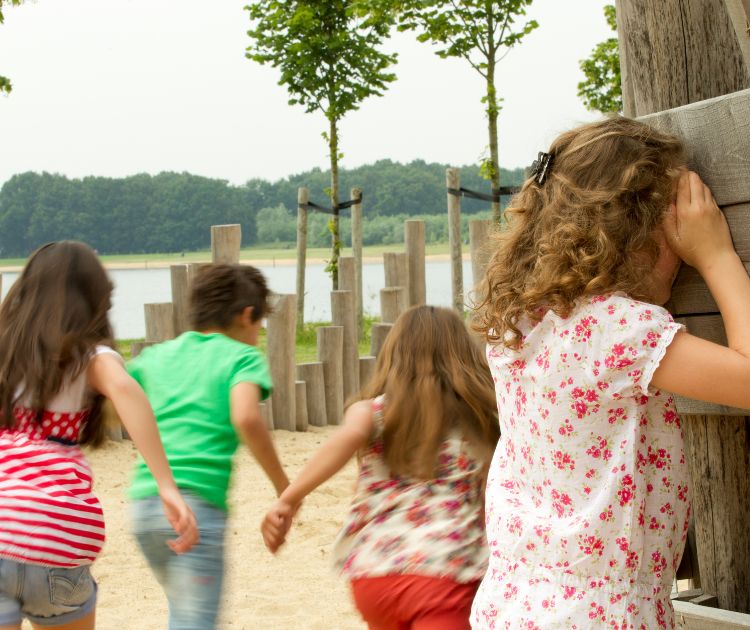
The principle: a child closes their eyes, counts to ten or twenty while others hide. Then, the "seeker" must find the hidden players. The last one to be discovered wins the game. But have you thought about trying other variations, like reverse hide and seek, also called "Sardines"?
Reverse hide and seek: how to play "Sardines"?
Do you know the reversed version of hide and seek called "Sardines"?
This variant transforms the classic concept: only one person hides, and all other players must find them. As soon as a player discovers the secret hiding spot, they must hide in the same place, creating a compact group like sardines in a can. This variant strengthens team spirit, the sense of sharing, and often causes joyful family laughter!
Original hide and seek variant for children's birthday
Host a party by creating a themed hide and seek!
Choose a theme (pirates, princesses, dinosaurs...) to transform the game into a true scripted adventure. Hide clues or small treasures that will guide children to a final grand prize. This way, your birthday party becomes an immersive adventure that children won't forget.
Set up the ideal children's room for playing hide and seek
Have you thought about adapting furniture to optimize hide and seek in your children's room?
A house bed or a loft bed from Chambrekids becomes a magical hiding place. Place accessible low storage units or open niches where children can easily hide safely. Thanks to playful and secure furniture, the bedroom becomes an ideal place to play, stimulate imagination, and promote autonomy for little adventurers.
5 creative hiding spot ideas easy to integrate into a child's bedroom
Spacious and secure Toy chest, easily accessible to children
Outdoor hide-and-seek: tips for playing in the garden as a family
Playing hide and seek outdoors develops the spirit of adventure.
To create safe and fun hiding places, think of clearly defined spaces like low bushes or garden sheds. Give children clear instructions to prevent them from wandering too far or taking unnecessary risks. A variation like treasure hunt hide and seek, where each hiding place leads to the next clue, will transform your garden into a true family adventure ground.
"Hide and Seek Treasure Hunt" variant: how to easily organize it at home?
Hide clues in several pre-identified hiding spots. Each discovered hiding place leads to a final treasure: candy, small gift, or exclusive coloring page. An original way to add an exciting twist to your usual game of hide and seek.
Adapt the hide and seek rules to increase the challenge
Special attention to outdoor play
All ages
Suggest a sound signal or phrase to end the game
Ensure no child stays hidden for too long
Adapt the hide and seek rules according to the number of players
Vary the play locations
Legend: This table presents recommended precautions and adaptations for different age groups, to ensure a playful experience adapted to each player.
The choice of play areas varies according to the environment and the abilities of the players. Hiding spots must match the maturity level, favoring simple spaces for younger ones. Education researchers emphasize the importance of adapting the game world to children's cognitive development.
For nighttime games, using luminous accessories facilitates searching while maintaining a playful aspect. This approach allows players to orient themselves easily, while preserving the fun of hiding. Child development professionals actually recommend regularly varying play locations to stimulate creativity.
 En
En
 Français
 Deutsch
 Nederlands
 Italiano
 Español













 What Age for Bunk Bed: Standards and Safety
 When to put baby in their room: age and transition
 Best Choice for Baby: Bed Attached to Parents or Next to Them?
 The convertible bed: furniture that grows with your child
 The bunk bed with storage and desk: discover its advantages!