Language development in babies starts from a very young age. Young children often begin to utter a few words, and very quickly, they can make themselves understood more easily. To support them in this learning process, there are many things parents can do to help their child develop language. So what are the stages of language development in babies and how can you help your child to speak?
The stages of language development in babies
Language development in babies occurs in several stages throughout their evolution and growth.
The first months: The basics of preverbal communication
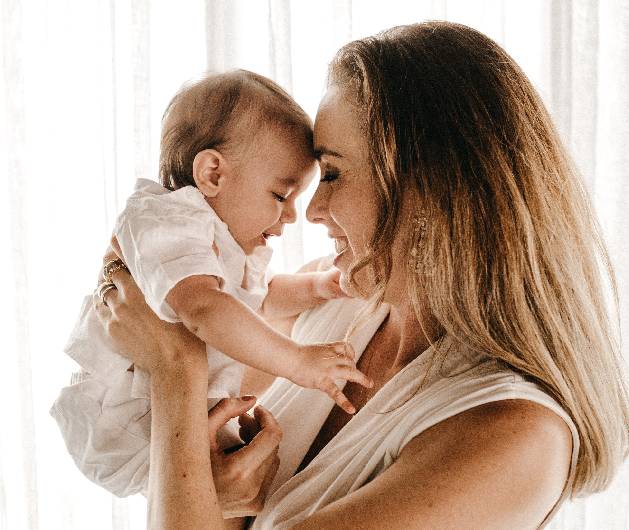
From the first days of life, baby hears and therefore becomes aware that there is a way to communicate. Hearing their parents talk to them allows them to record sounds and become familiar with language. Thus, between 2 and 4 months, they will also start wanting to express themselves with syllables and convey emotions and information through speech.
Then, the pace intensifies as sequences of syllables will be pronounced, as well as simple words like a name, mama, dada, etc. It's around the age of one year that your child will start to express other words and especially to understand many others. However, the age at which children truly start speaking varies from one baby to another. So don't panic if your child takes their time.
Between 6 and 12 months: First babblings and cooing
Between 1 and 2 years: First words and first sentences
After one year, baby will be likely to try simple word combinations to express a need. From then on, it becomes even easier to understand what they want to express and they will only progress over the following months.
Practical tips to help baby develop their language
Like motor skills, language is something you can help your child develop on a daily basis. For this, there are several good reflexes to have and habits to put in place.
Talk regularly to baby and narrate daily activities
It's certainly the best way to familiarize baby with language: talk to them. Explain what you're doing, tell them things, because even if you have the feeling that your child doesn't understand, their brain is recording and becoming familiar with sounds, intonations, etc. You'll notice that your child will often listen to you with great attention. So don't hesitate to communicate with your baby from a very young age to help them develop language later on.
Use appropriate and varied language to enrich their vocabulary
If you want to help baby enrich their vocabulary and understand you, use language adapted to a child. What is called "baby talk" even seems, according to some studies, to have a very positive impact on the child's development.
Read age-appropriate books and tell stories
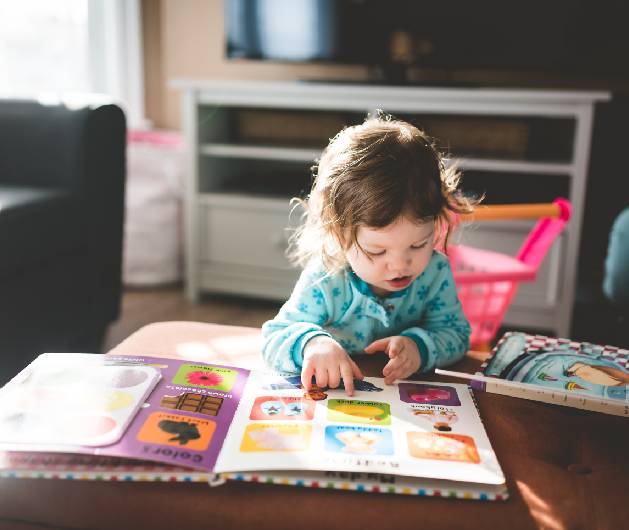
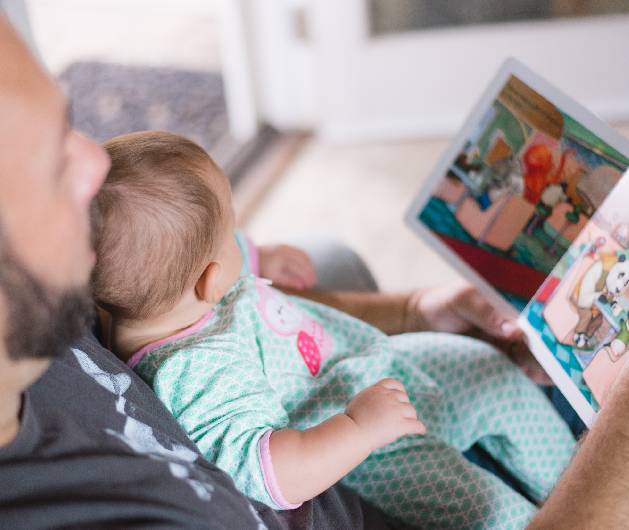
Stories are also a very good way for baby to discover new words and associate certain terms with an idea thanks to images. Don't hesitate to stock up on books suitable for your baby's age. This shared activity is ideal for the child's development, but also for spending time together, before bedtime for example.
Sing songs and recite nursery rhymes
Singing songs is also a very good way to exercise baby in pronouncing certain words. Learn nursery rhymes that you can sing to them, but also sing together afterwards.
Multiply social interactions
Social interactions are very stimulating for baby. Interacting with their parents will of course be beneficial, but it is also interesting for a child to hear other types of people speak. Don't hesitate to introduce your baby to other adults and children from your social circle.
Promote the Montessori method
The Montessori method can be very interesting for language learning. It also recommends communicating, varying vocabulary and activities dedicated to language expression. From birth, language should therefore be part of baby's daily life to help them develop it.
What about foreign languages?
Whether baby grows up in a multicultural environment or you simply want to help them become familiar with other languages, it is entirely possible to start from a very young age. You can practice a second language daily, and baby will be able to assimilate it just as well. This can come from you by opting for songs, games, or exchanges in another language, but you can also use other means. If you have chosen a childcare option like a nanny, for example, why not choose a bilingual nanny? There are also workshops dedicated to young children to practice other languages.
Conclusion
In conclusion, whether it's French or foreign languages, baby will be listening from their first months of life. To help them acquire language more easily, integrate this practice into their daily life, talk, sing, read, interact, it's by listening to you and observing you that baby will try to reproduce what you express.
Moreover, keep in mind that each child goes at their own pace. If baby has difficulty expressing themselves, perhaps they have developed other skills first? Give them time and you will see them very soon pronouncing complete sentences!
 En
En
 Français
 Deutsch
 Nederlands
 Italiano
 Español





 What Age for Bunk Bed: Standards and Safety
 When to put baby in their room: age and transition
 Best Choice for Baby: Bed Attached to Parents or Next to Them?
 The convertible bed: furniture that grows with your child
 The bunk bed with storage and desk: discover its advantages!