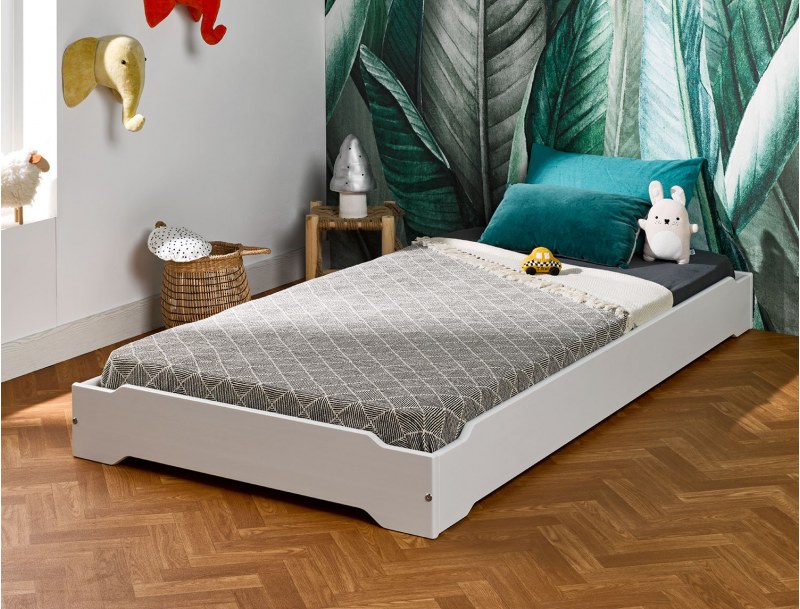
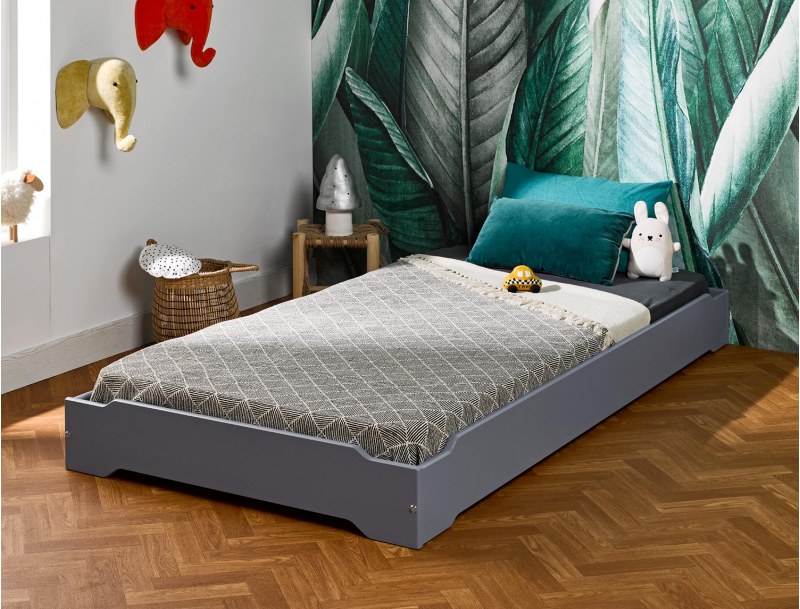
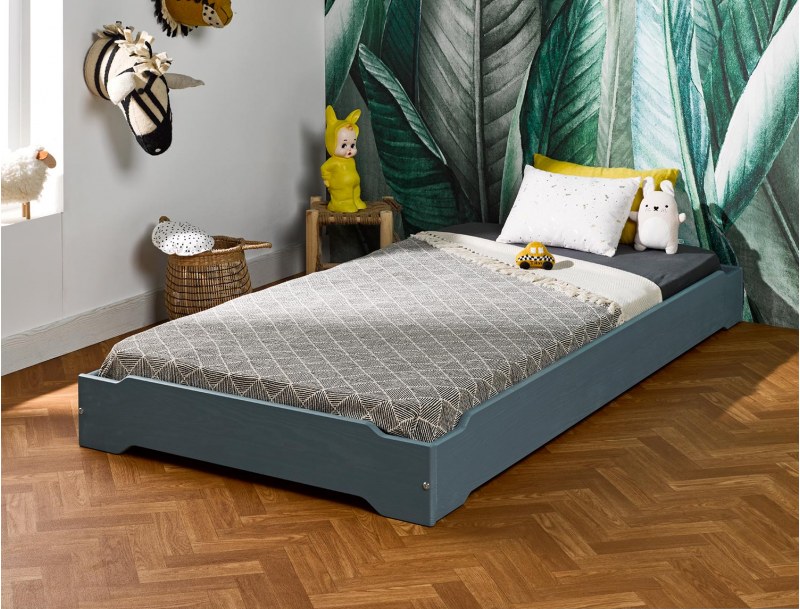
Montessori beds are becoming increasingly popular with parents concerned about their children's development and well-being. If you are also wondering about the opportunity to opt for this type of bed, you will find in this article the answers to all your questions.
What is the concept of the Montessori bed?
The concept of the Montessori bed was inspired by the pedagogue and physician Maria Montessori (1870 – 1952). Her goal is to teach the child autonomy by appropriating space. The floor bed allows them to define their spaces for sleeping, playing, reading, etc. Moreover, this easy access to their bed allows them to take a nap when they feel tired, rather than at a fixed time.
Maria Montessori believed that children are capable of doing many things by themselves and learning quickly. However, traditional education leaves them little room for maneuver. It forces them to occupy certain spaces, at certain times and for certain activities, which hinders their personal development.
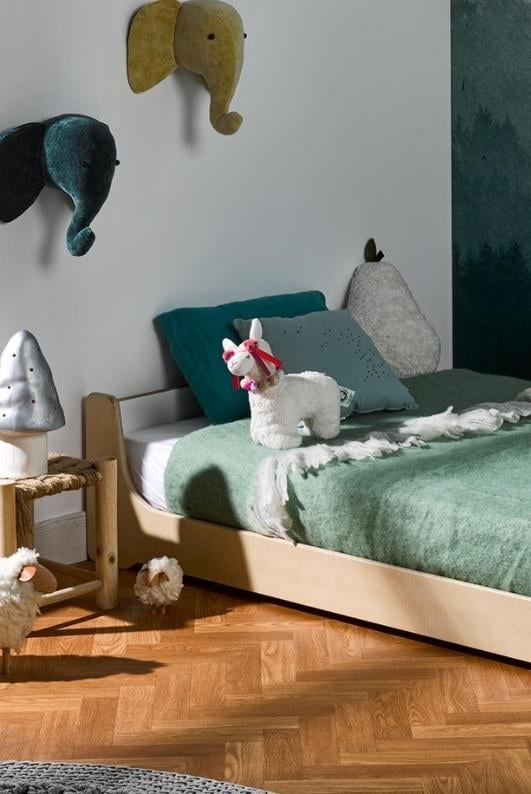
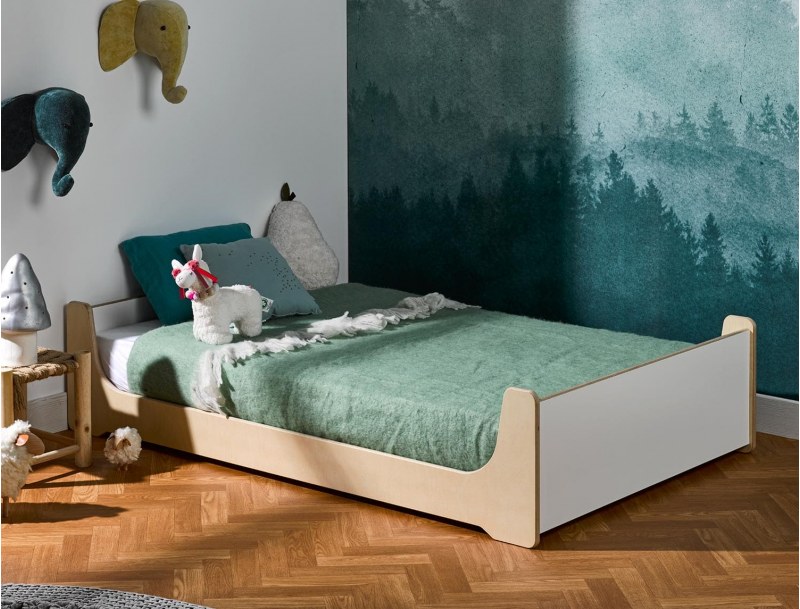
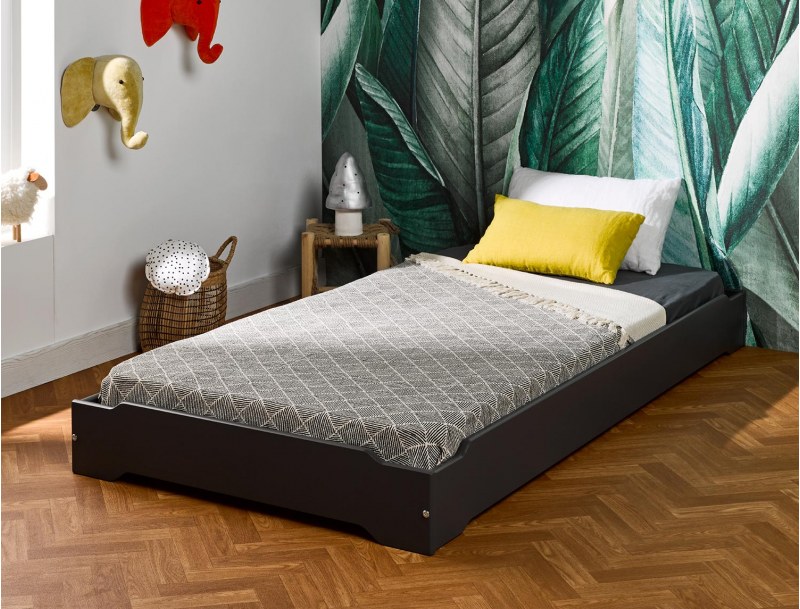
The fact that the bed is at ground level avoids any boundary in the room. For comfort, the ideal is to place it on a slatted base, rather than directly on the floor. Preferably select a thin mattress to prevent it from constituting too high a step.
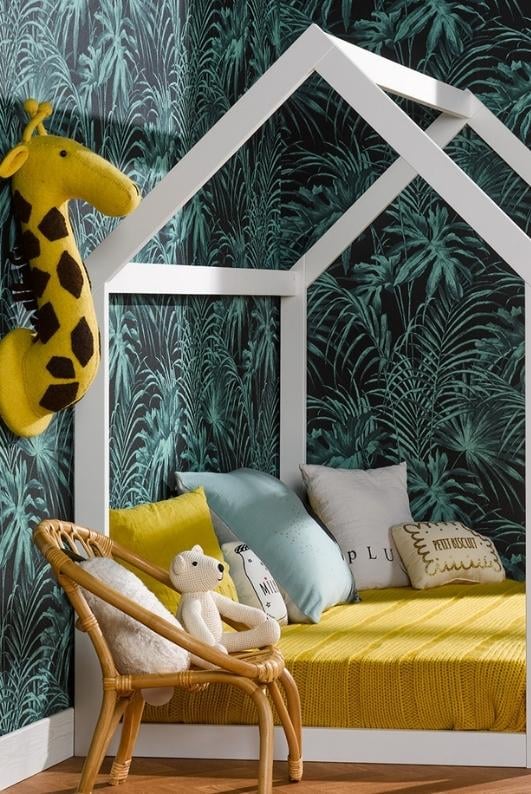
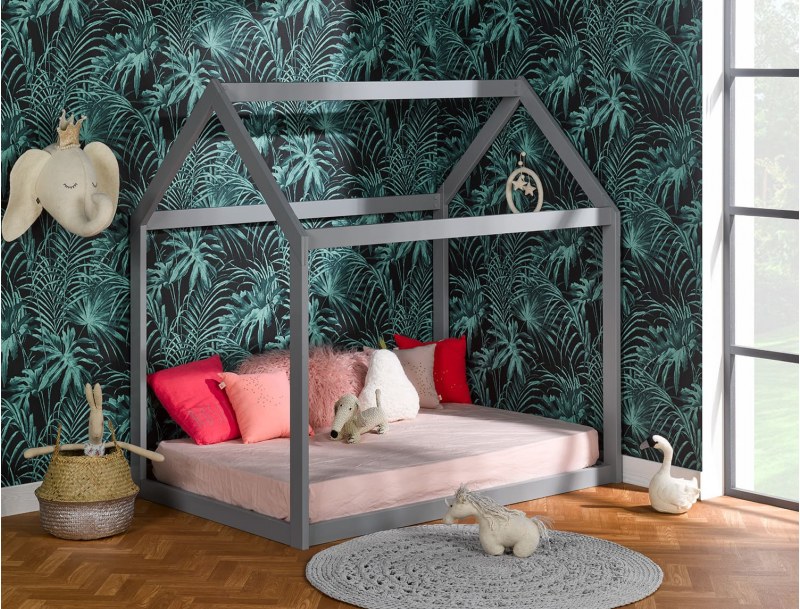
Moreover, the Montessori bed is often equipped with a structure that evokes a cabin. It reinforces the sensation for the child of evolving in a framework that belongs to them and constitutes a protective cocoon.
The advantages of the Montessori floor bed for children
The Montessori bed offers the child total freedom of movement and participates in the appropriation of their own independence. Placing the bed on the floor allows them to move freely, without any restriction. They come and go according to their needs and desires, without ever feeling constrained.
This independence can awaken concerns in parents of very young children. Some prefer to wait until they are already autonomous, from 3 years old, but the Montessori bed is also suitable for younger children.
The Montessori bed in the parents' bedroom
Parents worried about giving too much freedom to their children can initially install the Montessori bed in their own bedroom. They thus monitor their child's actions and movements, without necessarily intervening.
When they are reassured by their child's responsible attitude, it is time to move the bed to their room.
Baby floor bed: what age?
There is no specific age to offer a Montessori bed to your child. Parents particularly convinced by the Montessori method sometimes make the choice to let their child sleep in a Montessori bed from the first months, adding barriers to prevent falls.
If you want to use a Montessori bed with complete peace of mind, without having to resort to barriers, it is then advisable to wait until your child is between 2 and 3 years old.
Why are barriers important in a Montessori bed?
During the first days of their life, the newborn remains peacefully on their back and is not at risk of leaving their floor bed. However, as soon as they have enough strength to move and roll, they risk falling out of bed. They are not exposed to serious injuries due to the low height of the mattress, but they may fall on their face, hurt themselves and get stuck. Of course, there is no question of letting your child run any risk.
Removable barriers offer a perfectly safe solution to prevent any fall. These are panels that you attach to the edges of the Montessori bed. If your child rolls during the night, they are held back by the barriers. As soon as the child has gotten into the habit of not going beyond the edges of the bed, you simply remove the removable barriers.
If the bed is placed against a wall or in a corner of the room, you reduce the number of barriers needed. This allows you to limit your budget. Nothing prevents you from moving the bed to the middle of the room, with possibly only the head against the wall when the child no longer needs barriers.
The dangers of cribs with bars
Parents wary of the Montessori method highlight the dangers to which the child is exposed if they leave the bed without supervision. However, there comes an age when the child in a classic crib with bars begins to feel desires for independence. They then begin to climb the bars of their bed when their parents' backs are turned, which is much more dangerous than a roll out of a Montessori bed.
The boundaries of the bedroom
When your child walks, on all fours or standing, you must provide security on the bedroom door, so that they do not sneak out during the night. If they are not yet mature enough to be aware of the dangers of the house, they may fall down the stairs or manipulate objects they should not touch.
With a Montessori bed, you must ensure that they are not in any danger in their room, regardless of the time of day or night. To avoid any risk in the rest of the house, the bedroom door must be equipped with a device that they cannot unlock.
How to get your child used to the Montessori bed
If there is no specific age to adopt a floor bed, it appears easier to wait between 5 and 10 months, when they have started to sit up and move around on their own.
The advantage of choosing the Montessori bed from an early age is that you don't need to buy a child's bed. As soon as they have acquired the ability to move, you can remove the barriers to let them apprehend the space of their room.
On the other hand, by avoiding the passage through the crib with bars, you put all the chances on your side for your child to get used to their bed quickly.
If you decide to use a Montessori bed when the child has become accustomed to the crib with bars, you can use removable barriers to make the transition. The child does not feel destabilized, as they find the same bed configuration.
Many parents choose to reserve the Montessori bed for daytime when the child can use it to play or take a nap. On the other hand, they continue to let them sleep temporarily in their crib with bars at night, to ease the transition.
This method allows the child to take their time to adapt.
Evolving Montessori bed: for a child comfortable in their bed
Once they have found their bearings, children love their Montessori bed. Some even appreciate keeping it for as long as possible. You have two solutions for this.
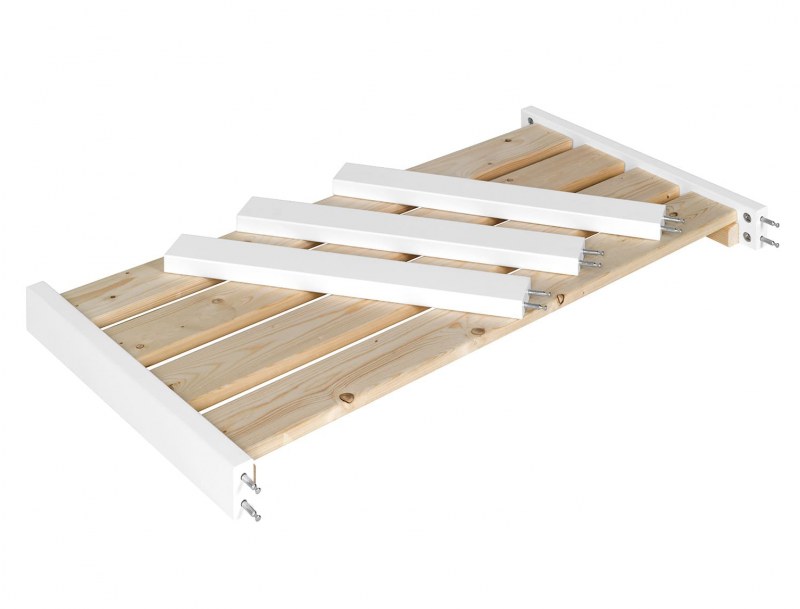
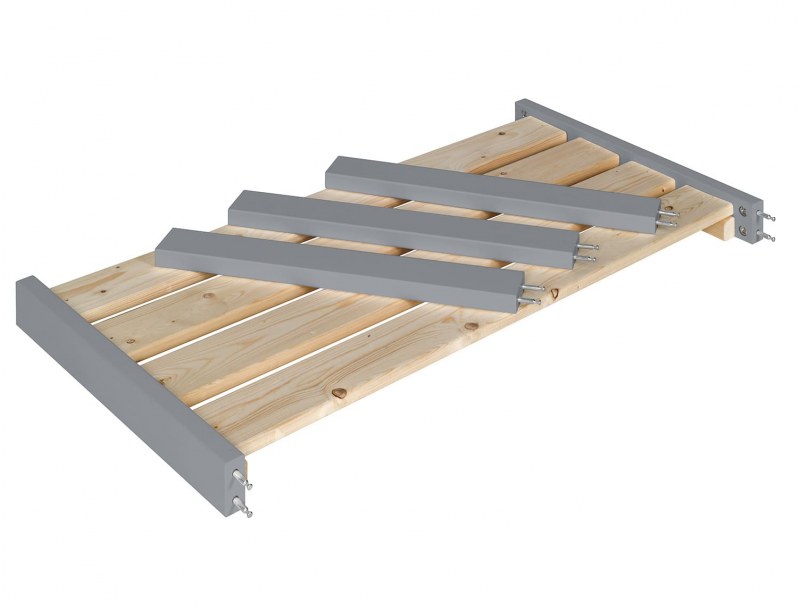
The 90 x 140 cabin bed exists in an evolving form. When the child becomes too big, you buy extensions for the slatted base, as well as cleats to lengthen the cabin-shaped structure.
If your mattress is recent and still in good condition, you can buy an extension alone. However, if it shows signs of fatigue, it is better to buy a new 90 x 190 mattress. The quality of mattresses is fundamental for good sleep, but also for good posture. This is all the more important as the child is still in their growth phase. Their back in particular needs to be well supported when in a horizontal position.
The evolving Montessori bed can be used as a floor mattress in a 90 x 140 format when the child is still young. The structure can then be transformed to form a 90 x 190 bed at normal height.
Whatever option you choose, you're buying a bed designed to last as long as possible, from early childhood to your child's adulthood.
What bedding to choose for the Montessori bed?
It is not recommended to place a mattress directly on the floor, as comfort suffers. The slatted base is the one that best adapts to the Montessori concept. It only slightly raises the mattress, it withstands perfectly over the years and guarantees the proper support of the mattress, essential for comfort and growth in good conditions for the child.
Avoid spring mattresses which are heavy, not very comfortable and often generate noise. On the other hand, they tend to age poorly. It is better to choose a foam mattress with hypoallergenic treatments against dust mites and antibacterial.
Thickness is by no means a guarantee of quality. For a child, a mattress of 13 to 16 centimeters thick is sufficient, provided that its foam offers a density adapted to their weight.
Finally, avoid memory foam mattresses for young children. When they are young, they have difficulty turning over, as they tend to sink into it. On the other hand, this type of mattress releases more heat than a classic mattress and causes excessive sweating.
 En
En
 Français
 Deutsch
 Nederlands
 Italiano
 Español













 What Age for Bunk Bed: Standards and Safety
 When to put baby in their room: age and transition
 Best Choice for Baby: Bed Attached to Parents or Next to Them?
 The convertible bed: furniture that grows with your child
 The bunk bed with storage and desk: discover its advantages!