 En
En
 Français
 Deutsch
 Nederlands
 Italiano
 Español

Your cart
There are no more items in your cart




 What Age for Bunk Bed: Standards and Safety
 When to put baby in their room: age and transition
 Best Choice for Baby: Bed Attached to Parents or Next to Them?
 The convertible bed: furniture that grows with your child
 The bunk bed with storage and desk: discover its advantages!
Which toy for a 2-year-old child to choose for development and motor skills?
Categories:
Child Development
2-year-old child:
which toy to choose for their development?
Faced with a plethoric offer, identifying which toy for a 2-year-old child will effectively stimulate their motor skills without neglecting safety often represents a challenge for parents. This guide compares essential developmental supports, highlighting the differences with a toy for a 1 or 3-year-old child. You will discover precise selection criteria and sustainable ideas to promote their learning and imagination in daily life.
Which toy for a 2-year-old child?
At 2 years old, a child needs toys that develop motor skills, coordination and autonomy. The best choice combines movement, manipulation and imagination.
Here are the 3 types of toys most suitable for 24 months:
- Motor skills games (climbing & balance)
Motor arch, slide, rocking toy… They strengthen balance, confidence and overall coordination. - Manipulation and thinking games
Wooden puzzles, stacking towers, nesting games. They stimulate logic, patience and fine motor skills. - Simple imitation games
Small kitchen, workbench, doll or figurines. They develop language, imagination and socialization.
? At 2 years old, prioritize stable, durable and safe wooden toys that allow the child to act independently while exploring their physical abilities.
3 solutions to promote development at 2 years old
To concretely meet these growth needs, here is a complete list of games & toys ideal for 2-year-old children, including a selection found in our Chambrekids catalog.
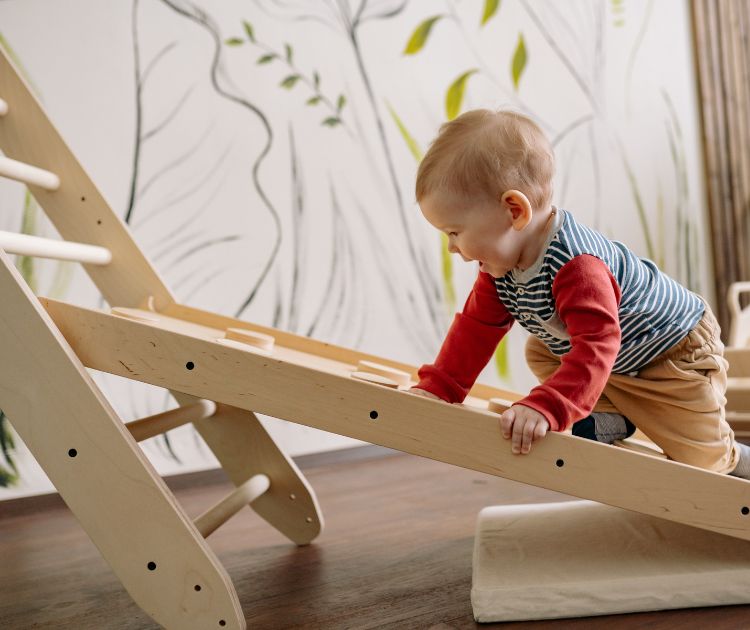
1) The motor arch for free climbing
The arch develops arm muscle strength. It's a secure vertical play area. The child climbs up and down under your caring supervision.
This product is very versatile. You can create varied play courses in the living room.
Transform it into a cabin with a simple sheet. It's a smart investment for years of fun.
2) Rocking toys to develop balance gently
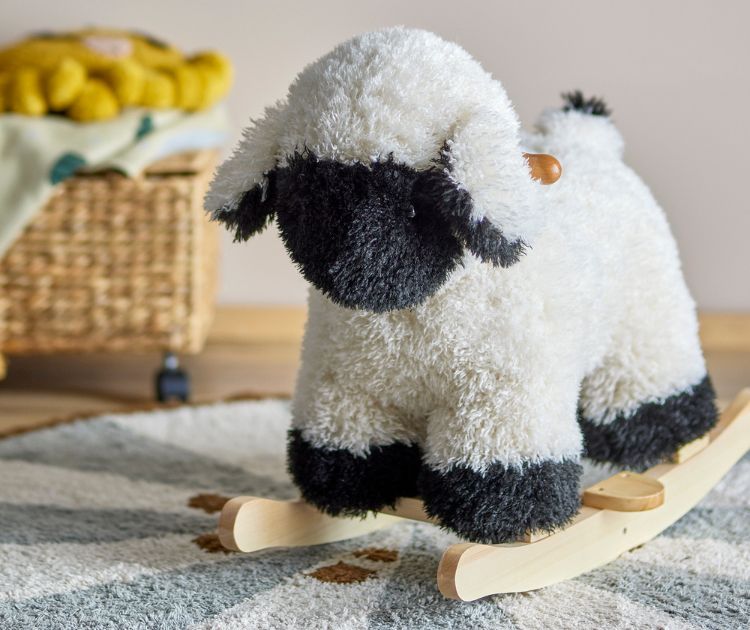
The rocking toys naturally stimulate tone, coordination and the child's posture. Halfway between free play and motor exercise, they promote the development of the center of gravity without the child realizing it. The rocking motion becomes a true sensory exploration ground.
Designed in sustainable wood with clean lines, our models integrate harmoniously into a child's room while offering secure stability. The gentle rocking reassures, channels energy and encourages body mastery. Finding one's balance point becomes a playful challenge that stimulates self-confidence.
Indoors or outdoors, our rocking toys transform every moment into an enriching motor experience. We rock, we adjust our weight, we laugh… and we progress without even thinking about it.
3) Thinking games for patience
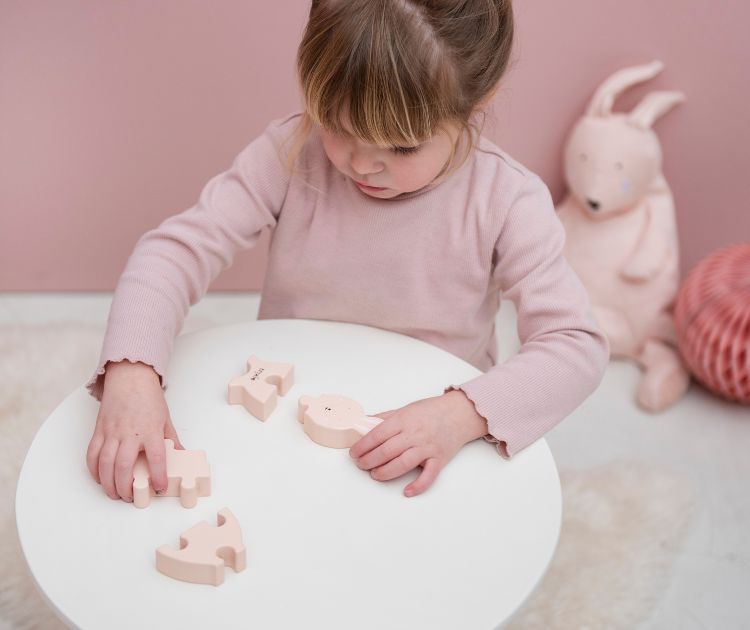
Nesting games stimulate pure logic. You have to find the right shape for the right hole. It's rewarding for the little one who succeeds.
- Themed wooden puzzles
- Stacking towers
- Color sorting games
These calm activities promote deep concentration. Silence finally settles in during the play session.
How to properly choose a toy for a 2-year-old child?
After the first months of discovery, the transition to two years marks a turning point where the object becomes a tool for physical assertion.
Fall for our 2-year-old children's toys
Identify movement and coordination needs
At 24 months, your child runs, climbs and tests their physical limits. They need stable supports to channel this overflowing energy. Chambrekids offers suitable solutions. This is essential for their safety.
Physical experimentation truly boosts the brain. By handling heavy or light objects, the little one understands gravity. It's a major cognitive development stage that goes through the body.
Coordination improves every day. Using hands and legs at the same time becomes a fascinating challenge.
Focus on active pedagogy and natural materials
Wood remains the premier material for safety. It's sturdy, healthy and durable over time. Discover our wooden children's toys for natural development.
Autonomy is often inspired by Montessori principles. The child must be able to grab their toys alone. This strengthens their personal confidence. Moreover, an organized environment helps focus on one task at a time.
Avoid fragile and noisy plastic. Prefer the nobility of natural textures that stimulate touch without assaulting the senses.
The evolution of activities for a 3-year-old child
Once motor basics are acquired, the three-year-old child opens up to a more complex and symbolic universe.
Enrich language through imitation games
Role-playing games like kitchen or workbench now appear. We pretend to prepare a meal. This is the beginning of rich and structuring symbolic thinking.
Interactive supports greatly stimulate daily dialogue. We exchange new words, we invent crazy stories together. This structures grammar and vocabulary naturally. These educational children's games like the animal memory game are really useful.
Playing shop together also teaches sharing. Social interactions become more fluid and peaceful.
Make indoor physical courses more complex
Climbing structures like the Montessori ladder become more challenging. The child now seeks physical challenges suited to them. They want to go higher and faster on their slide.
Agility progresses by leaps and bounds around three years old. Risk-taking remains measured but very real. This is essential for forging a courageous character and good coordination.
You can create stimulating circuits directly in the living room. Here are some simple elements to vary motor pleasures. The goal is to test balance safely at home.
- Obstacle courses with cushions
- Crossing tunnels
- Secure rope ladders
Identifying the ideal toy for a 2-year-old child requires meeting their thirst for movement and their need for imitation. Investing today in durable supports promotes their immediate autonomy while anticipating the imaginary adventures of their three years.
Offer them without delay these developmental tools that will transform each motor challenge into an unforgettable personal achievement.
Suitable developmental supports for a 1-year-old child
If at two years action dominates, the previous stage of the first birthday focuses on pure sensory discovery.
Promote simple manipulation and textures
At one year old, your child's hands actively explore their entire immediate environment. Grasping objects must therefore remain easy for them to grasp. The Maileg brand particularly excels in designing these soft little companions.
- Varied textures are necessary to effectively stimulate tactile development.
- Ergonomic shapes must be adapted to small clumsy palms.
- Soft colors are preferable to avoid overstimulating the child.
- Washable materials remain mandatory to ensure perfect hygiene.
It's a unique opportunity to enrich their universe. Fall for the Maileg brand toys available.
Support first steps with stability
Building confidence goes above all through low and solid structures. The child naturally leans on them to finally pull themselves up alone. The safety of furniture is crucial here to avoid accidental falls.
Balance represents constant daily learning. Each small movement effectively strengthens your baby's fragile legs. This is the true beginning of the great adventure of independent walking.
Stable support significantly reduces natural fear of emptiness. The baby then feels truly capable of letting go. They thus progress at their own pace, without any pressure.