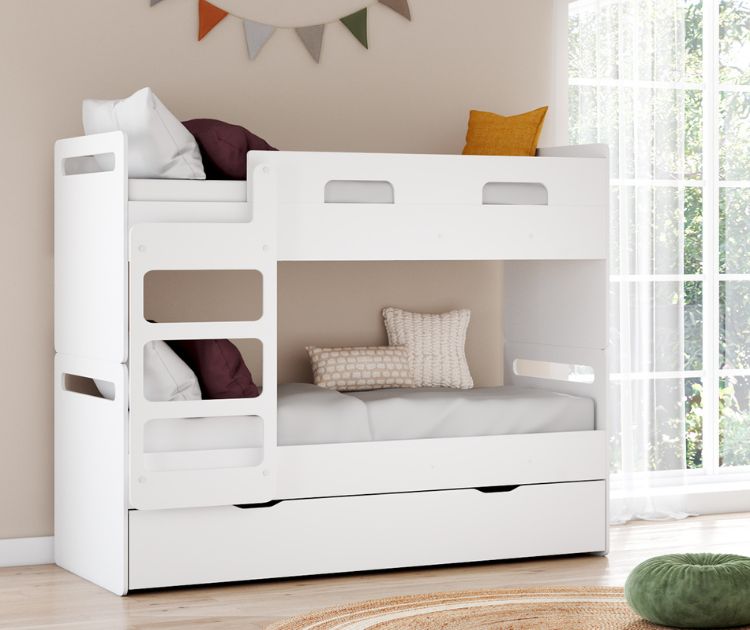
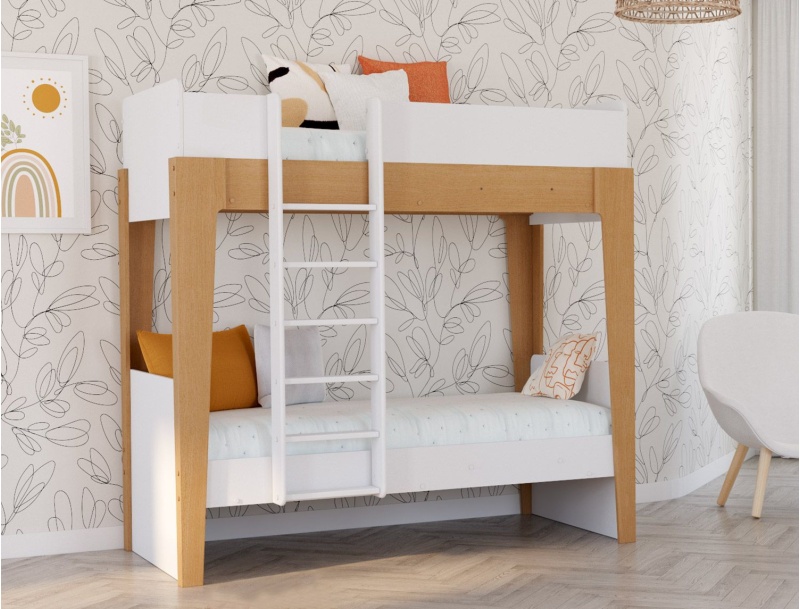
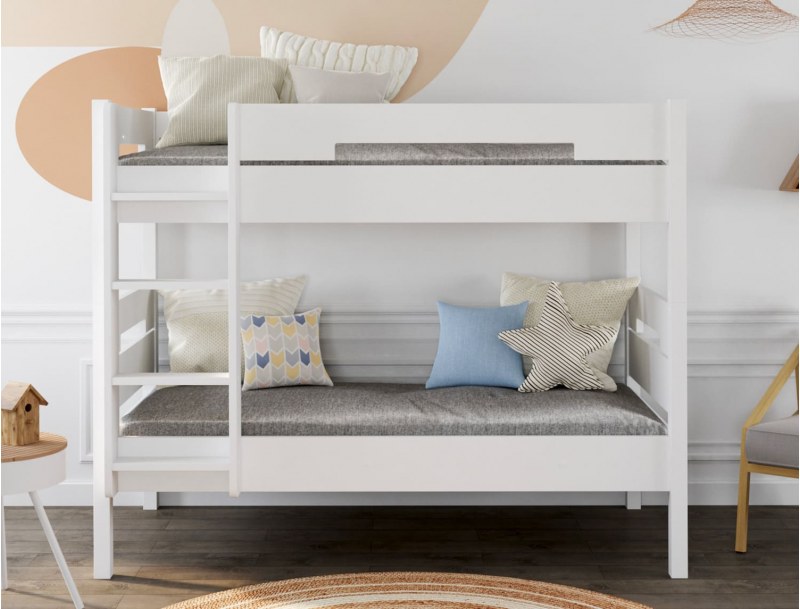
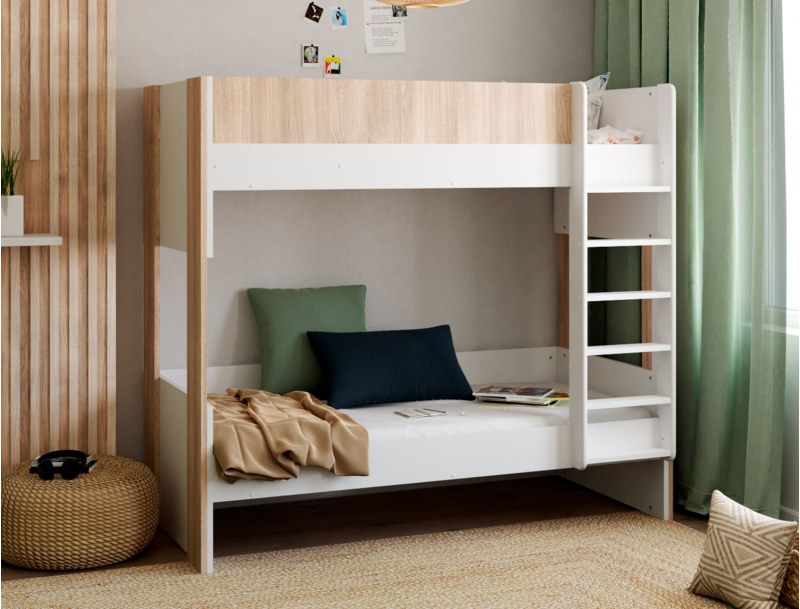
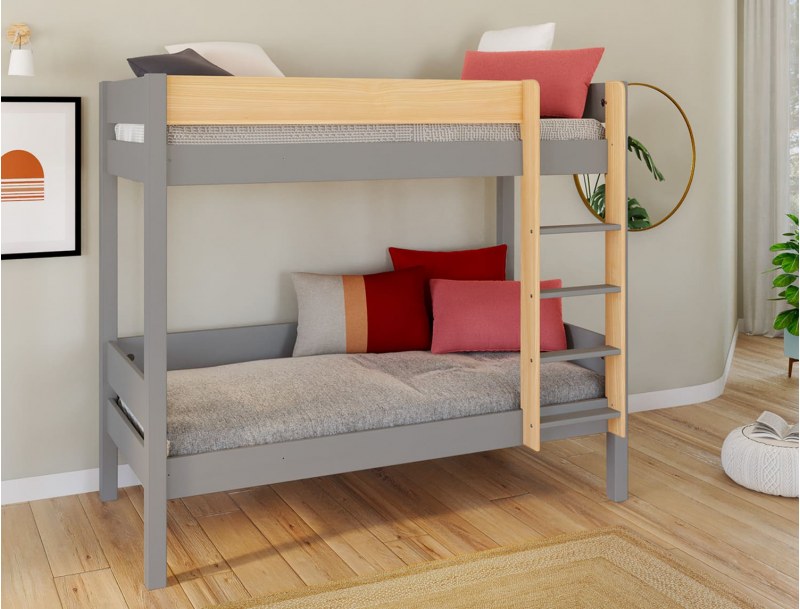
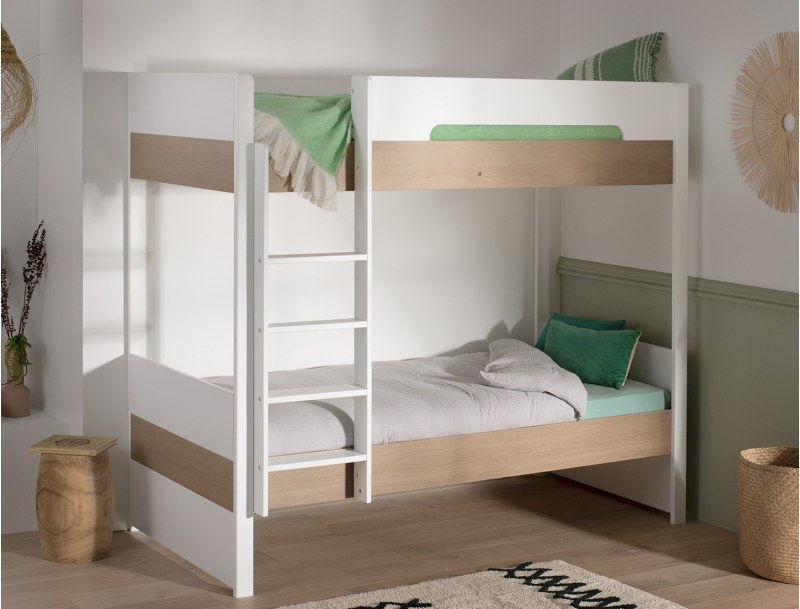
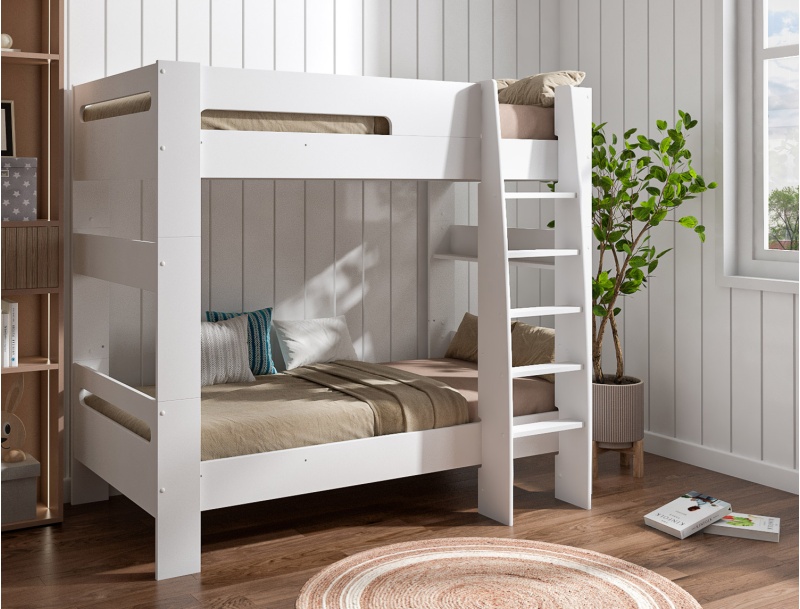
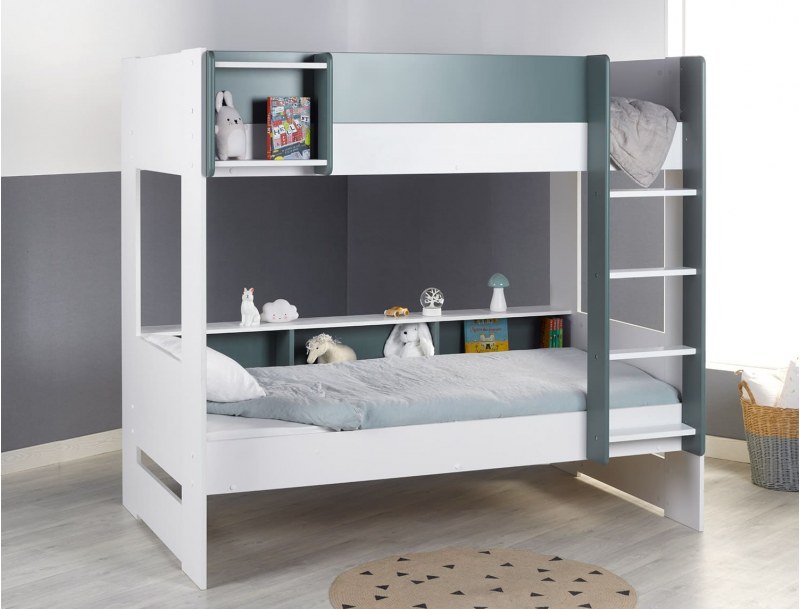
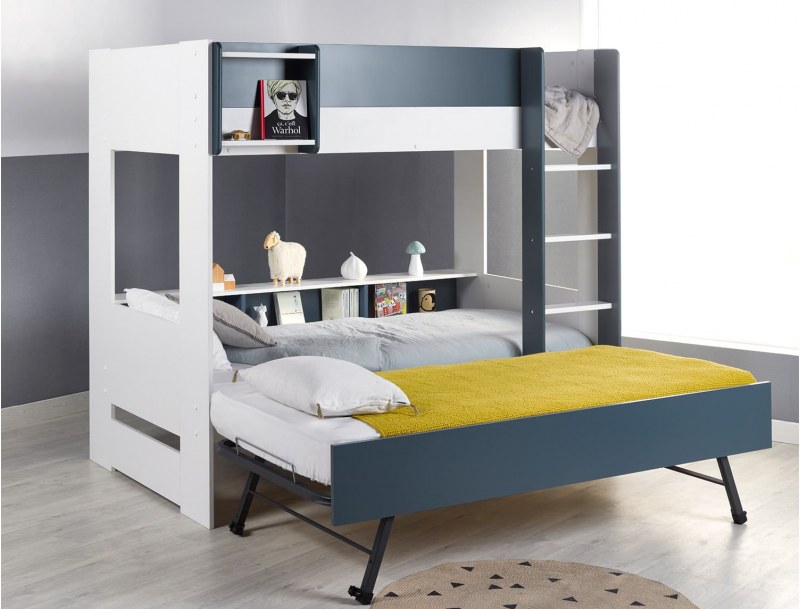
The bunk bed is a must-have for optimizing space in a child's room or accommodating multiple sleepers in one room. But before making your choice, an essential question arises: what is the ideal height for a bunk bed?
In this article, we guide you to find the perfect model, adapted to your needs and those of your family, while respecting your living space.
Understanding the ideal height of a bunk bed
General considerations
Choosing a bunk bed can transform a room into a truly functional oasis. But how do you determine the ideal height? It all starts with analyzing your specific needs. For large families or shared rooms, optimizing space becomes an absolute priority. A well-designed model can offer considerable space-saving while remaining comfortable and practical.
However, safety, especially for a child's bed, is a major concern. Standards recommend a maximum height adapted to the age of users, with solid guardrails to prevent falls. Moreover, access to the top bed should be easy thanks to an ergonomic and well-fixed ladder.
Finally, comfort should not be neglected. Take into account the thickness of the mattress and the height between the two floors to ensure a pleasant experience. Respecting these criteria will allow you to combine safety, practicality, and design in a single piece of furniture.
French safety standards
Did you know that French standards impose strict restrictions on the design of bunk beds? For example, the minimum recommended age for sleeping on the upper bed is 6 years. This measure aims to protect the youngest, often vulnerable to height-related risks.
According to current standards, the total height of a bunk bed should not exceed 180 cm in most cases for daily use. This allows for maintaining good stability while adapting to standard ceilings in modern homes.
To choose a safe and reliable model, make sure the bed base is solid and that the materials used are robust, such as solid beech, known for its exceptional durability. Adopting these practical tips will help you become an informed consumer and invest in durable furniture.
What are the different types of bunk beds?
Standard bunk beds
Standard bunk beds are perfect for meeting the classic needs of furnishing a shared room. These models stand out for their timeless design and versatility. The average height generally varies between 150 cm and 180 cm, offering enough space between floors to ensure user comfort.
Some models even incorporate a sturdy bed base, ensuring excellent durability over the years. Available in elegant finishes such as gray or white lacquer, they easily integrate into various interior decoration styles.
Moreover, if you're looking for even more flexibility, opt for convertible versions, which can be transformed into individual beds according to your preferences or space configuration. This is the case, for example, with our MILO white 90x190 bunk bed.
Models for small spaces
Do you live in a small apartment or want to maximize every square meter? Models specially designed for small spaces are your best option! Their ingenious design combines compactness and functionality without compromising on quality or safety.
These modular beds often offer additional features such as built-in storage under the bed base or in the uprights. With an optimized ladder, they allow easy accessibility even in tight corners.
Customize them according to your specific needs: some models offer height-adjustable options or custom configurations to better adapt to your available space
Choosing the right bed height for your environment
Recommended ceiling height
Have you ever measured the ceiling height before buying a bunk bed? If not, it's time to take out your measuring tape! The general rule is that there should be at least 75 cm between the upper mattress and the ceiling to avoid any discomfort or accident when sitting on the top bed.
To obtain this precise calculation, add the thickness of the mattress, that of the bed base, and the total height of the bed frame (often indicated by the manufacturer). This will give you a perfect configuration that ensures comfort and safety.
If your ceiling is low, opt for models with a reduced height but still compliant with standards. This small adjustment can make all the difference in optimizing your space.
Materials and design impacting height
The choice of materials influences not only the aesthetics but also the durability and sometimes even the height of a bunk bed. Solid beech, for example, is particularly appreciated for its natural robustness, which offers great longevity to the furniture while maintaining a stable structure.
In terms of design, opt for modern finishes such as gray or white, easy to integrate into any type of interior decoration. This aesthetic choice also brings a bright touch that visually enlarges the space.
Regular maintenance of these materials also helps to preserve their quality over time. Carefully clean painted or varnished surfaces to prolong their shine and avoid premature deterioration.
Practical tips for maximizing space saving
Built-in storage and convertible
A well-designed bunk bed can become much more than just a piece of furniture! Versions with built-in storage allow for efficiently organizing clothes, toys, or books without requiring additional furniture. This not only represents a space-saving solution but also a harmonious optimization of your environment.
Some models even include hidden drawers under the bed base or in the ladder steps: clever, isn't it? And if your needs evolve over time, opt for a convertible model that perfectly adapts to each stage of your life!
Maintenance for longevity
How to preserve your investment in the long term? It all starts with meticulous maintenance! To effectively clean a wooden bed like those made of solid beech or solid pine, use a soft, slightly damp cloth followed by immediate drying to avoid any water infiltration.
Regularly inspect screws and mechanical parts: tighten them if necessary to ensure that the whole remains stable despite years of daily use. A simple but regular routine can significantly extend the life of your furniture while maintaining its impeccable appearance!
 En
En
 Français
 Deutsch
 Nederlands
 Italiano
 Español












 What Age for Bunk Bed: Standards and Safety
 When to put baby in their room: age and transition
 Best Choice for Baby: Bed Attached to Parents or Next to Them?
 The convertible bed: furniture that grows with your child
 The bunk bed with storage and desk: discover its advantages!