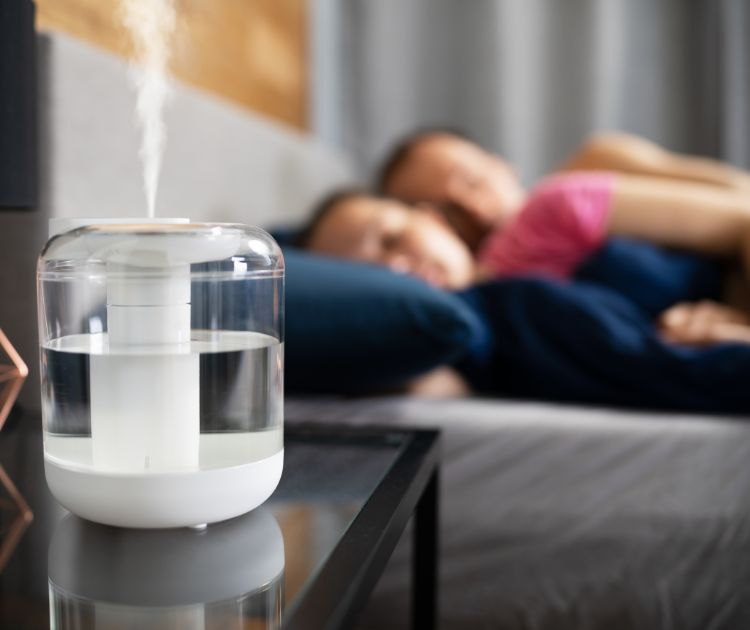
Have you noticed that dry air in your child's room is causing irritation or restless sleep? Here are 3 simple solutions to humidify a room:
Water containers near radiators or damp laundry
Using a humidifier
Indoor plants
Learn to regulate humidity levels to improve air quality and comfort for the whole family.
3 simple tips to humidify your room's air
Tip 1: Natural and economical solutions
Several methods can quickly increase room humidity without electrical devices. These simple and effective solutions easily adapt to your daily routine:
Water containers near radiators: fill a bowl or basin with water and place it on or next to the radiator. Heat accelerates evaporation and distributes humidity throughout the room.
Drying laundry indoors: hang clothes on a drying rack near a heat source. Be careful not to exceed 60% humidity to avoid mold.
Use plants like Cyprus Grass or Nile Papyrus
Leave the door open after a hot shower
Tip 2: Using an air humidifier
An air humidifier allows precise regulation of humidity levels. Unlike natural methods, it offers constant control adapted to the specific needs of the room.
Humidifier type
Advantages
Disadvantages
Warm steam
Eliminates bacteria, slightly warms the room
Risk of burns, high consumption, not suitable for baby rooms
Cold steam (evap.)
Child-safe, economical, effective for large areas
Fan noise, filter needs replacement every 1-3 months
Ultrasonic
Quiet (22-23 dB), economical, cold or lukewarm mist
Mineral diffusion if tap water used, frequent cleaning required
Hot/cold hybrid
Warm or cold mist depending on season, versatile
High price, more complex maintenance, cold mist only for babies
? For proper operation: clean the device every 3 to 5 days with white vinegar, change water daily, replace filters according to manufacturer recommendations. Place it away from walls to avoid condensation and ventilate the room well.
Tip 3: Plants as natural humidifiers
Some indoor plants naturally increase air humidity through transpiration. For a noticeable effect, place several plants in the room.
Cyprus Grass: very effective
Nile Papyrus: ideal near a heat source
Dragon Tree: purifies air and maintains humidity
Green Lily: purifying plant suitable for bedrooms
Indoor Bamboo: aesthetic and effective
?To maximize their effect, install them near a window for indirect light, mist the leaves, water regularly, avoid direct sunlight and heat sources.
Why is it important to maintain good humidity levels?
Effects of dry air on health
Air that's too dry irritates respiratory passages, dries out skin, promotes ENT infections and eye problems. A humidity level that's too low (< 40%) increases these risks.
Consequences for children, babies, allergy sufferers
Babies are particularly sensitive to dry air: irritated mucous membranes, headaches, worsening of asthma. Stable humidity in the nursery prevents these issues.
To measure humidity: use an electronic hygrometer or place a glass of ice water at room temperature and observe if it gets foggy after 5 minutes.
Sleep comfort
A well-adjusted humidity level preserves mucous membranes and facilitates breathing. Combined with a stable temperature (18-20°C), it promotes restorative sleep for both children and adults.
Protection of furniture and equipment
Air that's too dry can cause cracks in wooden furniture and static discharges harmful to electronic devices. Avoid sudden temperature changes and limit woodwork exposure to direct heat sources.
Seasonal tips for managing your room's humidity
❄️ In winter
Heating dries indoor air. To remedy this:
Place damp towels or water containers on radiators
Ventilate twice daily (morning and evening) for 5 to 10 minutes
Use thermal curtains at night
Keep furniture away from cold walls
☀️ In summer
Air conditioning can make the air too dry, while outdoor humidity can cause condensation.
Ventilate early in the morning or evening
Activate the AC's dehumidification function without overcooling
Compensate for dry air with water basins or hanging damp laundry
Slightly wet the floor for natural cooling
Common humidity problems and practical solutions
Excess humidity
Foggy windows, musty odors, black spots on walls: these signs should alert you. To remedy:
Ventilate for 10 minutes morning and evening. In winter, choose the warmest hours. In apartments, open roof or skylight windows. Avoid sudden drafts.
Combine regular ventilation with a humidifier, also use thermal curtains to stabilize ambient humidity.
Specifics for children's rooms
The ideal temperature for a baby's room is 18 to 20°C with stable humidity. This reduces the risk of ENT infections and promotes restful sleep. Whether you choose plants, a humidifier, or natural solutions, the child's comfort depends on good hygrometric balance.
Taking action today is investing in lasting comfort.
 En
En
 Français
 Deutsch
 Nederlands
 Italiano
 Español













 What Age for Bunk Bed: Standards and Safety
 When to put baby in their room: age and transition
 Best Choice for Baby: Bed Attached to Parents or Next to Them?
 The convertible bed: furniture that grows with your child
 The bunk bed with storage and desk: discover its advantages!