Do you feel unexplained fatigue upon waking, as if your immediate environment prevents true nighttime recovery? Applying feng shui rules for the bedroom optimizes energy circulation to transform your space into a place of deep calm. Discover concrete methods, from bed positioning to color nuances, to create a harmonious cocoon favorable to your well-being.
Feng Shui Bedroom: 10 Key Rules for Sleeping Well
? Position the bed in "command": back to a full wall, view of the door without facing it.
? Avoid energy currents: never between door and window, nor under a beam or window
? Favor North or East orientation: promotes deep and restorative sleep.
?️ Choose a single box spring: for the couple's energetic unity.
? Remove screens, work-related objects, and visible wires: sources of stress and Yang energy.
? Cover or hide mirrors at night: especially if they reflect the bed.
? Keep the space under the bed empty: to allow energy to circulate freely.
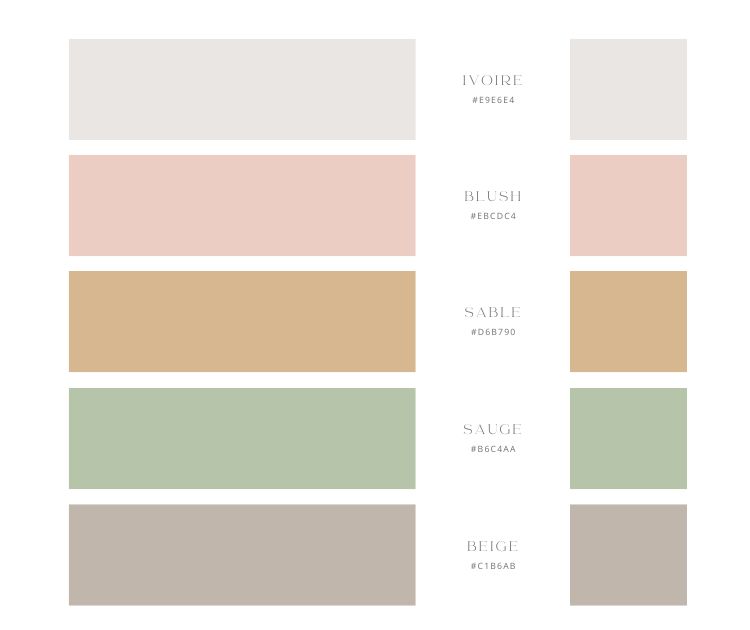
? Choose soft colors: beige, cream, pale green, powder pink… and avoid bright tones.
? Use natural materials: wood, linen, cotton. Ban metal.
⚖️ Favor symmetry and rounded shapes: soft, balanced and soothing furniture.
? Bonus: Air the room daily and avoid walls adjoining a bathroom for the headboard.
The bed: cornerstone of your sleep
The command position: a golden rule
For a successful feng shui bedroom arrangement, the command position is key. Your bed should offer a view of the door, without ever aligning with it. This provides a sense of control over the room, essential for sleeping well.
Also consider placing a solid headboard against a full wall. This wall acts as true back support, an essential symbolic protection during the night. Above all, never place the bed under a window.
This configuration avoids any unpleasant surprises. You thus control your personal space.
The classic trap remains the direct axis between the door and the window. The energy flow crosses the room too quickly, which disturbs sleep. Your bed should never be positioned on this invisible highway.
Move the bed as far as possible from the main entrance. This distance creates a necessary buffer against disturbances from the rest of the house.
Even in a small space, solutions exist to work around this problem. It's about finding the best compromise to avoid suffering from this energetic draft.
Orientation and box spring: details that matter
Let's now talk about the orientation of your headboard. East or North directions are frequently recommended to promote deep sleep. This is an asset for vitality upon waking.
A technical detail also makes a difference: the box spring. A single model is better than two separate bases, even for a large bed. This avoids a symbolic fracture in the couple and ensures unified Chi.
Now that the bed is well positioned, you need to tackle everything that can pollute the room's energy. Some objects, even if they seem harmless, are real disruptors.
Screens and electronics: enemies of rest
The bedroom is a sanctuary for sleep, not an annex of the office or living room. Television, computer and even mobile phones are to be banned. Their overly active Yang energy and electromagnetic waves are incompatible with rest.
Let's also mention tangled electrical wires that create stagnant and chaotic energy. Hide or remove them, as they harm overall harmony.
Simply removing these devices will significantly improve your sleep quality. This is a non-negotiable rule.
Mirrors and symbolic objects: beware of their influence
You may be unaware of the mirror problem. They reflect light and energy, which activates Chi and can make sleep restless. The worst being a mirror that reflects the bed.
If a mirror is essential, it should be placed inside a closet door or be covered at night. The idea is to prevent it from "working" while you sleep, creating overly active energy.
Also avoid non-personal photos, work-related objects and anything with a violent or aggressive connotation.
Clutter: Chi's number one blockage
Know that clutter is the main enemy of good energy. A cluttered bedroom prevents Chi from flowing freely, which leads to a feeling of oppression and stagnation.
Look at the space under the bed. It must remain absolutely empty. Storing suitcases or old shoes there blocks energy directly beneath you during your sleep.
To ensure optimal feng shui bedroom arrangement, here are the elements to eliminate:
Work-related or administrative task objects.
Sports equipment (too active energy).
Aquariums, fountains or water images (disturb sleep).
Pointed, sharp or aggressively connotated objects.
Creating a cocoon of softness: colors, lights and materials
Once the room is cleared, the next step is to dress the space with elements that promote calm and harmony. The choice of colors, lighting and textiles is decisive.
The ideal color palette for Yin energy
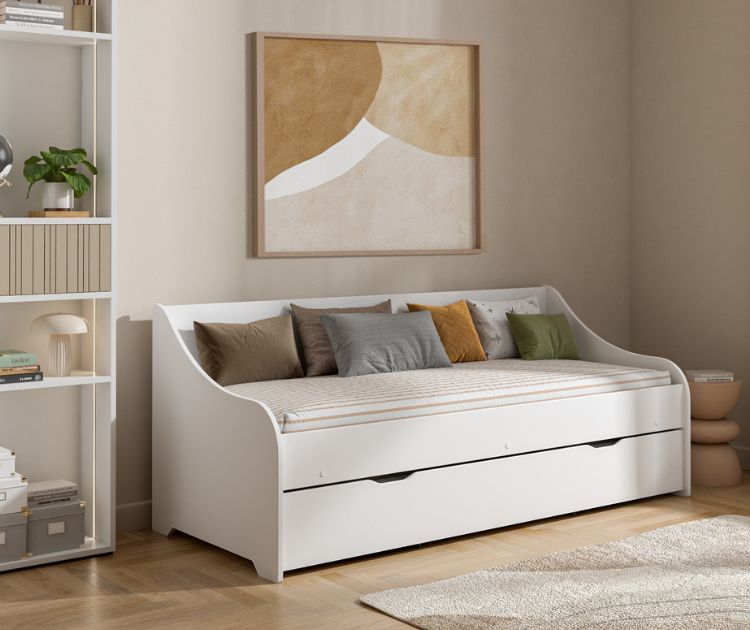
The bedroom is a Yin room, dedicated to rest. You should therefore favor soft and neutral colors that invite relaxation. Think of soothing shades to successfully achieve feng shui arrangement of your bedroom.
Avoid pure white, too stimulating as it reflects light. Prefer off-white, beige, cream or pastel tones. Bright colors should be reserved for small decorative touches.
Here are the shades to favor:
Creams and beiges: for stability and comfort.
Pale green and ice blue: for vitality and serenity.
Peach and powder pink shades: for softness and relational harmony.
Soft lighting to prepare for sleep
Ban aggressive and direct lighting, especially ceiling lights located directly above the bed. Light should be soft and indirect. The ideal is to multiply low-intensity light sources.
This is also a practical solution to modulate light throughout the evening: use dimmers. Fabric lampshades, such as cotton or linen, are perfect.
Candles are an excellent option to create a warm and soothing atmosphere before sleeping.
Choosing natural materials
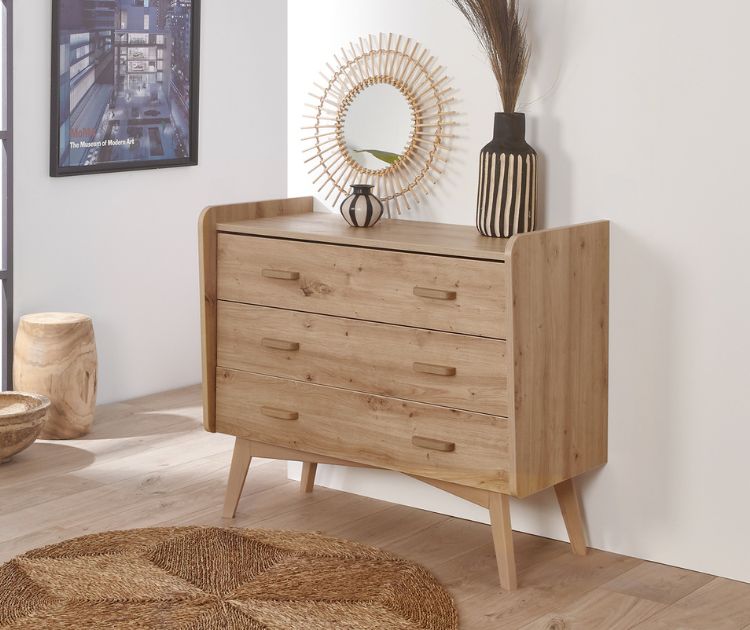
Surrounding yourself with natural materials helps you stay connected to the Earth element. For furniture, choose wood, whether light or dark. Avoid metal, which is too cold and conductive.
For bedding, curtains and rugs, opt for textiles like cotton, linen or wool. These materials are breathable and healthy.
Patterns on bedding should be simple and non-aggressive. Avoid stripes and overly bold geometric shapes.
To succeed in a feng shui bedroom, opt for furniture with rounded shapes. Sharp angles, called "poison arrows" by experts, project aggressive energy directly at the sleeper. Oval or round nightstands are therefore the ideal choice.
If your current furniture has sharp angles, simply soften these edges with a textured throw or a trailing plant.
Absolutely avoid massive or very tall furniture, such as large bookcases, as they create an oppressive crushing sensation.
Complementary symmetry for couple harmony
Symmetry is often misinterpreted. It's not about achieving a strict and soulless mirror effect. The challenge is to install complementary pairs to anchor balance in the room, which durably stabilizes the couple's relationship.
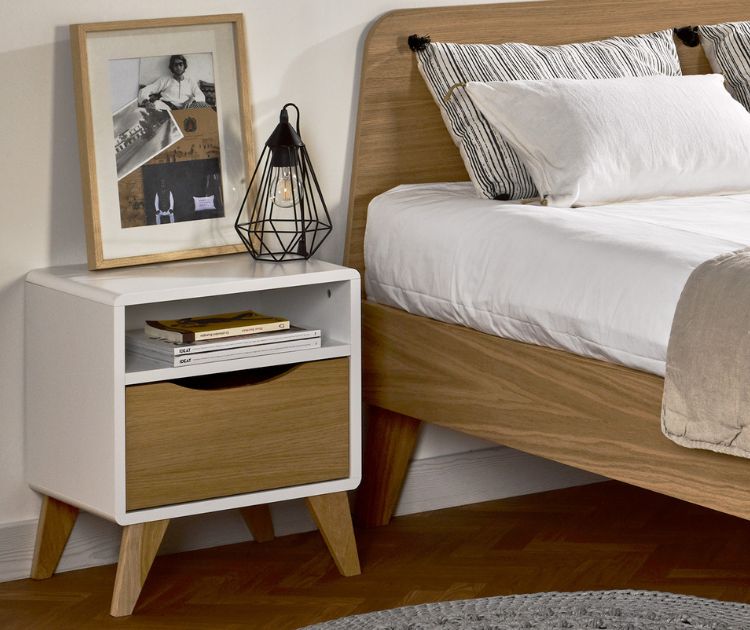
In practice, install a nightstand accompanied by a lamp on each side of the bed. These elements don't need to be identical, but should share a similar style and volume.
Even for a single person, this configuration is vital: it symbolically prepares the space for a partner's arrival.
Decoration and plants: the finishing touch
Your decoration should remain minimal but deeply personal. Keep only a few objects with positive meaning for you, such as inspiring travel souvenirs or precious gifts.
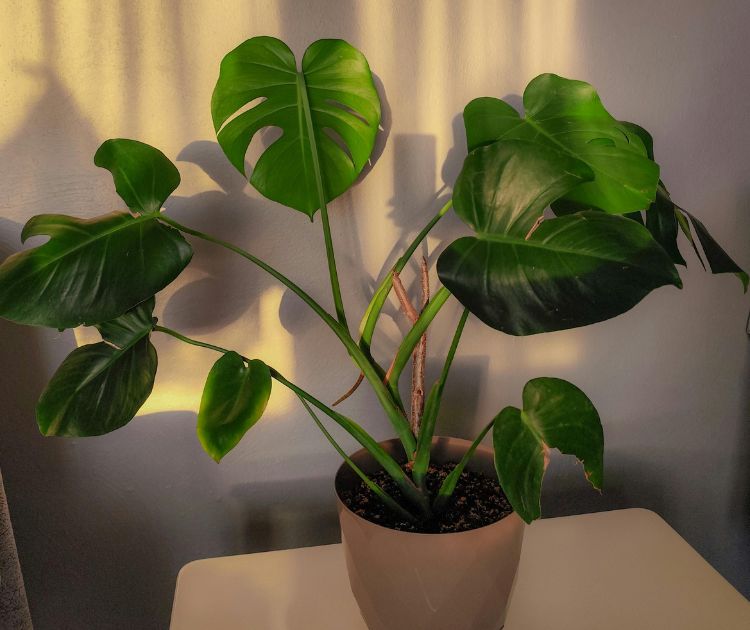
Plants are tolerated, but sparingly. Their growth energy (Yang) can quickly disturb nighttime rest. Choose exclusively varieties with rounded leaves and place no more than one or two in the room.
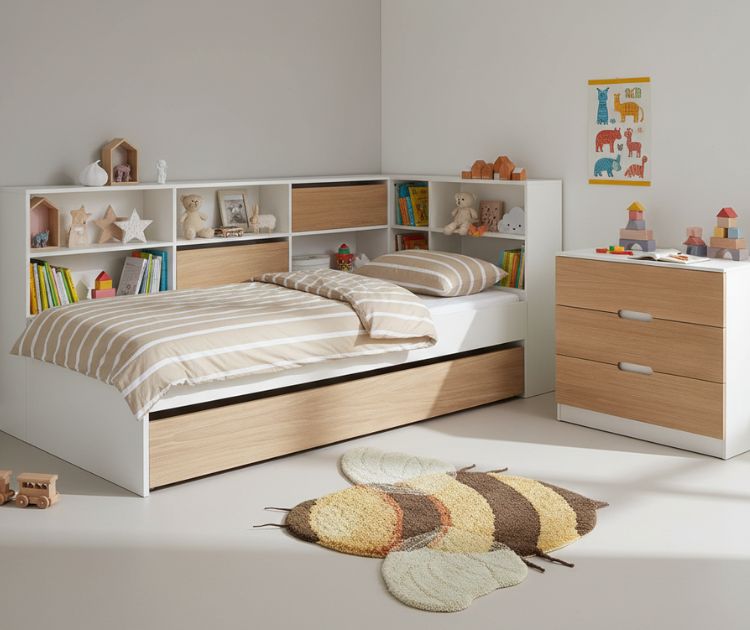
Touches of pink or white will stimulate softness. These rules also apply to improving baby's room and soothing their nights.
Managing structural challenges: beams, attics and adjoining walls
Sometimes, the house's architecture presents challenges. An exposed beam or poorly placed wall is not a fatality. Here's how to neutralize their negative effects.
Exposed beams and sloped ceilings
Sleeping under an exposed beam creates symbolic pressure and can generate stress or headaches. Similarly, a sloped ceiling (attic) can give a feeling of oppression.
The first solution is not to place the bed directly underneath. If this is not possible, you need to find tricks to correct this energy.
Paint the beam the same color as the ceiling to blend it visually.
Install a canopy bed (a simple veil) to create a protective "shield".
Hang two bamboo flutes on the beam, pointing upward, to "lift" the pressing energy.
The case of walls adjoining water rooms
Address an often-ignored technical point: the headboard should never be against a wall adjoining a bathroom or toilet. Water circulation creates unstable energy and drains the bedroom's energy.
This can affect health, vitality and even finances symbolically in the long term.
If moving the bed is impossible, reinforce the headboard or place thick furniture there to create a barrier.
Maintain good air circulation
Remember a basic principle: good feng shui bedroom also requires healthy air. You must air the bedroom every day, at least 15 minutes, even in winter.
This allows Chi to be renewed, stagnant energies to be evacuated and the room's atmosphere to be purified for restored balance.
Fresh and renewed air is also essential for quality sleep. It's a simple and powerful gesture.
In short, adopting Feng Shui in the bedroom creates a true sanctuary dedicated to rest. By harmonizing the space and eliminating disturbances, you promote restorative sleep for the whole family. Don't hesitate to test these simple adjustments to regain serenity and vitality in daily life.
 En
En
 Français
 Deutsch
 Nederlands
 Italiano
 Español












 What Age for Bunk Bed: Standards and Safety
 When to put baby in their room: age and transition
 Best Choice for Baby: Bed Attached to Parents or Next to Them?
 The convertible bed: furniture that grows with your child
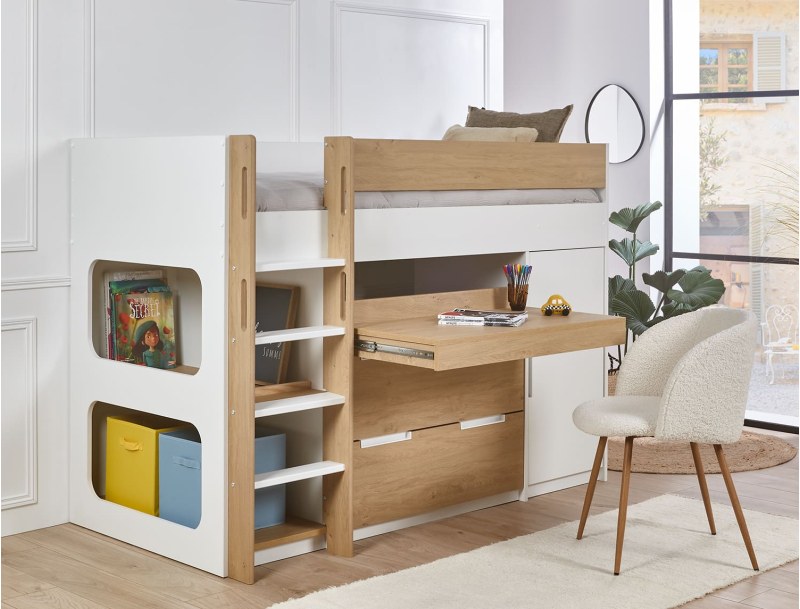
 The bunk bed with storage and desk: discover its advantages!