A well-furnished, healthy, and durable children's bedroom
Faced with the rapid evolution of your little ones, designing children's bedroom furnishing that combines durability, safety, and space optimization quickly becomes a significant challenge for many parents. To address this issue, we detail here the determining criteria for selecting healthy furniture and intelligently organizing sleeping, play, and work zones. You'll thus discover pragmatic tips to lastingly transform this room into a true convertible cocoon, perfectly adapted to your child's growth and development.
Top ideas for furnishing a child's bedroom in a practical and durable way
For successful children's bedroom furnishing, think simplicity, adaptability, and well-being.
Here are the best ideas to apply right now:
✅ Convertible or mezzanine bed
? Define 3 key zones: sleep, play, and work
? Choose healthy furniture
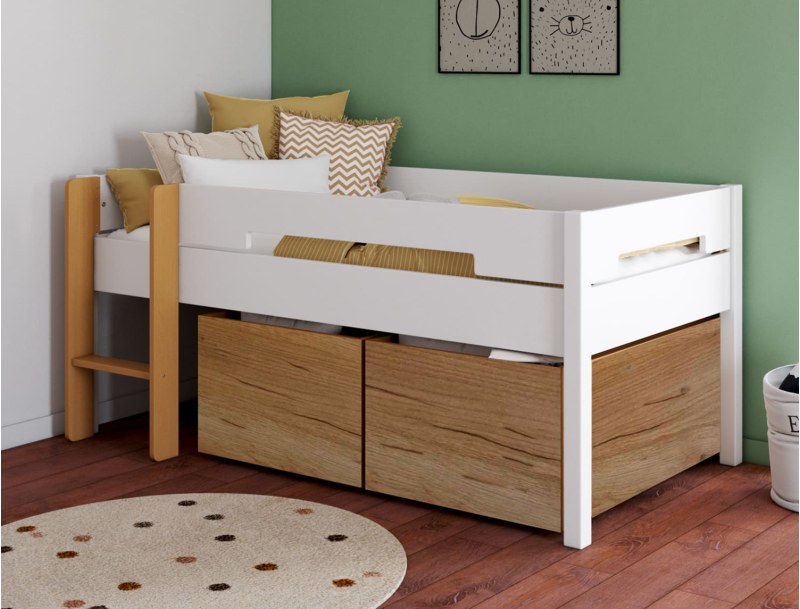
? Multiply clever storage solutions
? Involve your child in the decor
? Organize a shared bedroom intelligently
? Encourage independence with furniture at their height
? Optimize lighting for each zone
? These tips create a functional, healthy, and soothing environment that grows with your child.
Focus on durable and healthy furniture: the foundation of everything
Quality above all: choosing wood and made in France
Faced with the plethora of market offerings, it's easy to get lost. However, the winning strategy lies in purchasing durable, quality furniture capable of lasting through the ages. It's a smart long-term investment. Your younger children may even benefit from it later.
Favor made in France without hesitation for furnishing. This choice guarantees careful local manufacturing and strict compliance with European safety standards. For us parents, it's invaluable peace of mind in daily life.
Solid wood remains the undisputed king material. Its robustness ensures exceptional longevity against repeated assaults.
The ecological aspect should never be a secondary option. Always opt for PEFC-certified wooden furniture. This concretely certifies that the wood comes from sustainably managed forests.
Your child's respiratory health is at stake. You must absolutely track down volatile organic compounds (VOCs) that are often invisible. Demand minimal formaldehyde levels and water-based solvent-free paints. This is the only way to avoid harmful toxins.
These precautions directly guarantee the child's well-being. They will thus grow up in a room where the air remains pure.
The bed, centerpiece of the bedroom: how to choose it well
A bed for every need and every space
The children's bed constitutes the central element of the bedroom's universe. This strategic choice depends on their specific needs, but also on the actual configuration of the room. It's the foundation of successful furnishing.
Fortunately, there's a solution adapted to each family scenario. Here are the essential options for structuring the bedroom:
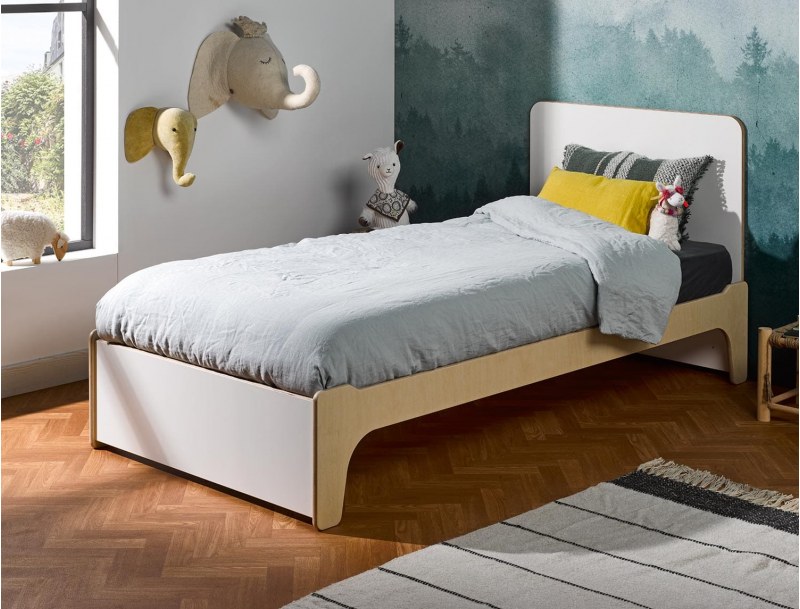
The classic children's bed: standard 90x190 cm format, ideal from 2 years old to adolescence.
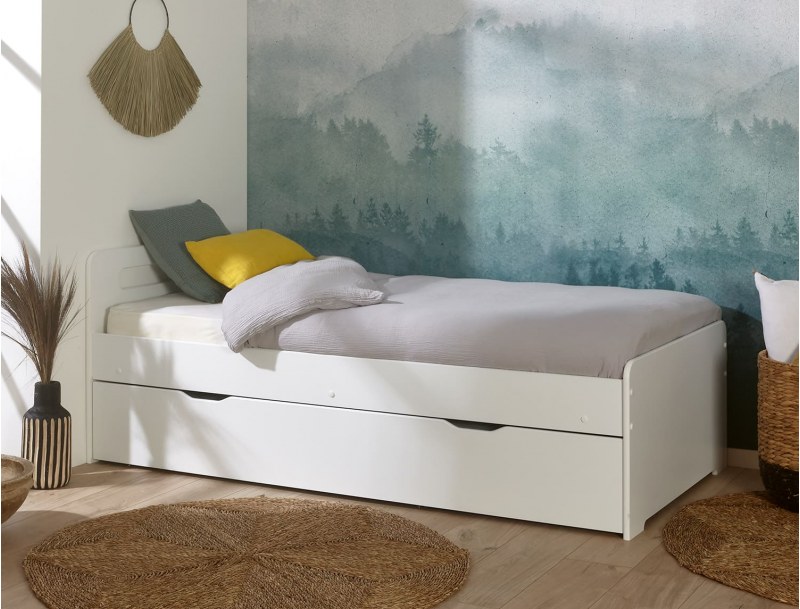
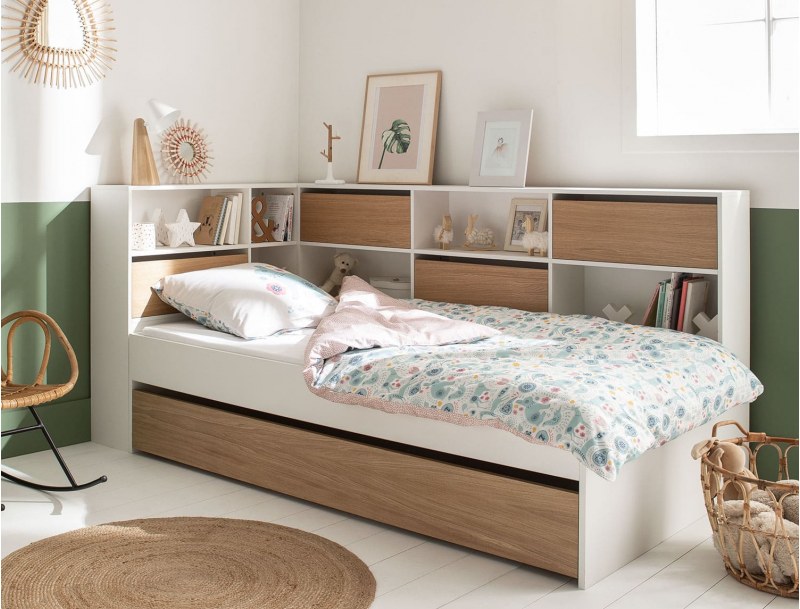
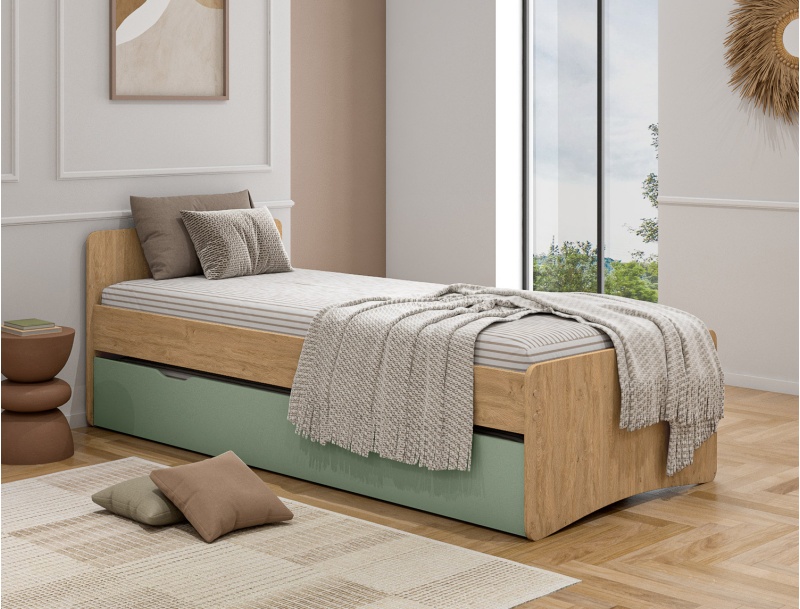
The trundle bed: a clever extra sleeping solution for friends or in a shared bedroom.
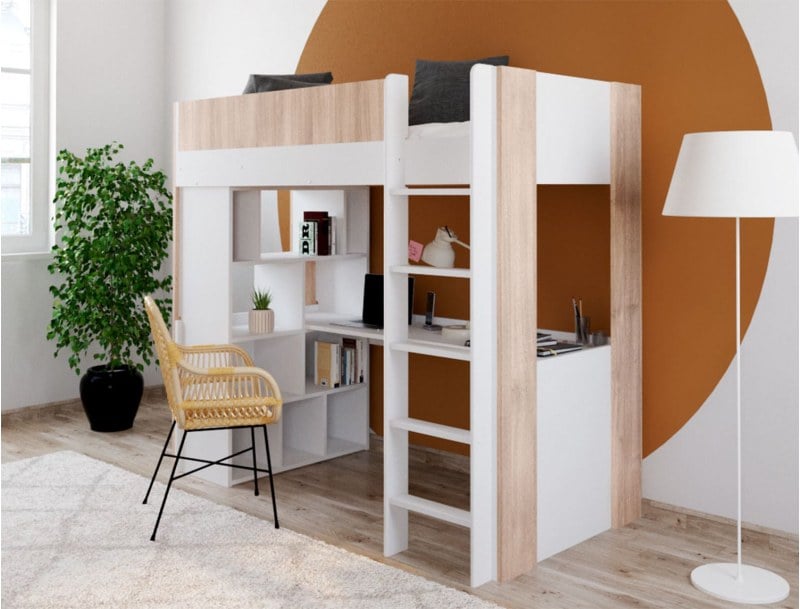
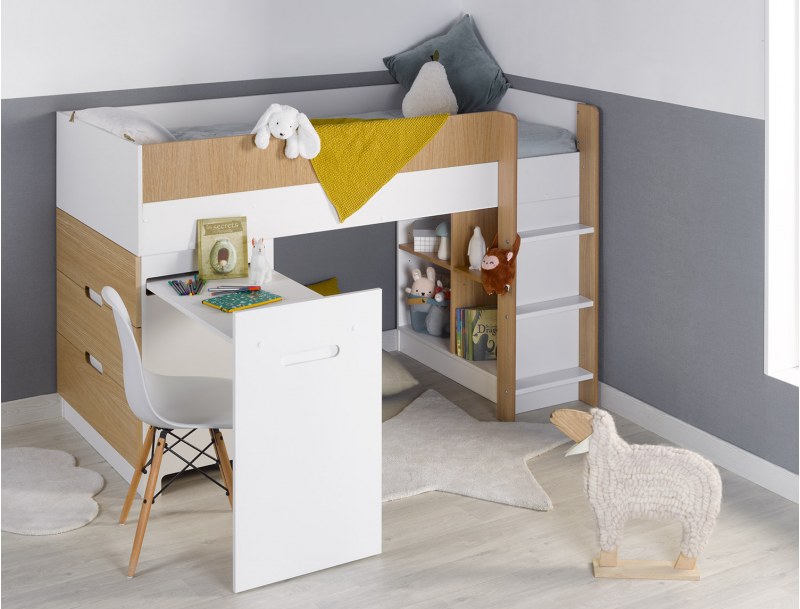
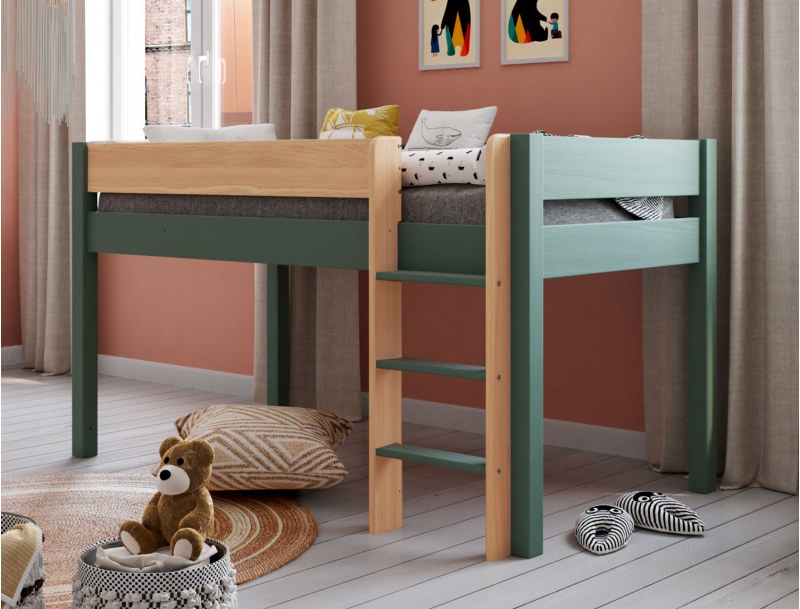
The loft bed: mezzanine or mid-height bed to free up floor space (desk, play area).
The convertible children's bed: the economical solution that grows with the child, transitioning from baby bed to children's bed.
Optimize space, especially in small bedrooms
Furnishing small spaces often represents a significant challenge for parents. However, the right model transforms a cramped room into an ultra-functional space. The loft bed is the ultimate solution for saving space. You thus recover precious square footage.
The space freed up under a loft bed offers infinite furnishing possibilities. You can easily install a desk, clever storage solutions, or even a cozy reading nook. It's the ideal trick for properly placing the bed in a small bedroom.
Finally, pay particular attention to choosing the bedding. We recommend natural materials like bamboo or cotton. Oeko-Tex certification for the mattress, duvet, and pillow guarantees healthy sleep.
Organize space for playing, working, and storing
Once the bed is selected, the real challenge begins: structuring the room around your child's life.
Define zones for more clarity
To help them find their bearings, divide the room into three key zones: a sleeping area, a play space, and a work section. This organization naturally structures their activities.
Visually delimit these spaces. A rug anchors the play area, a calming color isolates the sleeping corner, and targeted lighting marks the desk zone.
Essential storage furniture
For storage, the dresser remains perfect for folded clothes, while the children's wardrobe is essential for hanging items on hangers.
Here's a comparison to identify the furniture suited to your needs:
Furniture type
Ideal for...
Main advantage
Children's dresser
Folded clothes, underwear, bed linen
Top surface usable for decoration
Children's wardrobe
Clothes on hangers (coats, dresses), folded clothes
Large vertical storage capacity
Bookshelf
Books, small toys, decorative items
Encourages reading and organization
Toy chest
Large toys, stuffed animals
Quick and easy storage for the child
For older children, the children's desk must find its place. The goal is to offer a comfortable space for homework and creativity, ideally with an ergonomic chair.
Finally, organize toys and books with a bookshelf or toy chests. This is the key to optimizing storage space and encouraging your child to tidy up themselves.
A bedroom that evolves with your child
A successful furnishing never remains fixed over time. It must follow the frantic pace of your child's needs.
Involve your child in the decoration
It's their room, so let them express themselves a bit. Giving them the choice of colors or bedding really helps them make the space their own. You'll see that they'll feel much better in their environment. Trust them on this.
Focus on accessories that are easy to change like lamps or fun cushions. Absolutely avoid complex wall murals that will be hated in six months. Children's tastes change at lightning speed. Flexibility remains your best ally.
Anticipate changes: from 3 to 10 years old
For a 3-year-old, everything must be accessible and secure. Storage at their height promotes their daily independence. This is the foundation of the Montessori method.
Around 6 years old, the play space gives way to serious matters. The desk area becomes central in a well-designed bedroom for 6-10 year olds. The child will spend more and more time there.
What if a brother and sister share the same bedroom?
Rest assured, having a brother and sister sleep together is entirely possible. It often even creates very strong bonds.
The secret lies in clearly defining a personal space for each. A simple bookshelf or a different wall color is sometimes enough. Take a look at our solutions for a shared bedroom to succeed in this endeavor. Each child thus keeps their own little secret garden.
Furnishing your child's bedroom is a lasting investment in their well-being. By favoring healthy and convertible furniture, you create a secure and functional space. Don't hesitate to involve your little one in the decoration so they can make the space their own. With these tips, you'll transform this room into a true cocoon adapted to their growing needs.
In 2025, focus on natural and sustainability: certified solid wood, convertible furniture, soft colors, and cozy atmosphere. Avoid visual overload to create a space conducive to both sleep and play.
Yes, provided you organize the space well. We recommend delimiting zones with colors or distinct bedding. Bunk beds or a bookshelf can also serve as a clever divider.
Not necessarily. Sharing a bedroom can strengthen bonds. The essential thing is that each child has their own space, even if small: a desk, a shelf, a play area.
 En
En
 Français
 Deutsch
 Nederlands
 Italiano
 Español












 What Age for Bunk Bed: Standards and Safety
 When to put baby in their room: age and transition
 Best Choice for Baby: Bed Attached to Parents or Next to Them?
 The convertible bed: furniture that grows with your child
 The bunk bed with storage and desk: discover its advantages!

.jpg "Comment aménager au mieux une chambre enfant ? | Chambrekids")
.jpg "Comment aménager au mieux une chambre enfant ? | Chambrekids")