Choosing the right single bed dimension is far from simple given the multitude of options available on the market. From 60x120 cm for toddlers up to 120x190 cm models for adults seeking more space, each size meets specific needs in terms of comfort and layout. Since we spend about a third of our life sleeping, it's important to select a bed whose dimensions perfectly match the sleeper's morphology and room size. In this article, we present all standard single bed sizes to help you make the ideal choice.
Choosing the right bed dimension is important for quality sleep. For individual beds, dimensions generally vary in width from 70 to 90 cm and in length from 190 to 200 cm. These sizes adapt to the specific needs of each sleeper.
Beyond the classic dimensions, there are variants such as the extra-large single bed, offering between 100 and 120 cm in width. To learn more about the available options, consult our complete guide on bed dimensions. This additional width provides increased comfort without excessively cluttering the room.
Dimension
Target Audience
Notes
70x140 cm
Children (2 to 6 years)
Suitable as a transition bed after the crib. Reassures the child thanks to its small size.
70x160 cm
Young children (up to 7-8 years)
Longer lifespan than a 70x140 cm bed. Often equipped with protective barriers.
90x190 cm
Children, Teenagers, Adults
Most common standard dimension. Suitable for people of average height.
90x200 cm
Teenagers, Tall Adults
Offers more length for better comfort, particularly for people over 5'11" (1.80m) tall.
120x190/200 cm (Small double bed)
Teenagers, Adults who prefer more space
Compromise between a single bed and a double bed. Ideal for those who like to have room to move.
The 70x140 cm bed: ideal for transitioning children
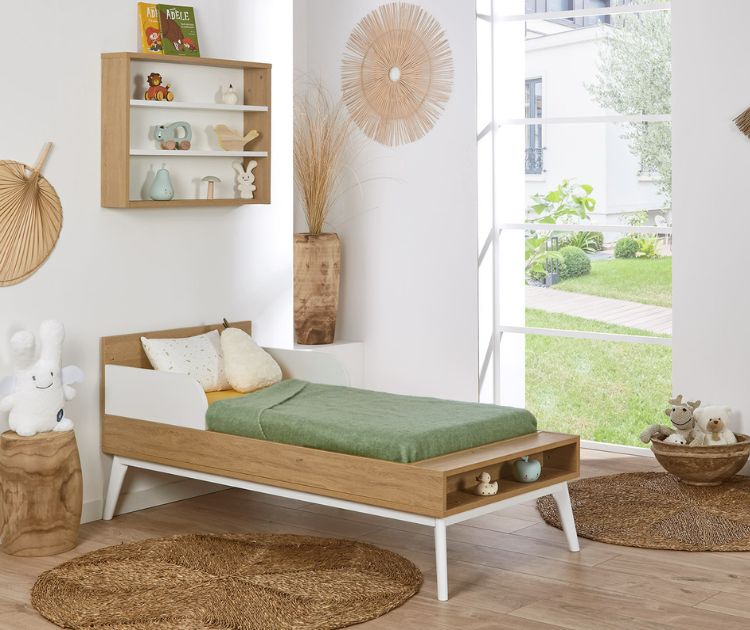
The 70x140 cm bed marks a significant step in a child's sleep evolution. This size marks the ideal transition between the small crib and a larger bed. Designed for children from 2 to 6 years old approximately, this format offers a reassuring space while accompanying the growth of the little sleeper.
Safety is the major advantage of this bed size. You can equip it with removable rails that protect against nighttime falls. The bed base of these beds usually allows height adjustment, which facilitates access for parents. A suitable mattress must measure exactly 70x140 cm to avoid any dangerous space between the frame and bedding.
The 70x190 cm and 80x190 cm beds: for children and preteens
The 70x190 cm and 80x190 cm dimensions are an excellent intermediate option for children between 3 and 10 years old. This bed size offers enough space for comfortable sleep during this growth period, without unnecessarily cluttering the room. The 10 cm difference in width mainly depends on the available space.
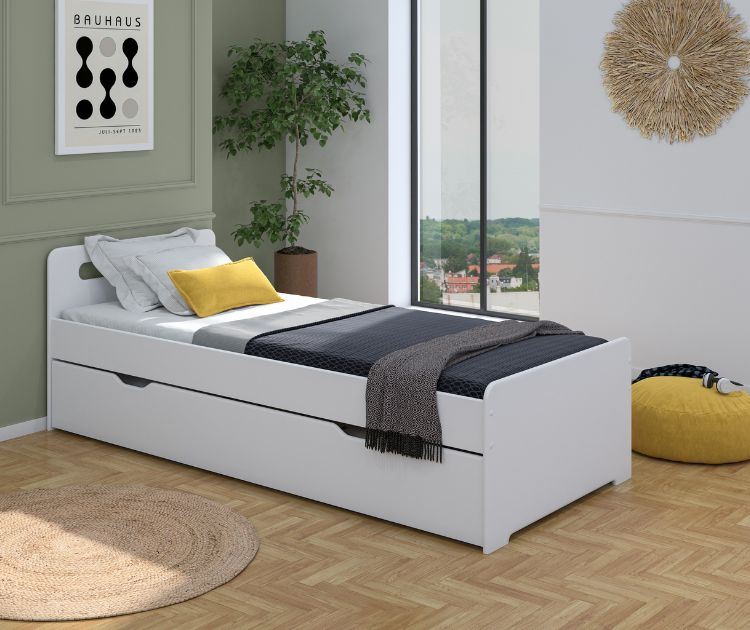
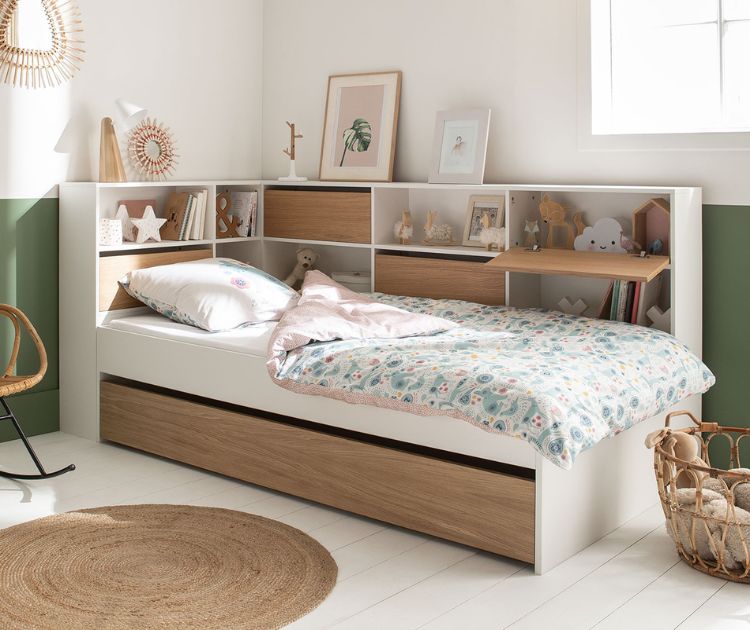
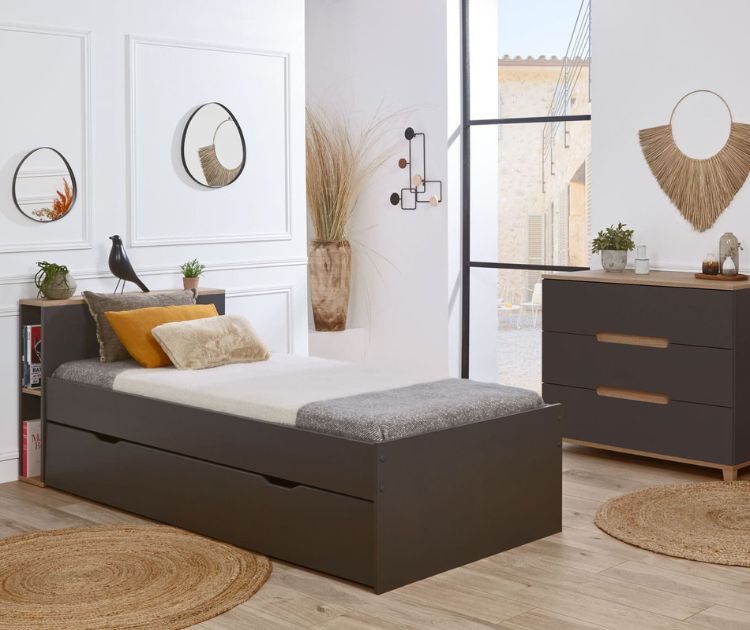
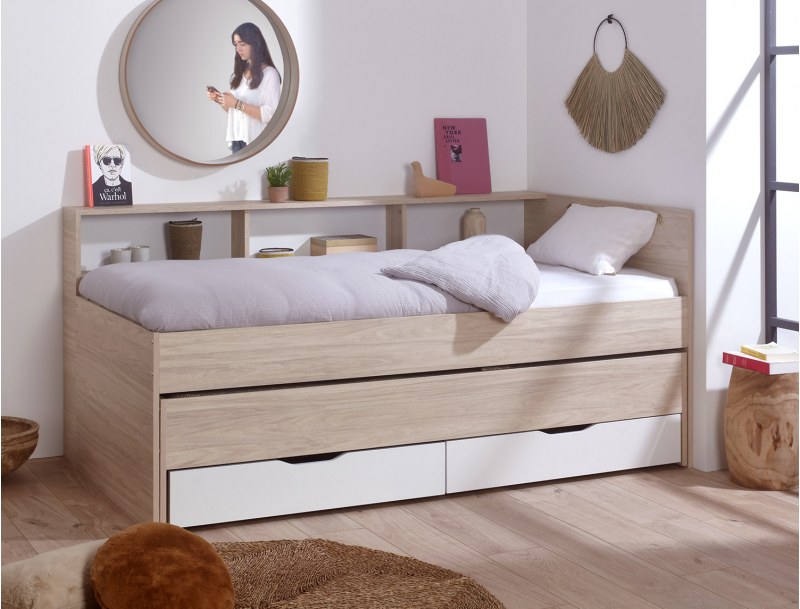
Choose beds with drawers: storage space, allowing easy storage of blankets, pillows or clothes, thus contributing to maintaining an orderly and functional room.
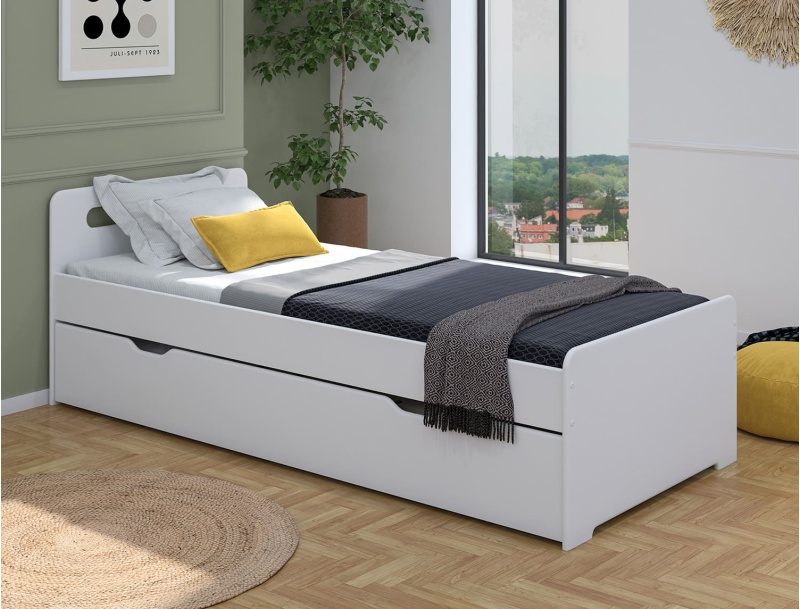
Select trundle beds: versatile solution with a pull-out extra bed, perfect for guests or for optimizing space during the day by converting it into a sofa.
These bed sizes represent a wise choice for small children's rooms. Their reduced dimension allows for efficient space planning while leaving room for a desk, storage, or play area. Additionally, there are numerous creative options for integrating these beds into the room's decoration.
The 90x190 cm bed: the classic single person dimension
The 90x190 cm bed represents the most widespread standard format for individual sleeping. This size has become the reference in France for a single person, offering a perfect balance between comfort and space optimization. Its success is explained by its ability to suit sleepers of all ages, from children to adults, without overly cluttering a room.
This bed size is particularly suitable for people whose height does not exceed 1.80m. Discover why the 90x190 children's bed is a popular choice for children's rooms. This size is perfect for teenagers and adults of average build looking for restorative sleep in a limited space.
The 90x190 cm bed has the considerable advantage of optimizing space in a room of modest dimensions. Bedding for this size is generally more affordable and easily found in stores. A bed of this dimension also promotes child autonomy. Learn more about the benefits of this dimension.
However, tall people may feel cramped in a 90x190 cm bed. For optimal comfort, it is recommended to choose a dimension offering at least 20 cm more than one's own height. This standard explains why sleepers over 1.80m often turn to longer beds, such as the 90x200 cm model
The 90x200 cm bed: the long-term and comfort option
The 90x200 cm bed offers 10 extra centimeters in length compared to the standard format, making it a wise choice for tall people. This dimension prevents the unpleasant feeling of having feet sticking out of the mattress during the night, thus ensuring a more restful sleep.
The quality of this bed size lies in its versatility and durability. The 90x200 cm slatted base provides optimal support for the mattress while promoting good air circulation. This dimension can accompany a child or teenager into adulthood, thus avoiding the need to change bedding during growth.
The 120x190 cm bed: between single and double bed
The 120x190 cm bed represents an intermediate solution that offers more space than a classic single bed. This extra width creates appreciable comfort for one person while taking up less space than a standard double bed. With this size, you get generous sleeping space without sacrificing room space.
This dimension finds its usefulness in various daily situations. People who appreciate having space to sleep or who move a lot during their sleep will fully benefit from this extra width. The 120x190 cm dimension is also ideal for parents who want to read stories to their children before bedtime.
The 60x120 cm bed: the first child's bed
The 60x120 cm bed is generally the first step in the sleep journey for toddlers, after the carrycot or cradle. This dimension is perfectly adapted to babies from 0 to 2 years old, offering a safe and comfortable space for their development. The choice of this size reflects a balance between the space necessary for growth and the need for a reassuring environment.
This baby bed format provides an ideal transition before moving to a larger sleeping arrangement. The mattress height is often adjustable, allowing it to be adapted to the size of the rapidly growing child. Experts generally recommend this type of bed until the age of 3, when most children are ready for a more spacious model.
Essential safety features for a bed of this dimension
To ensure your baby's safety in their 60x120 cm bed, it is essential to consider certain characteristics and comply with current standards.
Check that the bed complies with European safety standards NF EN 716-1 and NF EN 716-2, thus ensuring that it has been designed and manufactured according to strict standards to minimize risks.
Height and spacing of bars: Ensure that the height of the bars is at least 60 cm, thus preventing the child from climbing and falling, and that the spacing between the bars is between 4.5 and 6.5 cm to prevent the baby's head from getting stuck.
Height-adjustable base, allowing the position of the mattress to be adjusted according to the child's growth and facilitating access to the bed for parents, while ensuring the baby's safety.
Choose a non-toxic paint for the bed, without lead or heavy metals, to protect your child's health and avoid any risk of ingesting harmful substances.
Choose a firm and secure mattress, adapted to the bed dimensions, without gaps between the edges, to ensure optimal support and prevent suffocation risks, while promoting comfortable and safe sleep.
By following these safety guidelines, you will provide your baby with a safe and comfortable sleeping environment, conducive to their development and well-being.
The transition to a larger bed should be done by observing the child's signs of maturity. Around 2-3 years old, when your little one starts climbing the bars or seems cramped, it's time to consider a transition. Some children are ready as early as 15 months while others prefer their cocoon until 3 years old.
The single bed: versatility and adaptability
What exactly is a single bed? This term refers to a sleeping arrangement designed for one person with dimensions that vary in width from 70 to 90 cm and in length from 190 to 200 cm. It's often the first "real bed" adopted for children from 3 years old, but it's perfectly suitable for adults who have limited space.
The main advantage of a single bed lies in its adaptability to almost all types of rooms. Even in the smallest rooms, it fits without problem and leaves enough space to move around and install other furniture. This configuration allows for optimized layout while ensuring comfortable sleep.
The small double bed: the ideal compromise
The extra-large single bed is distinguished by its dimensions, which fall between those of a single bed and a double bed. With a width ranging from 100 to 120 centimeters, this size offers more space without overcrowding the room as a double bed would.
This intermediate dimension perfectly meets the needs of people who appreciate having space to sleep, particularly teenagers and adults who move a lot at night. Some models can reach 140 cm in width, while the standard length generally ranges between 190 and 200 centimeters.
Bed dimension
Fitted sheet dimension
Comforter size
60x120 cm
60x120 cm
100x135 cm
70x140 cm
70x140 cm
120x150 cm
90x190 cm
90x190 cm
140x200 cm
90x200 cm
90x200 cm
140x200 cm
120x190/200 cm
120x190/200 cm
200x200 cm
Comparison
Choosing a single bed mainly depends on the age and morphology of the sleeper. Children will thrive in a bed adapted to their size, while adults will prefer dimensions offering more space. This criterion will directly influence sleep comfort and the durability of your investment.
Standard single beds (90x190 cm) remain the most financially accessible, with prices starting around €250 for a decent quality bed base and mattress set. Small double beds or models with integrated storage can reach €400 to €600, however offering better long-term value. The dimension of your single bed deserves all your attention to ensure restorative sleep. Whether it's a standard 90x190 cm model, a longer 90x200 cm version for tall people, or a small double bed offering generous space, your choice must adapt to the sleeper's morphology and available room space.
By taking the time to select the size that precisely corresponds to your needs, you're investing in your daily well-being and sleep quality for many years.
 En
En
 Français
 Deutsch
 Nederlands
 Italiano
 Español













 What Age for Bunk Bed: Standards and Safety
 When to put baby in their room: age and transition
 Best Choice for Baby: Bed Attached to Parents or Next to Them?
 The convertible bed: furniture that grows with your child
 The bunk bed with storage and desk: discover its advantages!