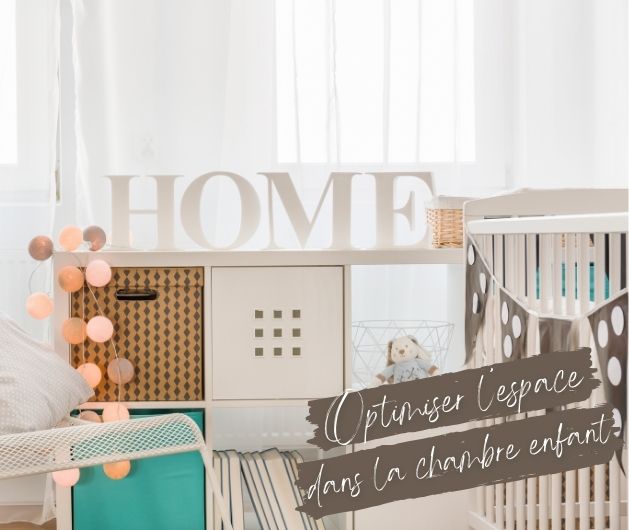
In a child's room, it's not uncommon to quickly become overwhelmed with numerous belongings. To keep track of everything and optimize the room's space as best as possible, various strategies can be implemented. This way, the child can evolve in their space more pleasantly. Discover 10 concrete ideas for optimizing storage space in a room.
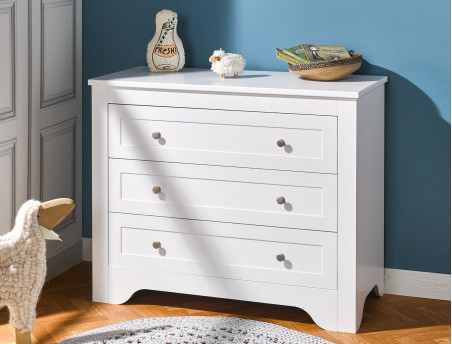
While there are many storage options available, the children's dresser remains an essential element. A bedroom dresser provides drawers for storing clothes, linens, toys, or other items as needed. Choosing a children's bedroom dresser is therefore an excellent choice to gain storage space. The children's dresser also allows you to decorate the room by placing a lamp, a decorative element, a beautiful frame, etc. on top. Prefer a children's dresser with a timeless look that can follow your child through the years and adapt to decor changes, like the OCCITANE dresser for example.
Compartmentalize drawers
When using a children's dresser, it's not about throwing everything randomly in the drawers. Each storage furniture piece must be well organized. For the dresser, you can compartmentalize the drawers with suitable small boxes. Everything will thus easily find its place and you avoid mixing everything up. For this, you need to know how to best optimize storage in a child's room.
Choose a bed with built-in storage
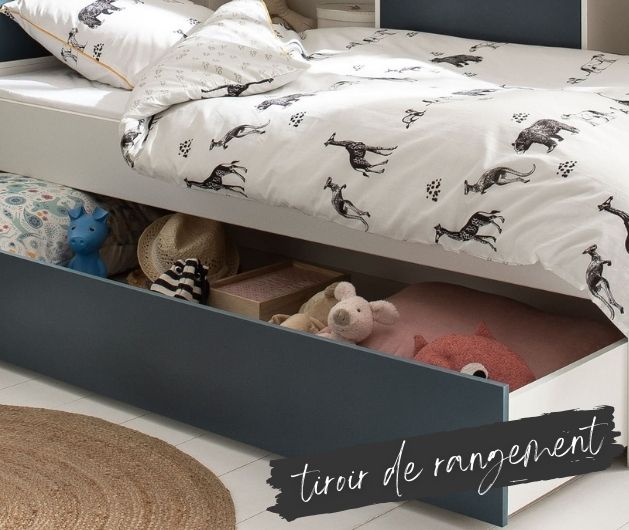
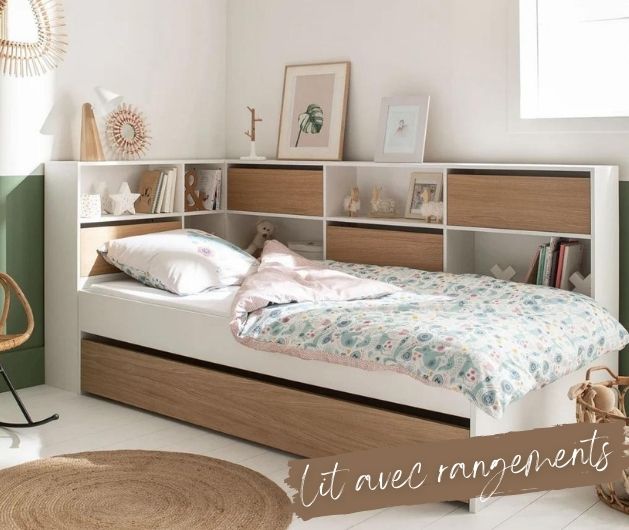
A piece of furniture can certainly serve two functions, and a bed with built-in storage is an excellent choice to save space. A storage bed can come in several forms. There are models with cubby-style shelves around the bed, for example. You can also choose a model with a drawer to store items you use less frequently. The bed can therefore also become a true bedroom storage furniture piece.
Add wall shelves
On the walls, adding storage is also entirely possible. You just need to mount a few shelves or storage cubes to incorporate decorative items, as well as books, toys, etc. By using wall space, you don't clutter the floor space and the room remains pleasant to use daily. However, pay attention to properly secure your shelves to avoid any risk of falling.
Encourage playful storage
For the room to stay tidy, its organization system must be easy and playful. This way, your child can easily understand how it works and gain autonomy by putting away their own things. You can opt for color-coded storage or by type, add labels or stickers to make this new organization easier to understand. Adapt according to your child's age to make this mission accessible and facilitate the acquisition of these new good habits.
Sort regularly
Optimizing storage space in a room cannot be done without regular sorting. Children accumulate many items, from clothes to toys. However, they grow up very quickly, and many items become completely useless. By sorting regularly, you declutter the space and allow your child to better find their belongings. Once or twice a year, organize a major sorting session with their participation and choose what to keep, sell, donate, or throw away for the most damaged items.
Adapt the room as the child's needs evolve
Unlike an adult's room, a child's room will evolve with their growth, tastes, and personal development. The same applies to storage elements, which must adapt to their needs and available space. Choose solutions that can be renewed and reinvented over the years to avoid unnecessary purchases. Observe your child's new needs to provide them with a space that's even more adapted to their current preferences and activities.
Opt for a folding desk
As a child grows, they will often need a desk for homework, as well as reading, drawing, etc. If space is limited in their room, you can opt for a foldable element. Simply fold it down when it's not in use to save space. There are many clever solutions for incorporating a desk even in a small room. For example, choose a loft bed to fit a small desk underneath.
Utilize lost spaces
If the room has special features, every "lost space" must be utilized efficiently. This is particularly true for attic rooms that often have areas with low ceiling height. Today, there are furniture pieces specifically designed for these types of spaces so that no square meter is wasted. Adapt the room's furnishing according to its configuration, even if it's somewhat unusual.
Avoid excess
Finally, avoid excess in the room. This applies to your child's belongings, but also to decoration, for example. A visually cluttered space will not be pleasant and will tend to distract rather than stimulate your child. It's up to you to find the right balance to create a harmonious ensemble that reflects their personality without being too crowded.
 En
En
 Français
 Deutsch
 Nederlands
 Italiano
 Español









 What Age for Bunk Bed: Standards and Safety
 When to put baby in their room: age and transition
 Best Choice for Baby: Bed Attached to Parents or Next to Them?
 The convertible bed: furniture that grows with your child
 The bunk bed with storage and desk: discover its advantages!