Convertible baby bed: when to adjust the mattress base height?
For a large majority of models, the height of baby's bed can be adjusted according to their age and needs. This solution allows parents to reach baby more comfortably, but also allows baby to enjoy a space more adapted to their size. The whole question is then knowing when to transition from one height to another while ensuring baby's safety. So what are the signs to observe? What solution should you choose so that baby's bed adapts to their development?
A baby bed with multiple height levels
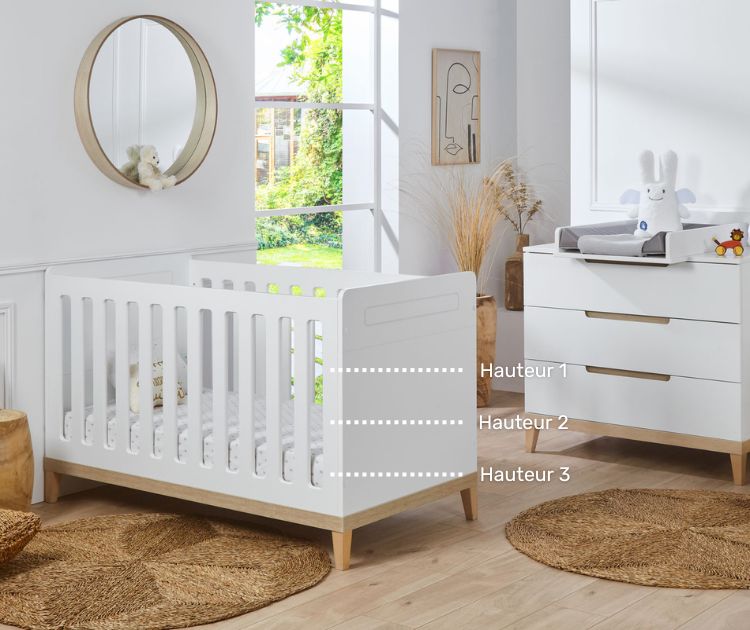
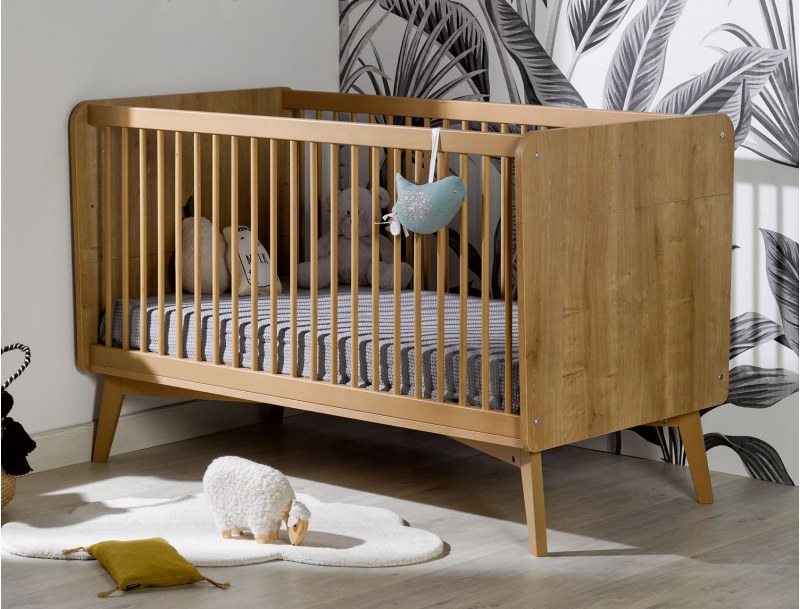
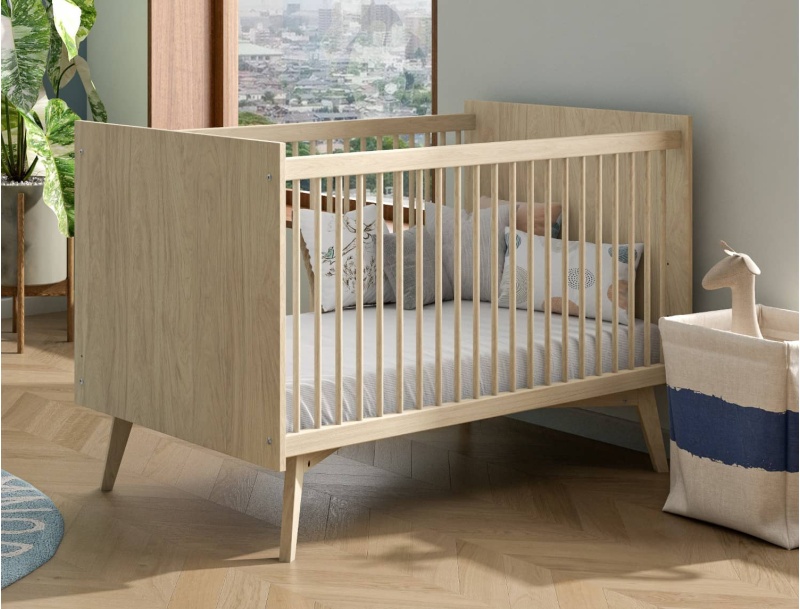
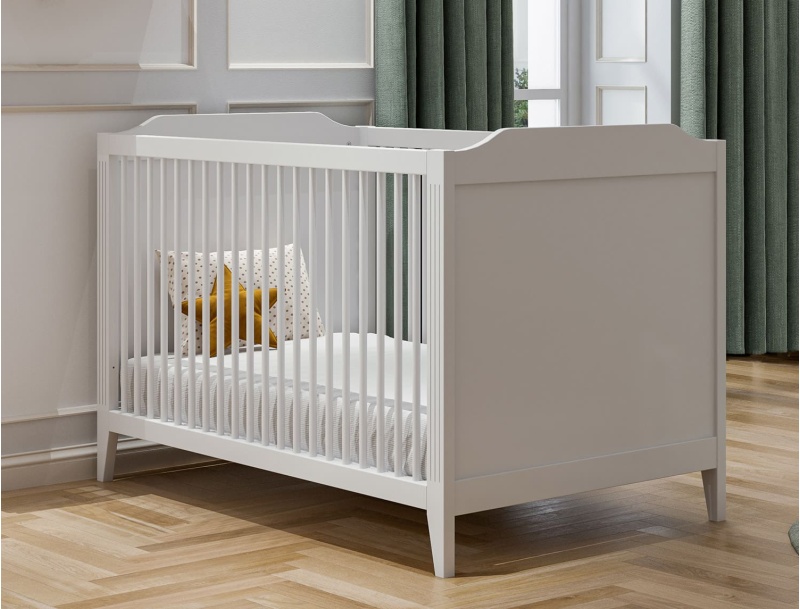
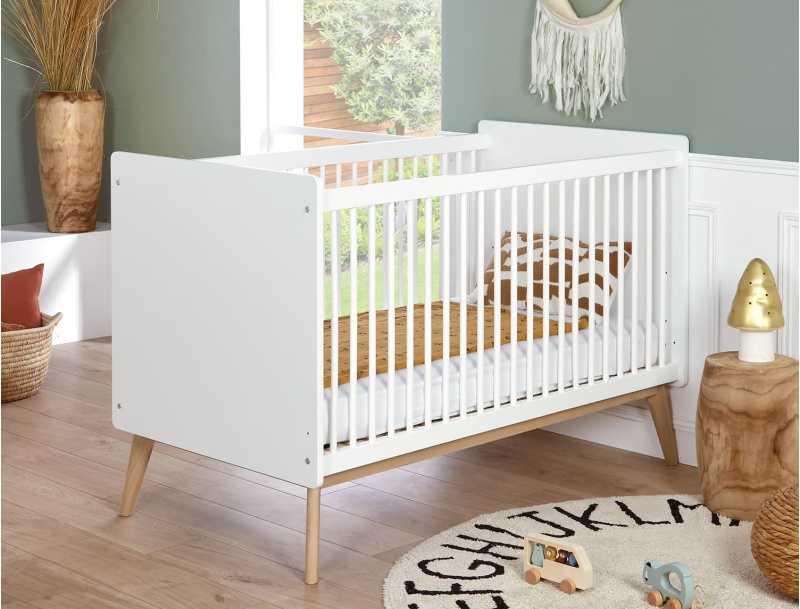
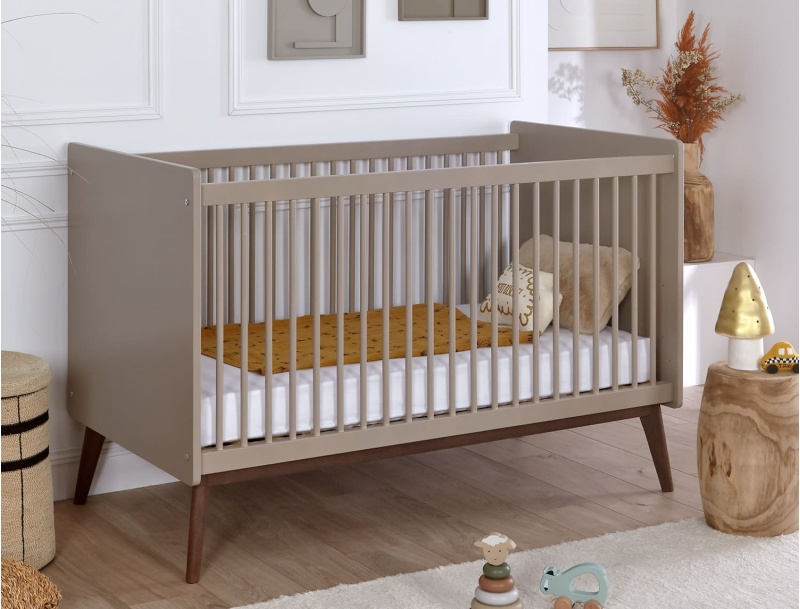
As mentioned in the introduction, a convertible baby bed or an adjustable baby bed are models that offer two different heights. When we talk about height variations, we are referring to the mattress base which can be placed either in the high position or in the low position. Some models even offer three different height levels.
The goal is above all to allow parents to access baby more easily. Indeed, leaning over the bars several times a day requires effort from the back and even more so when you have to stand up with baby in your arms. Raising the mattress base thus allows baby to sleep higher up, while continuing to benefit from the safety of the bars. Parents can thus limit their effort and protect themselves from back pain.
When baby becomes bigger, rolls over and moves more, the mattress base can then be placed in the low position so that the height of the bars remains sufficient to guarantee all the safety they need. It is therefore according to baby that the height will be chosen, which is why we often speak of a convertible baby bed.
When to change the height of baby's bed?
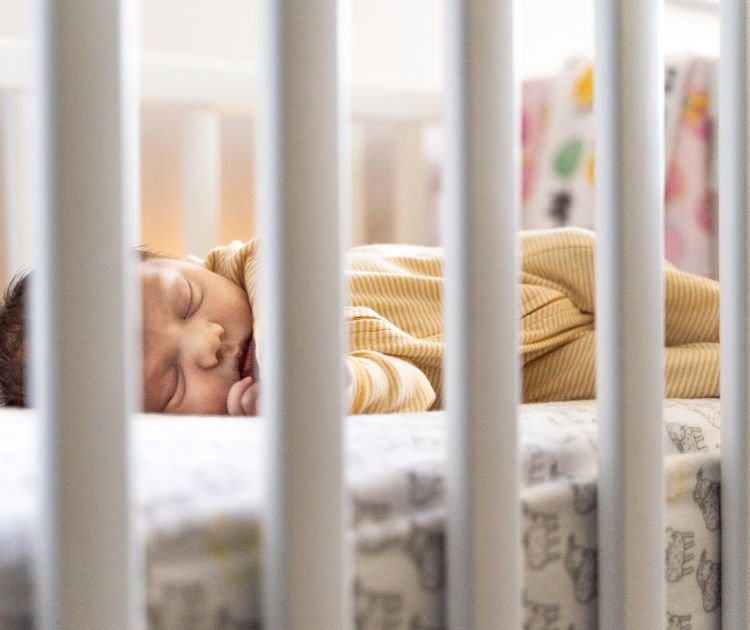
The question of changing the height of the baby bed is therefore above all a matter of safety for the child. Generally, it is recommended to lower the height when baby begins to roll over. From then on, the high position is no longer sufficiently secure. Generally, this is behavior that occurs around the age of 5 months. So be very attentive to your child's development to make the change as soon as it becomes necessary.
You can also refer to the manufacturer's recommendations depending on the bed model chosen. Also make sure to opt for a mattress that respects the maximum thickness recommended by the manufacturer of your bed to avoid any risk of falling.
What bed to evolve at the child's pace?
A bed that evolves at the child's pace helps avoid purchasing new furniture at different stages of their development and therefore to opt for an economical and eco-responsible solution. In this sense, the convertible baby bed is the best option to evolve at the child's pace. The convertible baby bed indeed allows transitioning from a high to low mattress base position for use from birth (you can also opt for a bassinet or co-sleeper from 0 to 6 months of age).
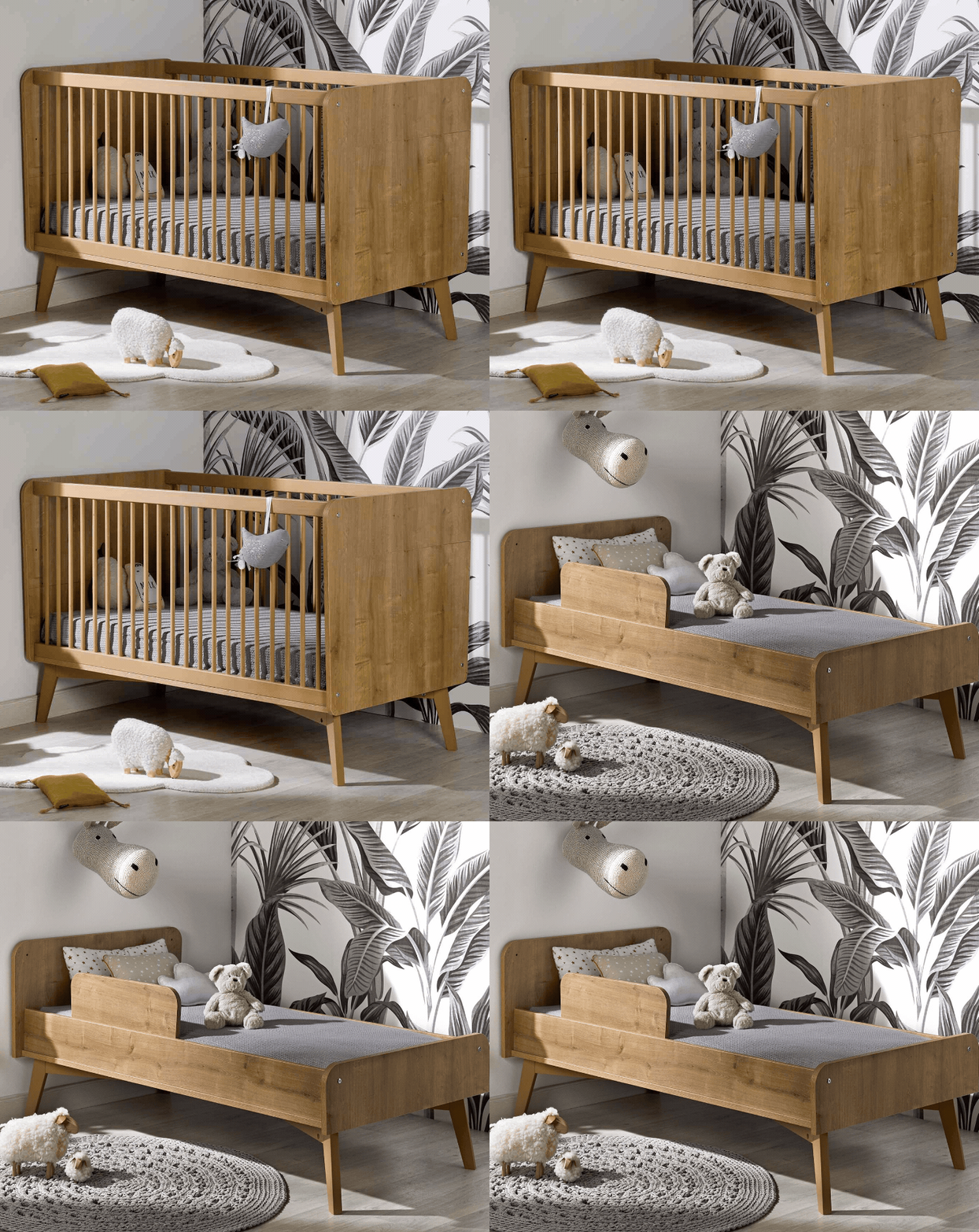
What's more, the convertible baby bed also allows changes to accompany baby over the longer term. Indeed, it offers the possibility to transform the crib with bars into a child's bed. Simple manipulations thus offer the possibility of transitioning from a 70x140 cm baby bed to a 70x140 cm child's bed. The latter can then easily be used until the age of 6 before moving to a more spacious bed such as a 90x190 cm child's bed.
More than being economical and eco-responsible, this solution is particularly interesting if you have chosen a matching baby room. Thus, the bed remains coordinated with the dresser and/or wardrobe for many years.
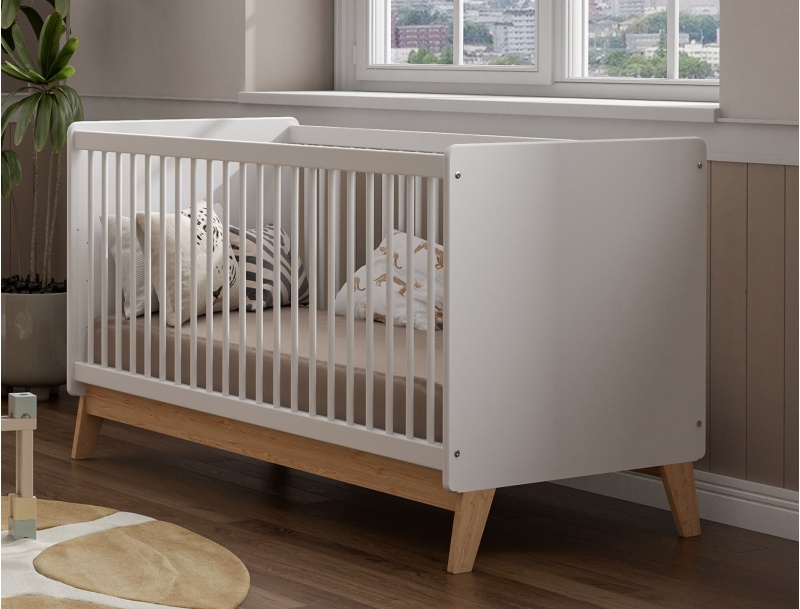
At ChambreKids, you can notably discover the Equilibre convertible baby bed. This model allows transitioning from a crib with bars to a child's bed. It is moreover crafted from ecological panels. Its combination of white and pine colors allows it to find its place in all sorts of decorations.
When to transition from a crib with bars to a child's bed?
If you decide to opt for a convertible baby bed, you will also need to ask yourself when to transition from a crib with bars to a child's bed. Here, it is most often recommended to make the change when baby attempts to climb over the rail. This poses a fall risk and it is therefore recommended to install them in a big kid bed.
Certain signs also show that baby feels cramped when they bump against the bars or throw their stuffed animals out of the bed, for example. Once again, being attentive to your child's needs will allow you to choose the right moment. Most often, this change occurs between the age of 18 months and 2 years.
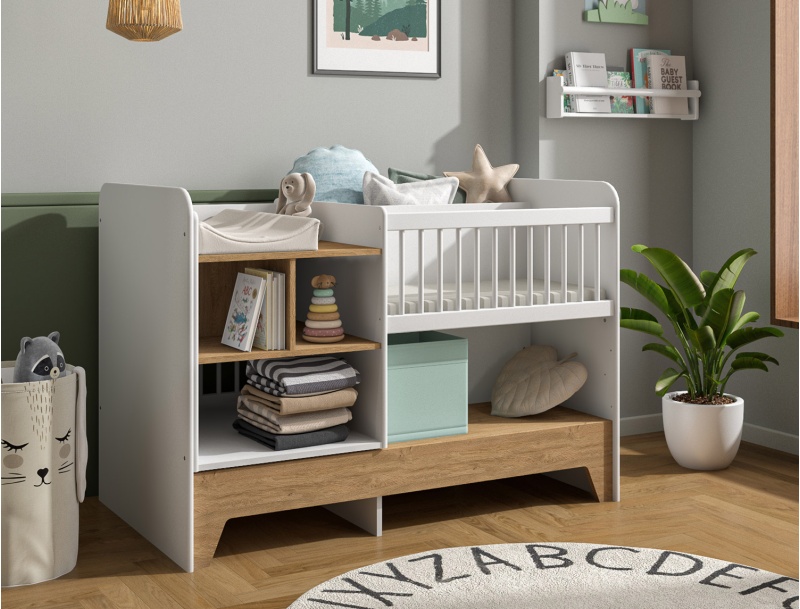
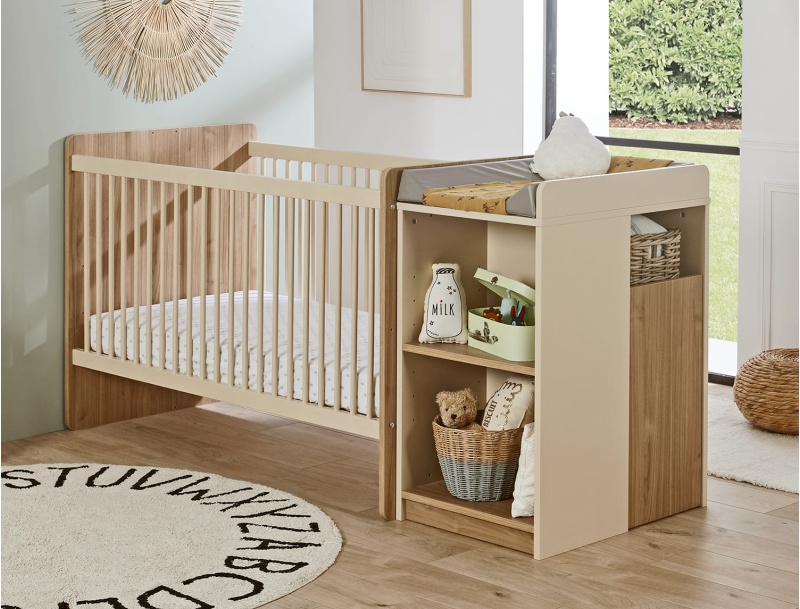
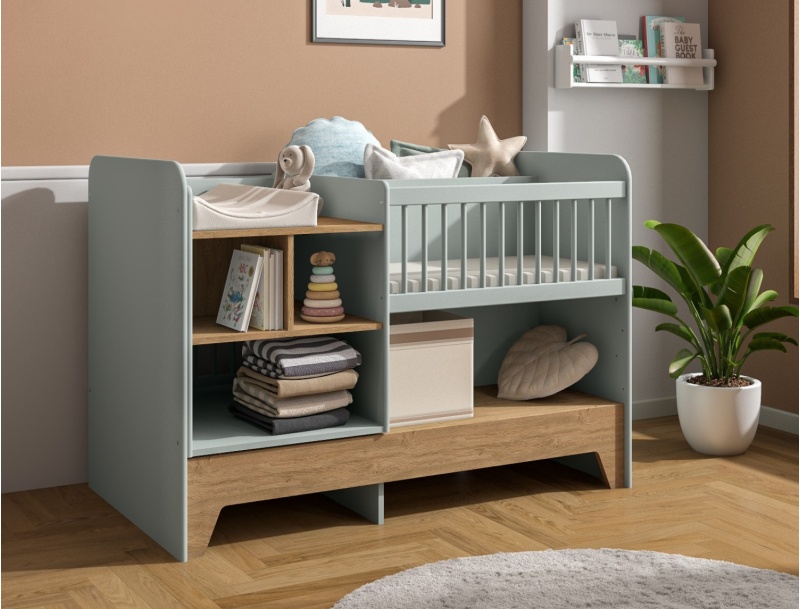
More than just the convertible baby bed, you have the possibility to choose other convertible furniture for baby's room such as a dresser with removable changing top, for example.
The Montessori bed solution
Finally, you can also consider the Montessori baby bed solution. This baby bed has a mattress base very close to the floor, which helps limit the risk of falling. What's more, the Montessori method aims to encourage the autonomy of little ones. Your child can thus get up and go to bed independently thanks to this bed.
That being said, using a Montessori baby bed is not suitable from birth. Recommendations regarding the minimum age for using this type of bed vary greatly. You can therefore seek advice from a professional for guidance.
 En
En
 Français
 Deutsch
 Nederlands
 Italiano
 Español













 What Age for Bunk Bed: Standards and Safety
 When to put baby in their room: age and transition
 Best Choice for Baby: Bed Attached to Parents or Next to Them?
 The convertible bed: furniture that grows with your child
 The bunk bed with storage and desk: discover its advantages!