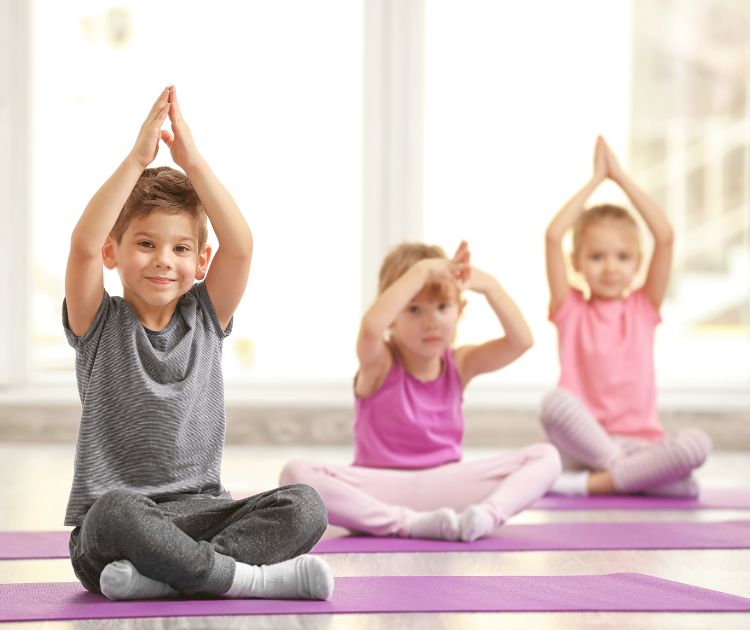
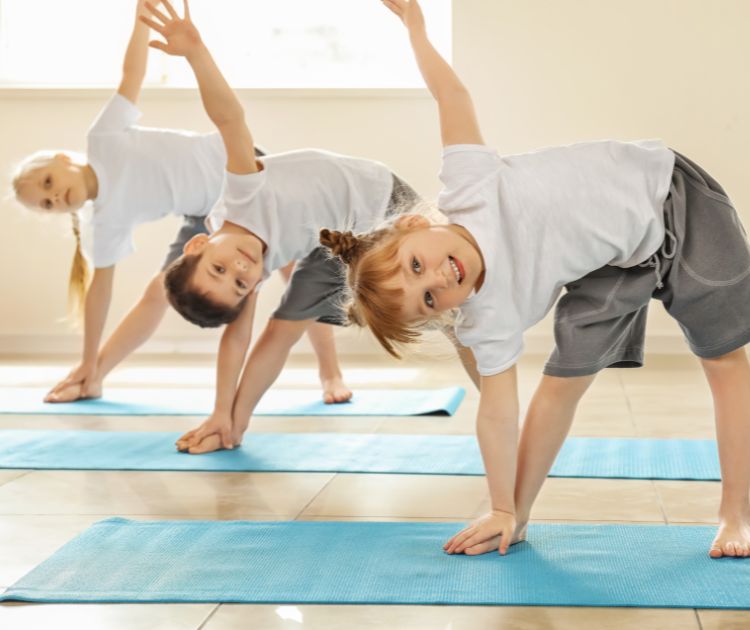
Introducing children to yoga is a fun and enriching approach that promotes their physical and mental well-being. This ancient practice, adapted for young ones, can become an amusing game while providing them with numerous benefits. In this article, we'll explore 10 simple yoga poses adapted for children, as well as the advantages of this discipline and tips for beginning this adventure together.
Easily reproduce yoga poses at home with our printable poster!
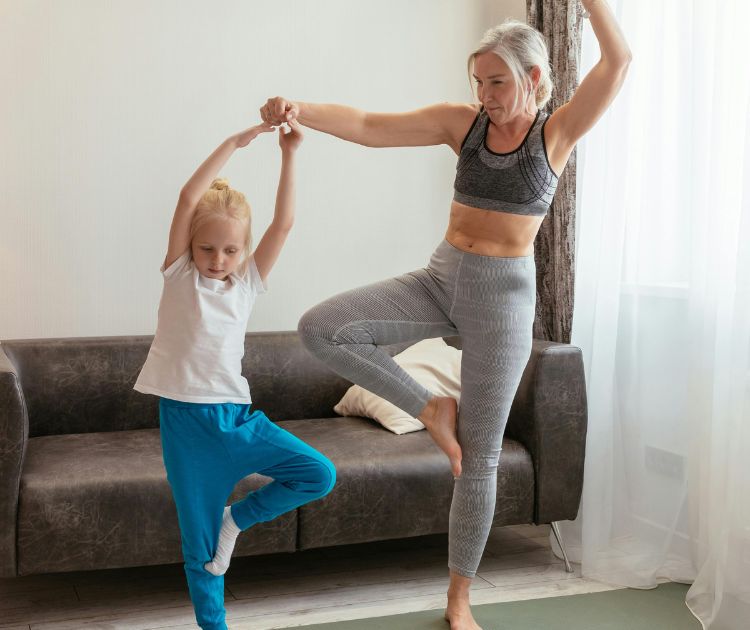
1) Tree Pose (Vrksasana) ? : develop balance and concentration
Imagine a majestic tree, firmly rooted in the ground, its branches rising proudly toward the sky. By adopting this pose, the child learns to cultivate balance, stability, and concentration, while having fun imitating nature.
To perform this posture, the child starts standing, feet together and back straight.
They then place one foot on the inner thigh or calf of the opposite leg (without pressing on the knee)
They join their hands in front of their chest in prayer position.
Once confident, they can raise their arms toward the sky like tree branches.
The goal is to hold for a few breaths, while staying well-anchored on the supporting leg. This position strengthens the leg and core muscles, while improving coordination and posture.
? A playful concentration exercise By trying to remain still, the child develops their attention and patience. This pose is ideal for channeling energy and promoting a state of inner calm. It is particularly useful for children who have difficulty staying focused, as it requires great mental presence.
? Practical tip: To help the child find their balance, encourage them to fix their gaze on a stationary point in front of them. And if they lose balance? No worries! Like a tree swaying in the wind, they can start over and have fun progressing little by little.
This pose is perfect for learning perseverance and grounding, while working on balance in a fun and caring way.
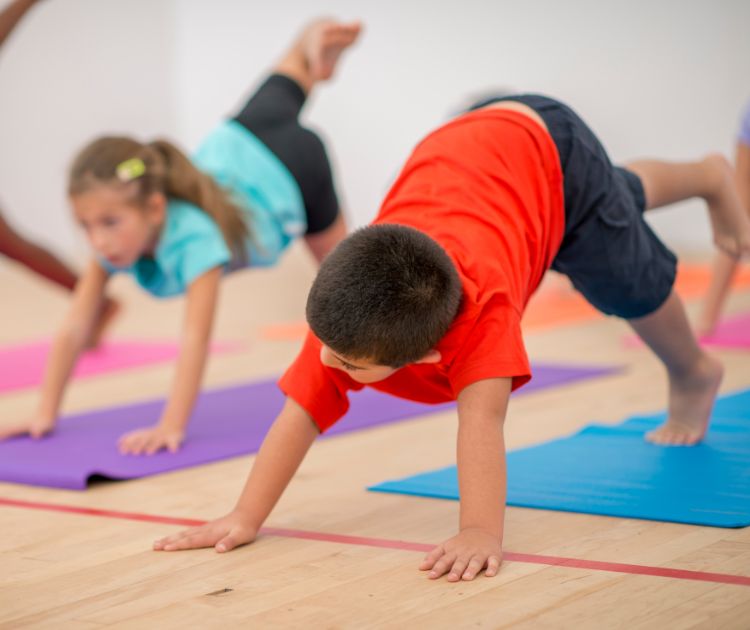
2) Downward-Facing Dog Pose (Adho Mukha Svanasana) ? : strengthen the entire body
Imagine a dog stretching after a long nap, extending its front paws and lifting its hips toward the sky. This is exactly what your child does when adopting this iconic yoga pose. Playful and dynamic, the Downward-Facing Dog helps strengthen the entire body while improving flexibility.
To perform this posture, the child starts on all fours, with hands firmly planted on the ground,
Then, they push on their arms and legs to form an inverted "V". The head is relaxed between the shoulders, and the back stretches naturally.
This position engages several muscle groups: arms and shoulders are toned, legs gain flexibility, and the spine elongates to release tension.
?A calming and energizing effect Downward-Facing Dog stimulates blood circulation to the brain, promoting concentration and mental clarity. It also helps relax the back and shoulders, often stressed by carrying backpacks or long hours of sitting. After a few deep breaths in this posture, the child feels a unique mix of dynamism and relaxation.
? Practical tip: If the child has trouble keeping their heels on the ground, encourage them to slightly bend their knees. The important thing isn't to have straight legs, but a well-elongated and relaxed back.
This posture is ideal for starting or ending a yoga session, offering the child a moment to reconnect their body and mind while having fun.
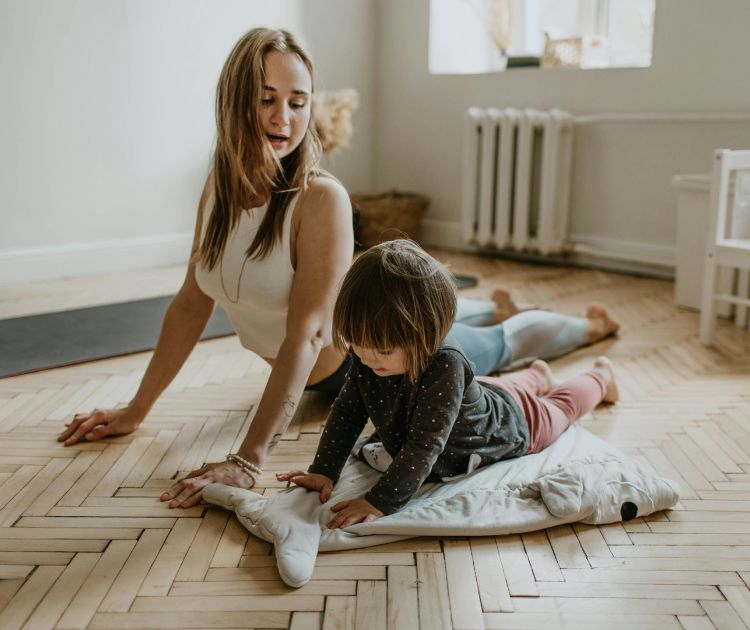
3) Cobra Pose (Bhujangasana) ? : Stretch the back and open the chest
Imagine a cobra slowly rising, lifting its head and confidently expanding its chest. The Cobra pose is ideal for stretching the back, improving posture, and strengthening the upper body while promoting deep and soothing breathing.
To perform this pose, the child lies on their stomach, legs extended and palms placed flat under the shoulders.
They gently push on their arms to lift the upper body, while keeping the elbows slightly bent and shoulders relaxed.
The chest opens, the gaze directs forward, and the back stretches naturally.
This posture stimulates spinal flexibility, strengthens back muscles and promotes good body alignment.
?A boost of energy and confidence The Cobra pose helps fight fatigue and stress, offering a sensation of openness and vitality. It's perfect after a day spent sitting at school, as it counterbalances slouched posture by straightening the back and strengthening the abdominal muscles.
? Practical tip: Encourage the child to not force with their arms and to rise only until they feel comfortable. They can also inhale deeply while rising and exhale while releasing, to accompany the movement with breathing.
This pose is ideal for bringing a sense of confidence and calm, inviting the child to open their heart and adopt a proud and relaxed posture.
4) Butterfly Pose (Baddha Konasana) ? : Improve hip flexibility
Imagine a butterfly gently flapping its wings, light and graceful. The Butterfly pose is a sitting position that helps children loosen their hips and release tension accumulated in the lower body, while bringing a sense of calm and relaxation.
To perform this pose, the child sits on the floor, brings the soles of their feet together and lets their knees open to the sides.
They grab their feet with their hands and, if they wish, can gently move their knees up and down, like a butterfly flapping its wings.
For a deeper stretch, they can also slightly lean their torso forward, keeping the back straight.
This posture promotes good sitting posture, improves hip flexibility and stimulates blood circulation in the legs.
? A relaxing pose that's beneficial for the back The Butterfly pose is ideal for releasing tension after a long day at school or physical activities. It also promotes better sitting, thus helping children who spend time in a seated position to maintain good posture and avoid lower back pain.
? Practical tip: If the child feels discomfort in their hips, encourage them to place a cushion under their buttocks to slightly elevate the pelvis. They can also keep their knees higher and gradually relax them over time.
This gentle and accessible pose helps children develop their flexibility while cultivating patience and relaxation. It's a perfect moment to settle down, breathe, and let the mind calm itself.
5) Child's Pose (Balasana) ?: Relax and calm the mind
Imagine a little bear curling up in its den to rest safely. The Child's pose is a soothing position that helps children release tension, recenter, and find a sense of inner calm.
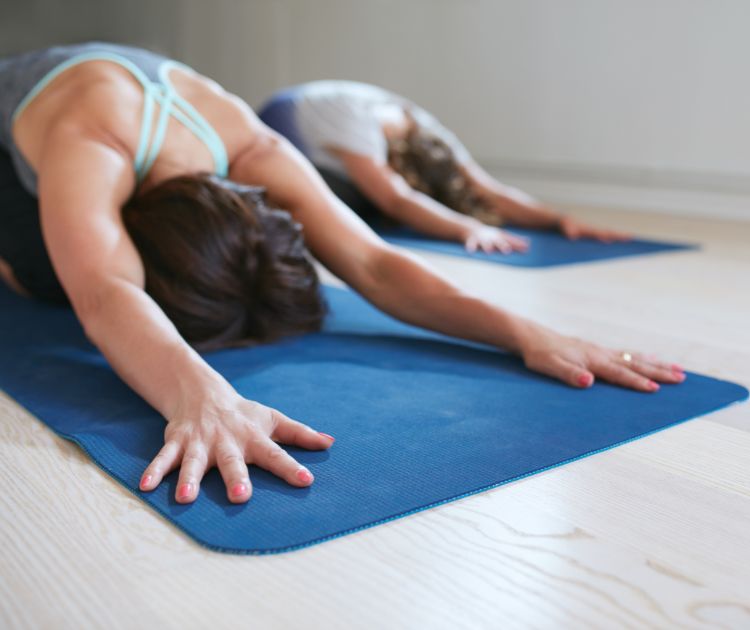
To perform this posture, the child kneels on their mat
They place their bottom on their heels and stretch their arms forward while lowering their forehead to the ground. Their arms can remain extended in front or rest along their body for complete relaxation.
In this position, breathing becomes deeper, calming the nervous system and promoting relaxation. This posture also helps to relax the back, shoulders and neck, offering a regenerating moment of pause.
? A natural refuge to soothe stress and fatigue The Child's pose is ideal for calming an agitated mind and releasing negative emotions. After a busy day or before bedtime, it helps the child release pressure and feel safe, as if in a protective cocoon.
? Practical tip: If the child has difficulty placing their forehead on the ground, put a cushion under their head for more comfort. They can also slightly spread their knees to create more space and facilitate breathing.
Gentle and comforting, this pose is perfect for establishing a moment of serenity, learning to manage emotions, and reconnecting body and mind with simplicity.
6) Warrior Pose (Virabhadrasana) ⚔️ : Increase strength and confidence
Imagine a great knight or proud warrior, standing facing adventure, ready to confront all challenges with courage. The Warrior pose helps children develop their strength, balance, and self-confidence, while offering a moment of fun and bodily expression.
1) The child starts standing and spreads their legs
2) They place one foot forward bending the knee at a 90-degree angle, while keeping the other leg stretched back.
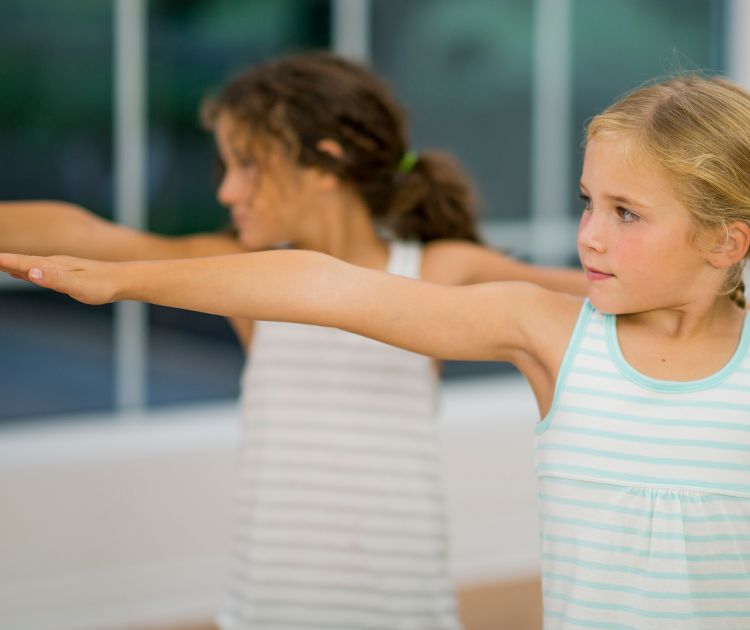
3) They then raise their arms towards the sky or stretch them out to each side, parallel to the ground, like a true warrior ready to advance.
This position engages the legs, trunk, and arms, strengthening muscular endurance and improving posture.
? A posture of power and stability The Warrior is a dynamic position that encourages perseverance and concentration. While holding the pose, the child learns to channel their energy and stay grounded in the present.
? Practical tip: To maintain proper alignment, ensure that the front knee doesn't extend beyond the ankle and that the shoulders remain relaxed. For better stability, the child can fix their gaze on a point in front of them to strengthen their balance.
Imagine a cat stretching upon waking, arching its back and lifting its head to observe its surroundings. The Cat pose is ideal for improving spine flexibility, strengthening the back, and releasing accumulated tension.
1) The child starts on all fours, hands well-anchored under the shoulders and knees aligned under the hips.
2) On an inhale, they slightly arch their back, lift their head and open their chest (this is the "Cat looking at the sun").
3) On the exhale, they round their back, tuck in their head and release their neck downwards (this is the "Cat stretching").
This fluid movement synchronized with breathing promotes back flexibility and improves coordination.
? An ideal exercise to loosen the back and calm the mind The Cat pose helps release tension in the back and shoulders, especially after a day spent sitting at school or playing in the same position. It's also beneficial for breathing, as it teaches how to move in rhythm with inhalation and exhalation, which soothes the nervous system and helps better manage stress.
? Practical tip: To make the exercise more fun, suggest that the child imitate a real cat: they can arch their back while hissing like an angry cat or hollow their back like a curious cat stretching after a nap.
This pose is ideal for developing body awareness, loosening the spine, and gently reconnecting with one's body.
8) Mountain Pose (Tadasana) ⛰️: Promote good posture
Imagine a majestic mountain, stable and immobile in the face of wind and weather. The Mountain pose is a basic position in yoga that helps children become aware of their body, improve their posture, and develop their grounding.
To perform this pose, the child stands with feet together or slightly apart, arms along their body.
They stretch their spine upwards while keeping their shoulders relaxed and distribute their weight evenly on their feet. Their gaze is straight ahead, chin slightly tucked, and arms can remain at their sides or be raised towards the sky.
Although the posture seems simple, it strengthens deep muscles, improves balance and promotes natural and aligned posture.
?A powerful exercise for concentration and inner balance Tadasana helps strengthen the muscles of the back, legs, and trunk, while teaching the child to stand straight and stable. It's ideal for learning concentration and mindfulness, as it requires being attentive to each part of the body while remaining still and relaxed.
? Practical tip: To strengthen balance, suggest that the child imagine they are a solid mountain, anchored to the ground, with a peak rising toward the sky. They can also close their eyes for a few seconds to intensify the feeling of grounding and inner calm.
This simple but essential pose allows children to become aware of their daily posture, correct bad habits, and regain a sense of stability and serenity.
9) Locust Pose (Salabhasana) ? : Strengthen the back and legs
Imagine a little grasshopper ready to jump, light and full of energy. The Grasshopper pose is ideal for strengthening the back, toning the legs and improving posture, while stimulating concentration and self-confidence.
The child lies on their stomach, arms extended along the body, palms facing the ground.
On an inhale, they lift their head, chest, arms, and legs while slightly contracting the back and buttocks.
They hold the position for a few seconds before slowly exhaling and releasing their entire body onto the mat.
This movement strengthens the lower back, activates the legs and stimulates blood circulation while helping to develop better posture.
? An exercise to boost strength and confidence The Grasshopper pose is perfect for toning back muscles and improving spine flexibility. It also brings a sensation of dynamism and energy, thus strengthening self-confidence and the desire to push oneself.
? Practical tip: If the child has difficulty lifting their legs and torso simultaneously, they can start by lifting only their chest and, once comfortable, add the legs. The important thing is not to force, but to feel a gentle and progressive stretch.
10) Boat Pose (Navasana) ?: Work on abdominals in a fun way
Imagine a little boat floating on the water, gently swaying with the waves. The Boat pose is a dynamic position that strengthens the abdominals, improves balance, and develops coordination, while making the exercise fun for children.
Your child sits on their mat, slightly bends their knees and lifts their feet off the ground while keeping their back straight.
They can first hold their legs with their hands, then, when they feel ready, stretch their arms out in front of them at knee height to maintain balance.
2 bis) For a more advanced version, they can try to fully extend their legs, forming a "V" with their body. This posture engages the abdominal muscles, legs, and back, while improving stability and concentration.
? A game of balance and strength The Boat pose is ideal for toning the abdominal belt and strengthening the postural muscles that support the back. It also helps develop patience and perseverance, as maintaining balance requires concentration and control.
? Practical tip: If the child has difficulty maintaining the posture, they can lightly rest their toes on the ground to find their balance, then try to lift them gradually. You can also turn the exercise into a game by imagining a boat sailing on calm waters... or waters stirred by invisible waves!
Why is Yoga beneficial for children?
Physical benefits: flexibility, strength and balance
Each yoga pose for children is designed to stretch and strengthen different parts of the body, thus contributing to harmonious growth. For example, poses like Mountain or Warrior help strengthen the legs and improve posture, while positions like Butterfly promote hip flexibility.
Mental benefits: concentration, relaxation and self-confidence
Beyond the physical benefits, yoga helps children improve their concentration, manage stress, and strengthen their self-esteem. The integrated breathing and meditation techniques promote a state of calm and relaxation. For example, the Child's pose is often used to help children recenter after a busy day.
How to start Yoga with your child?
Tips for establishing a home yoga routine
To encourage your child to practice yoga, it's important to integrate the discipline into their daily routine in a playful way. Create short 10-15 minute sessions, favor an interactive approach, and offer age-appropriate challenges. A good way to maintain their engagement is to alternate between dynamic poses and moments of relaxation.
Integrating Yoga into Children's Daily Life
Yoga shouldn't be an isolated activity, but can naturally integrate into the child's daily life. Rather than considering it an obligation, transform it into a moment of pleasure and sharing. Introducing a few poses in the morning upon waking or before bedtime helps bring physical and emotional balance to your child. Yoga can also be practiced after school, to help release tensions accumulated during the day. Over time, these habits transform into reassuring and beneficial rituals.
Ideas for practicing yoga as a family
Organizing a family yoga session is an excellent way to strengthen bonds and establish a shared wellness routine. Choose an opportune moment, for example in the morning to start the day well or at the end of the day to release accumulated tension. Begin with some gentle poses like Mountain or Cat to wake up the body, then add more engaging positions like Warrior or Grasshopper.
To make the experience more fun, incorporate games: ask your child to imagine being an animal by adopting corresponding poses. Another idea is to create a short story where each position illustrates a scene from the narrative. For example, the Tree pose to symbolize a magical forest or the Downward-Facing Dog to represent a curious puppy. This helps capture the attention of younger children and introduces them to yoga without frustration.
Adapted breathing and relaxation exercises
Teaching a child to control their breathing is one of the keys to yoga. These exercises help them channel their emotions, reduce stress and improve concentration. A simple method is to teach them abdominal breathing:
Ask them to place one hand on their belly and the other on their chest.
Encourage them to inhale slowly through the nose, inflating their belly like a balloon.
Then, exhale slowly through the mouth while feeling the belly go down.
This technique can be practiced before sleeping to promote peaceful sleep or before a stressful moment (exam, school presentation).
For restorative sleep, promote your child's well-being by offering them the best sleeping conditions with our children's beds from Chambrekids
Other exercises, like gently blowing on an imaginary feather or doing lion's breath (exhaling strongly with mouth wide open), make learning fun and accessible for children.
Creating a dedicated yoga space at home
To encourage your child to practice yoga regularly, it's essential to set up a dedicated space in the house or children's bedroom. This space doesn't need to be large, but should be quiet and pleasant, without distractions.
Set up a colorful yoga mat, some soft cushions, and dimmed lighting to create a soothing atmosphere. You can also add elements that promote relaxation, such as a small plant, an essential oil diffuser, or soft background music.
If possible, encourage your child to personalize this space with their favorite objects, like a comfort toy or an inspiring drawing. This will make them want to return regularly. The idea is to make yoga become an anticipated moment, a moment of well-being where they feel safe and relaxed.
Frequently Asked Questions about Yoga for Children
Yoga can be introduced from age 3, but in a playful and adapted form. At this age, children have limited attention spans and their motor coordination is still developing. Sessions should be short (5-10 minutes), interactive, and game-based. For example, a tree pose becomes a fun challenge where the child must stay stable like a mighty oak in the wind.
From age 6, children can start linking several poses with more fluidity and intention. It's also a good age to incorporate simple breathing exercises, like slowly blowing while imagining a flickering candle.
From age 10, children can practice more structured sessions, including dynamic sequences and poses requiring more concentration and balance. They can also start incorporating more advanced meditation and relaxation techniques.
There's no strict rule, but a good rhythm is 2 to 3 sessions per week. The important thing is to anchor yoga in a natural and pleasant routine, without constraint.
Once a week: This is a good starting point to introduce yoga without pressure. Ideal for children who are discovering the discipline.
2 to 3 times a week: This helps reinforce physical and mental benefits while maintaining a playful and varied approach.
Every day: If the child loves it, they can incorporate yoga into their daily routine, even with short 5-10 minute sessions in the morning or before bedtime.
Yes, yoga is an excellent tool to help children channel their emotions, calm down and improve their emotional well-being. Through gentle poses and breathing exercises, it offers concrete ways to ease anxiety and develop resilience.
? How does yoga help manage stress in children?
Controlled breathing: By learning to breathe deeply and slowly, the child activates their parasympathetic system, responsible for calming and relaxation.
Relaxing poses: The Child's pose or the Butterfly pose are ideal for releasing tension.
Concentration and mindfulness: By focusing on their movements and breathing, the child forgets their worries and develops their ability to center themselves.
Physical outlet: Some dynamic poses also allow for releasing accumulated energy and reducing irritability
Don't forget to print our "10 yoga poses for children" poster
 En
En
 Français
 Deutsch
 Nederlands
 Italiano
 Español













 What Age for Bunk Bed: Standards and Safety
 When to put baby in their room: age and transition
 Best Choice for Baby: Bed Attached to Parents or Next to Them?
 The convertible bed: furniture that grows with your child
 The bunk bed with storage and desk: discover its advantages!